





The Undeniable Health Advantage
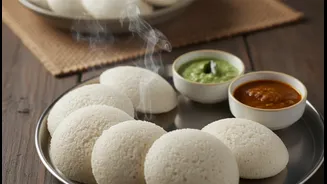
In an era where health consciousness is a driving market force, idli stands out. Unlike most fast-food options that are fried and heavy, idli is steamed, making it naturally low in calories and fat. Each piece is a balanced source of carbohydrates and plant-based
protein from its core ingredients: rice and urad dal. The crucial step of fermentation not only imparts a unique flavour but also enhances its nutritional profile. This process increases the bioavailability of B vitamins, makes the proteins easier to digest, and turns the idli into a probiotic-rich food that supports gut health and immunity. For a growing number of Indian consumers who are actively seeking high-fibre, low-fat, and clean-label products, the idli checks every box. It is a food that doesn't need a marketing spin to be perceived as healthy—it simply is.
Engineered for Speed and Scale
A key challenge for scaling any food business, especially for regional Indian cuisine, is maintaining consistency across outlets. This is where the idli's production process becomes a significant operational advantage for a QSR model. The core component, the batter, can be prepared in a centralized kitchen to ensure uniformity in taste and quality before being distributed to various outlets. This model has been successfully adopted by several existing South Indian food franchises. The final cooking process is steaming, which is fast, predictable, and requires less skilled labour compared to complex frying or grilling techniques. This streamlined workflow—centralized batter, quick steaming—minimizes variability and is perfectly suited for the rapid service and high-volume turnover that define the QSR industry. This operational simplicity directly translates to lower food wastage and easier staff training.
A Blank Canvas for Innovation
While traditional in its origins, the idli is remarkably versatile. It serves as a neutral, comforting base that can be adapted for diverse palates and occasions. QSRs can move beyond the classic idli-sambar combination and innovate with a variety of accompaniments like different chutneys, flavourful podis, or even fusion toppings. Some existing chains already offer dozens of idli varieties to cater to modern tastes. This adaptability allows a brand to create a broad menu that appeals to everyone from children to adults and can be positioned as an all-day food, suitable for breakfast, lunch, snacks, or a light dinner. This versatility is crucial for maximizing revenue throughout the day, a key factor for profitability in the competitive QSR space. The potential to offer stuffed idlis, mini idlis for kids, or protein-fortified versions further expands its market appeal.
Tapping Into a Proven Market
The demand for South Indian food isn't speculative; it's a massive, established market. Chains like Saravana Bhavan, Adyar Ananda Bhavan, and Sagar Ratna have demonstrated the immense popularity and profitability of this cuisine for decades. Furthermore, a new wave of QSR-focused brands like Idli Street and Idli Point are gaining traction by offering low-investment franchise models, proving the concept's viability in a modern format. The Indian QSR market is projected to grow significantly, reaching values between USD 47 billion and USD 17.7 billion by the early 2030s, with strong growth drivers in Tier-2 and Tier-3 cities. While international brands have localized their menus, there remains a huge opportunity for homegrown brands to capture the market with authentic, familiar, and healthy offerings that resonate deeply with Indian consumers.
Addressing the Operational Hurdles
Of course, scaling an idli-based QSR is not without challenges. Maintaining the freshness and precise fermentation level of the batter across a wide supply chain is a critical logistical hurdle. Competition from countless local eateries and the perception of idli as merely a breakfast item are also significant factors. However, technology offers solutions. Centralized, quality-controlled batter production, coupled with modern packaging and cold-chain logistics, can ensure consistency. As for perception, strategic marketing can position idli as a versatile, all-day meal. The success of delivery aggregators, which account for a substantial portion of revenue for many outlets, proves that consumers are eager to have their favourite comfort foods delivered with convenience, breaking traditional mealtime barriers.