




More Than a Meal, a Ritual
The Onam Sadhya is a banquet celebrating the harvest festival and the legendary King Mahabali's annual return. It’s a symbol of prosperity, gratitude, and togetherness, bringing families and communities around a shared meal that can feature over 25 dishes.
The entire experience, from preparation to eating, is steeped in tradition. It's a culinary marathon that represents Kerala's philosophy of harmony and hospitality. The meal is entirely vegetarian, showcasing the abundance of the harvest through a dazzling array of colours, textures, and tastes.
The Banana Leaf Canvas
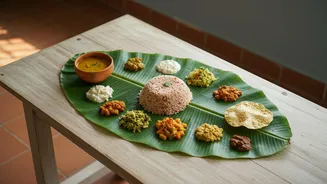
Your plate for this feast is a fresh banana leaf, or 'thoorashanila'. Traditionally, it’s placed with its narrow tip pointing to the left of the guest. This orientation has a purpose, creating a specific map for the servers to follow. The upper half of the leaf is reserved for all the side dishes and accompaniments, while the lower, wider half is for the rice and main curries. Beyond its rustic charm, the banana leaf is also said to contain natural antioxidants that are released by the warmth of the food, enhancing both flavour and health benefits.
The Opening Act: Sides and Pickles
The Sadhya service begins on the left side, with a pinch of salt. Then come the snacks: crispy banana chips (Upperi), and their sweet, jaggery-coated counterpart, Sharkara Varatti. These are followed by a variety of pickles and chutneys, like the tangy mango pickle (Manga Achar) and the essential Inji Puli, a sweet and sour ginger-tamarind chutney that aids digestion. Soon, the leaf is populated by an array of vegetable preparations known as 'Kootan'. You’ll find Avial (mixed vegetables in a coconut-yoghurt gravy), Thoran (a dry stir-fry of vegetables with grated coconut), and Olan (a mild stew of ash gourd in coconut milk).
The Main Event: Rice and Curries
Once the guests are seated, a mound of fluffy red Matta rice is served on the bottom half of the leaf. The first course begins with a ladle of Parippu, a simple lentil curry, enriched with a spoonful of fragrant ghee. This is followed by Sambar, the iconic lentil and vegetable stew, which is poured into a well made in the centre of the rice. Next comes Rasam, a thinner, peppery soup that cleanses the palate, and other yogurt-based curries like Kalan or Pulissery. Each curry is meant to be mixed with a portion of rice and enjoyed with the various side dishes.
The Sweet Finale: Payasam
No Sadhya is complete without Payasam, the dessert course. Often, two or three varieties are served. Common types include Palada Pradhaman, made with rice flakes and milk, and Parippu Pradhaman, a richer version made with lentils and jaggery. It is traditionally served directly onto the banana leaf. Many enjoy crushing a crispy pappadam into the sweet pudding, creating a delightful contrast of textures and flavours before the final course. A small, ripe banana is often served alongside to be mashed into the Payasam.
Sadhya Etiquette
The traditional way to enjoy a Sadhya is to eat with your right hand, using your fingers to mix the rice and curries. It’s a sensory experience that connects you to the food. A final serving of rice with buttermilk (Moru) concludes the meal, acting as a digestive. Once you have finished, it is customary to fold the banana leaf. To show your satisfaction and appreciation for the meal, you fold the top half of the leaf down, towards yourself. It’s a small but significant gesture to cap off this incredible feast.