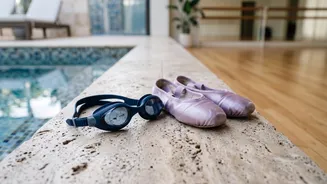





Tired of the treadmill? Finding an exercise routine you genuinely enjoy is the secret to staying consistent. Swimming and dancing are two fantastic options that feel less like a chore and more like fun, offering a host of health benefits.
The Case for Swimming: A Low-Impact Powerhouse
Swimming is celebrated
as a full-body workout that is remarkably gentle on the joints. As you move through the water, you engage nearly every major muscle group, from your core and back to your arms and legs. The water's resistance provides a strength-training effect without the jarring impact of land-based exercises, making it an ideal choice for people of all ages, including those with arthritis or mobility issues. It is also a powerful cardiovascular workout. Regular swimming can improve heart health, increase lung capacity, and help maintain a healthy weight. A person weighing around 70 kilograms can burn approximately 223 calories in 30 minutes of moderate swimming. The intensity is scalable; a leisurely pace offers a moderate workout, while swimming vigorous laps provides a much greater challenge.
The Joy of Dancing: A Rhythmic Heart Booster
Dancing is an incredibly effective way to get your heart pumping and improve your fitness, often without you even realising you're working out. Whether it's a high-energy Zumba class, a graceful ballet session, or simply moving to your favourite music at home, dancing boosts cardiovascular health by increasing heart rate and circulation. Unlike swimming, most forms of dance are weight-bearing, which helps to improve bone density and strength. It also enhances balance, coordination, and flexibility. The mental engagement required to learn steps and patterns also provides a cognitive workout, helping to keep your brain sharp. Studies have shown that some forms of high-intensity dance, like street or swing, can burn a significant number of calories, sometimes even more than swimming or cycling in the same amount of time.
Cardiovascular and Strength Benefits Compared
Both activities are excellent for cardiovascular fitness. Swimming provides a steady, rhythmic workout that improves endurance and heart health with minimal strain on the body. Dance, especially styles like salsa or hip-hop, can offer a high-intensity interval-style workout, strengthening the heart muscle. For muscle toning, swimming provides a comprehensive, all-over workout due to the water's resistance engaging muscles throughout the body. Dancing tends to target specific muscle groups more depending on the style. For example, ballet builds powerful leg and core strength, while other forms might focus more on hip and arm movements. A 2008 study even found professional ballet dancers scored higher on seven out of ten fitness measures compared to international swimmers, highlighting the intense physical demands of elite-level dance.
Mental and Emotional Well_being
Beyond the physical benefits, both swimming and dancing have a profound impact on mental health. The rhythmic, repetitive nature of swimming can be meditative, helping to reduce stress and anxiety. Being in water has been shown to increase blood flow to the brain, which can improve mood and concentration. Dancing offers a powerful emotional release through music and self_expression. It can lower levels of the stress hormone cortisol while boosting feel_good endorphins. The social aspect of group dance classes also fosters connection and combats loneliness, further enhancing mental well_being. A UCLA Health study found that 98% of participants in conscious dance reported an improved mood.
Which One Is Right for You?
Choosing between swimming and dancing often comes down to personal preference, accessibility, and specific fitness goals. If you are looking for a low_impact exercise that is easy on the joints, swimming is an unparalleled choice. It requires access to a pool, which can be a barrier for some. Dancing, on the other hand, can be done almost anywhere. While classes offer structure and social connection, you can just as easily have a beneficial workout in your living room. If your goal is to improve bone density or you thrive in a high_energy, social environment, dance might be the more appealing option. Both can be adapted for any fitness level, from a gentle, moderate activity to a vigorous, challenging workout.