






A Monsoon Running Late
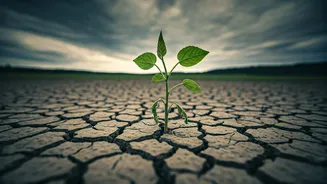
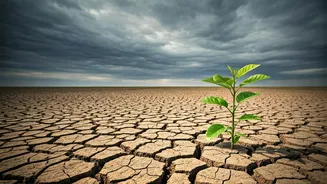
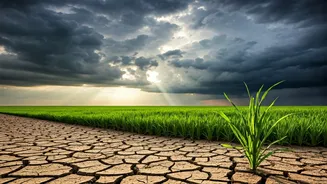
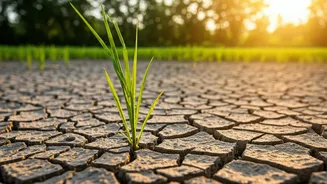
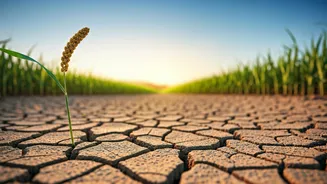
The Southwest monsoon, the lifeblood for over half of India's farmland, is off to a shaky start in 2026. As of late June, rainfall across the country is significantly below normal—by as much as 41% according to recent data. This delay, intensified by a strengthening
El Niño phenomenon, has slowed the monsoon's advance across crucial agricultural belts in central and western India. The India Meteorological Department (IMD) has forecast a below-normal season, projecting rainfall at around 90% of the long-period average. This creates uncertainty during the critical Kharif sowing period, when farmers plant essential crops like rice, pulses, and oilseeds.
The Field-to-Kitchen Ripple Effect
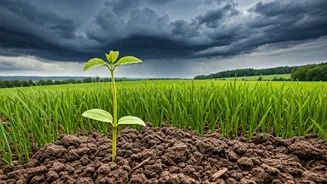
Delayed rains mean delayed sowing. Without adequate soil moisture, seeds cannot germinate properly, forcing farmers to postpone planting to avoid losses. The current deficit has already hit sowing activities for paddy, cotton, pulses, and key vegetables. In Maharashtra, for instance, paddy transplantation is far behind schedule. This initial disruption has a cascading effect. A delayed start can shrink the total area under cultivation, and even if rains pick up later, a compressed growing season can lead to lower yields. With roughly 55-60% of India's sown area being rain-fed, millions of farmers' decisions—and the nation's food supply—are hostage to the monsoon's performance.
Spotlight on Your Shopping Trolley
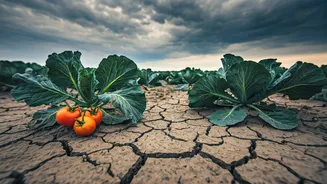
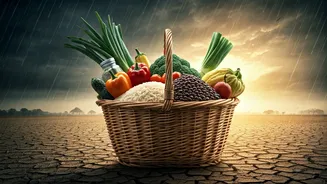
This uncertainty in the fields translates directly to volatility at the checkout counter. The prices of everyday essentials are highly sensitive to monsoon performance. Vegetables, which have shorter cycles and are often grown in rain-fed areas, are the first to react. Recent data from June 2026 already shows an uptick in the prices of tomatoes, potatoes, and onions. One report from May noted a staggering 48.4% acceleration in tomato prices due to summer heat, a problem that erratic rains can worsen. Pulses (dal) and oilseeds are also highly vulnerable. The government has flagged that a continued deficit will likely impact pulse and oilseed crops in states like Karnataka and Maharashtra. Even before the full impact of the delayed monsoon is felt, food inflation has been a concern, with the Consumer Food Price Index rising by 4.8% in May 2026.
More Than Just Missing Rain
The impact of changing rainfall isn't just about deficits. Increasingly, it's about volatility. Climate change is making rainfall patterns more erratic, leading to long dry spells punctuated by intense downpours. This 'uneven distribution' is sometimes more damaging than a simple deficit. A burst of heavy rain after a dry spell can lead to flash floods, which can destroy standing crops and damage infrastructure like roads and warehouses. This disrupts supply chains, creating bottlenecks that prevent produce from reaching markets efficiently and adding another layer of cost that is ultimately passed on to consumers. These climate shocks create a cycle of lower production, supply disruption, and price volatility, making household budgets more vulnerable.
Government on Alert
The government is closely monitoring the situation. With the memory of past monsoon failures and their impact on inflation, contingency plans are being activated. Agriculture Minister Shivraj Singh Chouhan has noted the risk, identifying over 300 districts that could face deficient rainfall, with 111 of them being particularly vulnerable due to low irrigation coverage. These plans involve advising farmers on alternate, less water-intensive crops and ensuring the availability of drought-tolerant seeds. In the background, the Reserve Bank of India is also watching closely. Food prices are the largest component of India's inflation basket, and a sharp, sustained rise could force it to reconsider its monetary policy stance later in the year.