







The Arrival of a New Rocket
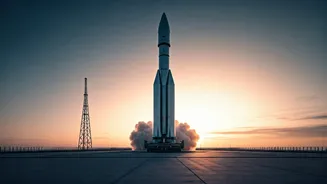
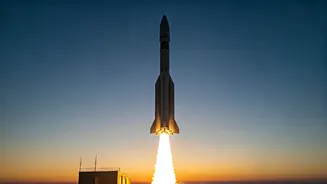
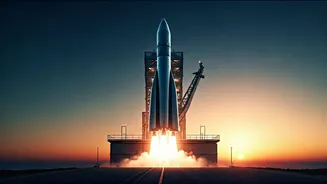
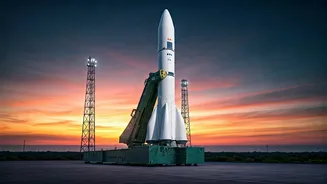
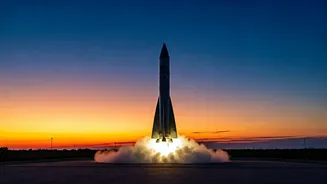
Hyderabad-based startup Skyroot Aerospace is on the cusp of history with its Vikram-1 rocket. The launch window for its maiden test flight, named 'Mission Aagaman' (Sanskrit for 'Arrival'), is set between July 12 and August 4, 2026. This isn't just another
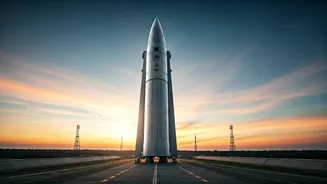
launch; it's slated to be India's first-ever privately developed orbital-class rocket launch. Founded in 2018 by former ISRO scientists Pawan Kumar Chandana and Naga Bharath Daka, Skyroot aims to do for space what private airlines did for travel. The company made headlines in November 2022 with Vikram-S, the first private rocket to reach space from Indian soil on a suborbital flight. Now, the seven-storey tall Vikram-1 represents a much larger leap, designed to place satellites weighing up to 350 kg into Low Earth Orbit. A successful mission would place Skyroot in a small, elite group of global companies capable of building and operating their own orbital rockets.
Innovation at its Core
What makes Vikram-1 a potential game-changer? The answer lies in its design and manufacturing. The rocket features an all-carbon composite structure, making it incredibly lightweight yet strong. It is powered by a combination of in-house propulsion systems, including advanced 3D-printed engines and high-thrust solid rocket motors. This approach, leveraging modern manufacturing techniques like 3D printing, dramatically reduces production time and costs—key factors in the competitive small satellite launch market. Skyroot’s goal is to provide reliable, frequent, and on-demand access to orbit, a service that many satellite operators currently find themselves waiting a long time for. By developing this technology entirely in India, the company is not just building a rocket; it's building a cost-effective “Uber for space,” as one co-founder described it.
A Policy Shift Opens the Door
Skyroot's rise would not have been possible without a monumental shift in government policy. For decades, the Indian space program was the exclusive domain of the state-run ISRO. That changed in 2020 when the sector was opened to private participation. This reform led to the creation of the Indian National Space Promotion and Authorisation Centre (IN-SPACe), a single-window agency designed to facilitate and regulate the activities of private space companies. IN-SPACe acts as a bridge, allowing startups like Skyroot to use ISRO's world-class infrastructure, including testing facilities and launchpads. This asset-light model, where private companies don't have to build everything from scratch, has been crucial in accelerating development. The Indian Space Policy 2023 further solidified this framework, even allowing 100% FDI in satellite manufacturing to attract investment and foster a self-reliant ecosystem.
A Galaxy of Opportunity
Vikram-1's success is about more than one company. It's a powerful proof of concept for India's entire private space ecosystem. There are now over 400 registered space startups in India, up from just a handful before the 2020 reforms. Companies like Chennai-based Agnikul Cosmos, which launched the world's first rocket with a single-piece 3D-printed engine, are also pushing boundaries. Others, such as Pixxel and Dhruva Space, are focused on building and operating satellites. The success of pioneers like Skyroot and Agnikul validates the market, de-risks the sector for investors, and creates a ripple effect. It demonstrates that building complex 'deep tech' products in India is not just possible, but commercially viable. This is crucial for attracting both domestic and global capital, which is essential for these long-gestation, high-capex ventures.
Launching a Legacy of Inspiration
Perhaps the most significant impact of Vikram-1 will be on human capital. A successful homegrown orbital rocket company, built by Indian engineers and backed by global investors, sends a powerful message to students, engineers, and aspiring entrepreneurs across the nation. It shatters the notion that pioneering space technology is reserved for government agencies or Silicon Valley giants. The launch of Vikram-1 could be India's 'SpaceX moment,' igniting the imaginations of a new generation to found their own ventures, whether in launch vehicles, satellite constellations, or downstream data analytics. This creates a virtuous cycle: success attracts talent, which in turn fuels further innovation and growth, helping to reverse brain drain and establish India as a global hub for space technology.