



The Sun’s Unseen Temper
Most of the time, the Sun is a reliable source of light and energy. But it also has a turbulent side. It constantly releases a stream of charged particles called the solar wind. Occasionally, it erupts with much greater force, sending out solar flares—intense
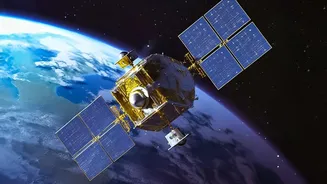
bursts of radiation that reach Earth in just eight minutes—and coronal mass ejections (CMEs), which are giant clouds of solar plasma and magnetic fields that take one to three days to arrive. When these eruptions are directed at Earth, they can cause significant disturbances known as space weather. While our planet's magnetic field and atmosphere protect us on the ground, the satellites orbiting above are far more exposed to this solar onslaught.
Satellites in the Firing Line
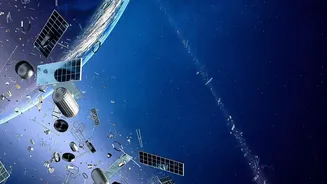
Space weather poses a multi-faceted threat to the thousands of satellites our economy relies on. Intense radiation from solar flares can damage sensitive electronics and degrade solar panels, shortening a satellite's operational lifespan. Furthermore, when a CME slams into Earth's magnetic field, it can heat and expand our upper atmosphere. This increases the atmospheric drag on satellites in low-Earth orbit, causing them to slow down and lose altitude. In a dramatic example from 2022, a relatively minor solar storm caused 40 newly launched Starlink satellites to fall out of orbit and burn up because they couldn't overcome the increased drag. These events also disrupt the radio signals used for GPS, potentially causing errors ranging from a few meters to a total signal loss, affecting industries like aviation, shipping, and farming.
The Challenge of Forecasting
Predicting space weather is incredibly difficult. Currently, forecasters rely on spacecraft like those at the Sun-Earth L1 Lagrange point, which sits about 1.5 million kilometres from Earth. While this provides crucial data, it often gives operators only 15 to 60 minutes of warning before a solar storm hits—not enough time to take significant preventative action. With the Sun currently in a period of high activity, known as a solar maximum, the frequency and intensity of these events are increasing, making the need for better forecasting more urgent than ever. A severe space weather event has the potential to cause trillions of dollars in economic damage, highlighting the massive financial stakes involved.
A New Generation of Sentinels
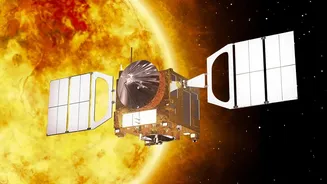
To get ahead of the storm, space agencies are developing a new generation of missions. The European Space Agency's (ESA) Vigil mission, planned for a 2031 launch, will be a game-changer. It will be positioned at the L5 Lagrange point, a unique spot that allows it to see the side of the Sun days before it rotates to face Earth. This different vantage point will provide an unprecedented four- to five-day warning for some solar events, giving satellite operators and grid managers crucial time to protect their assets. Other missions, like the UK-built MAGIC instrument on the HENON CubeSat, aim to measure the solar wind much farther upstream from Earth, extending warnings from minutes to hours.
The Power of Artificial Intelligence
Alongside new hardware in space, scientists are harnessing the power of artificial intelligence on the ground. Researchers are developing AI models trained on vast archives of solar imagery from observatories like NASA's Solar Dynamics Observatory. These AI systems learn to recognize subtle patterns in the Sun's magnetic field and atmosphere that precede solar flares and CMEs. One model, named Surya, has already shown it can predict solar flares with greater accuracy than previous methods. Other AI systems are proving adept at forecasting solar wind speeds up to four days out, a significant improvement on current capabilities. By integrating these AI-driven forecasts with data from new satellites, scientists hope to build a comprehensive and much more reliable space weather warning system.