







The Case for More Reps
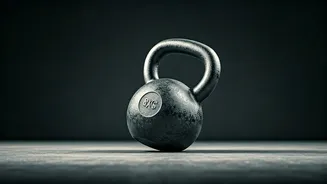
Let’s start with the gym. Every time you lift a weight, you're creating microscopic tears in your muscle fibers. The process of repairing these tears is what makes muscles grow back stronger. This is the fundamental principle of resistance training, often
called progressive overload. To keep getting stronger, you need to consistently challenge your muscles with more repetitions, more weight, or more challenging exercises. Reps are the direct stimulus that tells your body it needs to adapt and build muscle. Without this stimulus, your muscles have no reason to grow. This is why a consistent training schedule is a non-negotiable part of any strength or muscle-building plan.
The Unseen Power of Sleep
While the gym is where you create the signal for muscle growth, the actual building happens while you sleep. Sleep is not a passive state of doing nothing; it's a highly active period of physical and mental restoration. During deep sleep, your body releases the majority of its daily Human Growth Hormone (HGH). This hormone is absolutely critical for repairing those muscle tears you created during your workout. Sleep is also when your body replenishes its energy stores (glycogen) and facilitates muscle protein synthesis—the process of turning the protein you eat into new muscle tissue. In short, reps break the muscle down, and sleep builds it back up stronger than before.
When Sleep and Reps Clash
So, what happens when you’re sleep-deprived but it’s a training day? Pushing through a workout on little sleep can do more harm than good. When you're tired, your form is more likely to falter, significantly increasing your risk of injury. Your performance also takes a direct hit. Studies show that sleep deprivation reduces strength, power, and the number of reps you can complete. It also increases your perceived exertion, meaning the same weight feels much heavier than it normally would. Furthermore, a lack of sleep elevates cortisol, a stress hormone that can promote muscle breakdown, effectively working against your fitness goals. You might get the workout done, but your body won't get the full benefit and your recovery will be compromised.
The Verdict: Which One Wins?
If you have to choose between an extra hour of sleep and a workout, sleep should almost always be the priority. Think of it this way: a workout on poor sleep is like trying to build a house on a shaky foundation. The work you put in won't be as effective, and you risk a setback. Prioritizing sleep ensures your body has the hormonal environment and restorative capacity to actually benefit from your training. The relationship isn't truly 'versus,' but a partnership. However, if that partnership is strained on any given day, honouring your body’s need for rest is the smarter long-term strategy for consistent progress. Getting enough sleep actually makes you more likely to be physically active the next day.
Your Smart Training Scenarios
Navigating this in the real world can be tricky. Here’s a simple guide for different scenarios: If you slept 5 hours or less: This is a clear signal to prioritize rest. Skip the high-intensity workout. Forcing a heavy session increases your injury risk and puts your body under excessive stress. If you feel you must move, opt for very light activity like a gentle walk or stretching. Otherwise, getting that extra sleep is the best choice. If you slept around 6 hours: You are in a grey area. Listen to your body. You might not perform at your peak, but a workout is possible. Consider reducing the intensity or volume of your planned session. For example, use slightly lighter weights or do fewer sets. Some research suggests that even on reduced sleep, exercise can help maintain muscle-building processes. If you consistently sacrifice sleep for workouts: This is a sign that your schedule needs a rethink. Chronic sleep deprivation will stall your progress and can lead to burnout. Instead of forcing early morning workouts, see if you can train during your lunch break or in the evening. Just be sure to avoid very high-intensity exercise within a few hours of bedtime, as it can interfere with your ability to fall asleep.