





The Truth About 'Effortless' Endurance
Let's address the 'effortless' part first. While a wall sit doesn't require you to run, jump, or lift heavy weights, anyone who has held the position for more than 30 seconds knows it is far from zero effort. The appeal lies in its simplicity and accessibility.
It’s an exercise you can do almost anywhere with no equipment other than a sturdy wall. The 'effortless' aspect is better understood as being low-impact and mechanically simple, not requiring dynamic movement, which makes it an excellent option for strengthening leg muscles without putting stress on joints like knees and hips. This makes it a powerhouse exercise for nearly all fitness levels.
The Science of Stillness: What is Isometrics?
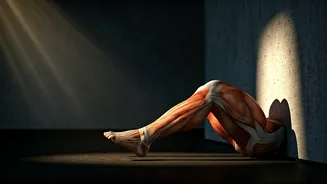
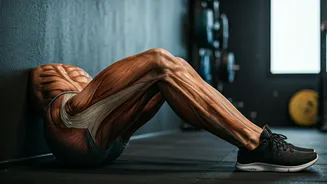
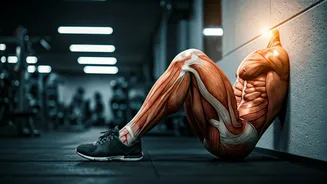
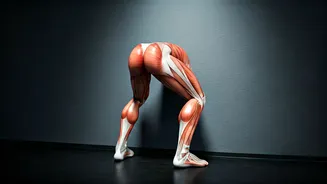
A wall sit is a form of isometric exercise. This means the muscles contract and are put under tension, but they don't change in length, and the nearby joints don't move. Think of holding a plank or carrying a heavy suitcase—your muscles are firing to hold the position, but you aren't moving. This static contraction is incredibly effective for building muscular endurance, which is the ability of a muscle to exert force consistently and for an extended period. By holding the wall sit, you are training your leg muscles, particularly the quadriceps, glutes, and hamstrings, to stay contracted and stable under stress for longer stretches of time.
How to Perform the Perfect Wall Sit
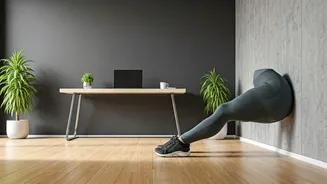
Proper form is crucial to maximize benefits and prevent injury. It's not just about leaning against a wall and squatting. Here's a step-by-step guide: 1. Get in Position: Stand with your back flat against a wall. Walk your feet out about two feet from the wall, keeping them shoulder-width apart. 2. Slide Down: Slowly slide your back down the wall until your thighs are parallel to the floor, as if you're sitting in an invisible chair. Your goal is to create a 90-degree angle at your hips and your knees. 3. Check Your Knees: Ensure your knees are directly above your ankles, not extending past your toes. This alignment protects your knee joints. 4. Engage Your Core: Keep your back, shoulders, and the back of your head pressed firmly against the wall. Engage your abdominal muscles to help keep your lower back flat against the wall. 5. Hold and Breathe: Keep your weight in your heels and hold the position. Breathe steadily. Start with a 20-30 second hold and aim to increase the time as you get stronger.
Common Mistakes to Avoid
To get the most out of your wall sit, be mindful of these common errors: * Not Sitting Low Enough: A frequent mistake is not reaching the 90-degree knee angle, which reduces the exercise's effectiveness. Your thighs should be parallel to the floor. * Incorrect Foot Placement: Placing feet too close to the wall puts stress on your knees, while placing them too far out makes the exercise too easy. Your shins should be roughly vertical. * Letting Knees Drift: Don't let your knees cave inward or splay outward. Keep them aligned with your hips and ankles. * Pushing on Your Thighs: Avoid the temptation to rest your hands on your knees or thighs. This takes tension off the leg muscles and cheats the exercise. Cross your arms over your chest or let them hang by your sides.
Building Endurance: Progression and Variations
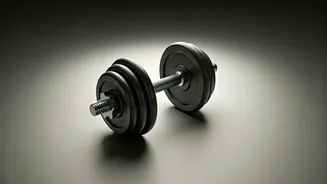
The key to building endurance is progressive overload. Once you can comfortably hold a basic wall sit for a minute, it's time to increase the challenge. You can do this by simply holding the position for longer periods. For more advanced challenges, try these variations: * Add Weight: Hold a dumbbell or weight plate on your lap to increase the resistance on your legs. * Single-Leg Wall Sit: From the wall sit position, extend one leg straight out in front of you. This dramatically increases the load on the supporting leg and challenges your core stability. * Calf Raise Wall Sit: While holding the sit, lift your heels off the floor to engage your calf muscles. * Ball Squeeze: Place a small ball or rolled-up towel between your knees and squeeze it to engage your inner thigh muscles (adductors).