


The Grandeur of the Rajasthani Thali
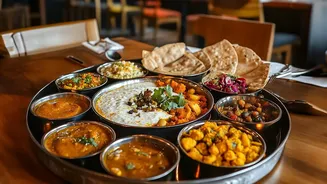
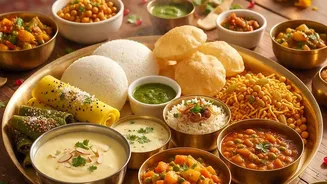
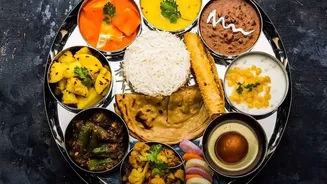
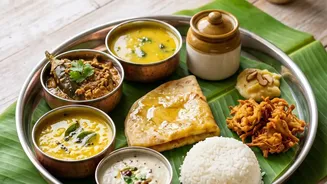
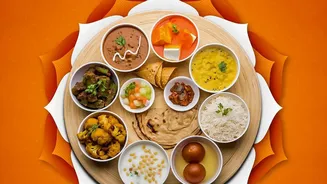
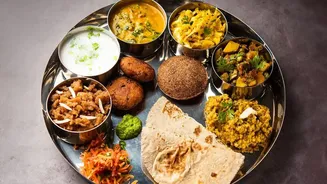
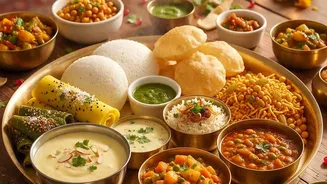
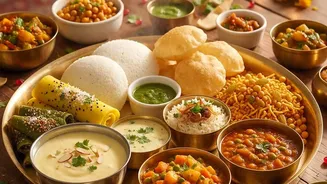
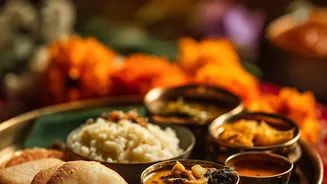
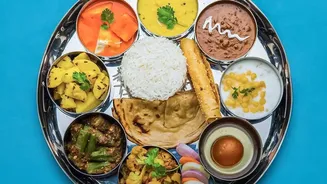
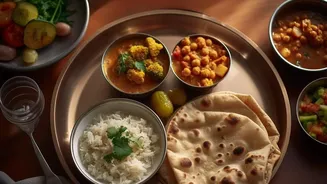
The Rajasthani thali is more than a meal; it's a platter of history and culture served in a dazzling array of small bowls called 'katoris'. Shaped by the region's arid climate and martial history, the traditional thali is a masterclass in balance, bringing
together bold spices, rich textures, and surprising flavours. While non-vegetarian options like Laal Maas exist, the heart of the thali experience is vegetarian, a reflection of the state's prevalent dietary traditions. Expect a complete meal that combines lentils, gram flour preparations, local vegetables, and various breads, all designed to provide a wholesome, satisfying experience.
Decoding the Main Attractions
At the centre of any authentic thali is Dal Baati Churma. This isn't just one dish, but a trio of preparations that form Rajasthan's culinary identity. The 'baati' is a hard, unleavened bread ball, traditionally baked in the desert sand by soldiers. It is broken up, drenched in ghee, and eaten with 'dal', a spicy lentil curry. The 'churma' is a delightful accident of history, created when a cook mistakenly added sugarcane juice to baatis, resulting in a sweet, crumbly dessert. Alongside this, you'll likely find Gatte ki Sabzi (gram flour dumplings in a tangy yoghurt curry) and Ker Sangri, a unique dish made from desert beans and berries that is emblematic of the local landscape.
A Journey Through Street-Side Savouries
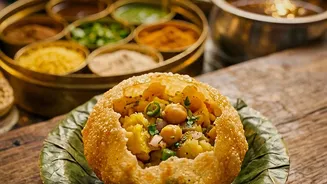
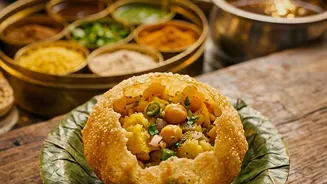
Once you've had your fill of royal platters, it's time to hit the streets. Rajasthan's cities, particularly Jaipur and Jodhpur, offer a parallel universe of flavour in their bustling bazaars. In Jaipur, the Pyaaz ki Kachori is king—a deep-fried pastry filled with a spicy onion mixture. Shops like Rawat Mishthan Bhandar and Sodhani Sweets are local legends, each with its own loyal following. Head to Jodhpur, and the snack of choice is the Mirchi Bada. It consists of a large, relatively mild green chilli stuffed with a spiced potato filling, coated in gram flour batter, and fried. It's a fiery, flavourful bite that perfectly encapsulates the city's love for spice.
The Essential Street Food Stops
The street food adventure doesn't end with a single snack. In Jaipur's walled city, you can find everything from spicy chaat to refreshing kulfi. A morning often starts with a hot cup of chai from a specialist like Sahu Chai Wala, where tea is brewed over coals. In Jodhpur, the area around the Ghanta Ghar (Clock Tower) is a food hub where you can find delicious Dahi Vada and the city's famous Makhaniya Lassi, a rich, creamy yoghurt drink served at institutions like Shri Mishrilal Hotel since 1927. These spots are not just eateries; they are cultural landmarks where locals have gathered for generations.
Sweet Endings: Ghevar and Other Delights
No Rajasthani food tour is complete without indulging in its sweets. The most iconic is Ghevar, a disc-shaped sweet cake with a honeycomb texture, made from flour and ghee before being soaked in sugar syrup. Traditionally associated with festivals like Teej and Raksha Bandhan, this dessert is a work of art, often garnished with nuts or topped with a layer of sweetened, thickened milk known as rabri. While Ghevar is a must-try, especially during the monsoon season, keep an eye out for other sweets like Malpua (small, syrup-soaked pancakes) that are equally beloved across the state.