






From Complexity to Clarity
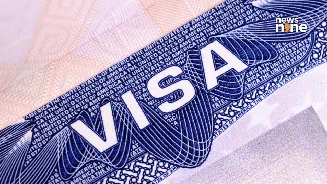
For years, prospective visitors to India navigated a complicated web of visa options. At its peak, the system featured 22 main categories and over 60 sub-categories, often leading to confusion for applicants trying to select the correct one. This complexity
could be daunting for tourists, business professionals, and students alike. In a move to boost tourism, trade, and overall accessibility, the Indian government has undertaken a significant simplification process. In a recent overhaul announced by the Ministry of Home Affairs, the framework has been condensed to just nine main visa categories, with sub-categories also being sharply reduced.
The New Nine: A Simpler Framework
The new system is designed to be more intuitive, grouping travel purposes logically. The nine streamlined categories are: Visitor Visa, Business Visa, Student Visa, Work Visa, Medical Visa, Diplomatic Visa, Official Visa, Journalist Visa, and a Miscellaneous Visa for cases not covered elsewhere. This restructuring aims to make it easier for applicants to identify the appropriate visa, reducing the chances of errors and delays. Furthermore, the government has also cut the number of fields in the application forms by up to 70%, drastically simplifying the paperwork involved.
Visitor Visa Replaces Tourist Visa
One of the most significant changes is the rebranding of the 'Tourist Visa' to the more comprehensive 'Visitor Visa'. This new category acknowledges that visitors come to India for a variety of short-term reasons beyond pure tourism. It is divided into two sub-categories: the V-1 visa, a 30-day multiple-entry visa for activities like tourism, brief business meetings, wellness retreats, or short courses; and the V-2 visa, for longer-term visits of one, five, or ten years, which also covers mountaineering.
Streamlined Paths for Business and Study
The Business and Student visa categories have also been reorganized for greater clarity. The Business Visa is now split into B_1, for long_term ventures like setting up a company, and B_2, for short_term contractual work, conferences, and even film shoots. Similarly, the Student Visa has two main streams: S_1 for school and university education, and S_2 for research, PhD programs, and internships. These clear distinctions help applicants match their specific purpose to the correct visa with ease.
A Boost for Medical Travel
India is a major destination for medical value travel, and the new visa rules support this. The Medical Visa category now has clear streams for conventional treatment (M_1) and AYUSH (traditional Indian medicine) systems (M_3). These visas will typically be granted for one year with multiple entries, giving patients and their families more predictability and flexibility during the course of treatment. Corresponding visas for medical attendants (M_2 and M_4) are also clearly defined, simplifying the process for those accompanying patients.