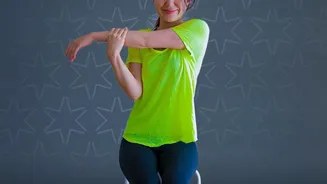






1. Neck Side-to-Side Tilts
To counteract the strain from looking at a screen, this gentle stretch can provide immediate relief. Sit up tall with your shoulders relaxed and down, away from your ears. Slowly tilt your right ear toward your right shoulder, holding for 15 to 30 seconds.
You should feel a light stretch along the left side of your neck. Be careful not to raise your shoulder to meet your ear. Return to the center and repeat on the left side. This simple move helps release tension and improve flexibility in the cervical spine.
2. Shoulder Shrugs and Rolls
Hunching over a keyboard often causes tension to build up in the upper trapezius muscles. To combat this, perform shoulder shrugs and rolls. While seated or standing, inhale and lift your shoulders up toward your ears, squeezing them tightly for a moment. Exhale and release, allowing your shoulders to drop. Follow this by slowly rolling your shoulders backward in a circular motion for 10-15 seconds, then reverse the direction and roll them forward. This exercise boosts circulation and helps reset your posture.
3. Seated Torso Twist
Sitting for prolonged periods can make your spine feel stiff and compressed. A seated twist can help mobilize your back. Sit tall in your chair with both feet flat on the floor. Gently twist your upper body to the left, placing your right hand on your left knee for leverage. You can also use your left hand to hold the back or arm of the chair to deepen the stretch. Hold for 15-30 seconds, breathing throughout the movement, before slowly returning to the center and repeating on the other side.
4. Upper Back and Chest Opener
To counteract the rounded-shoulder posture common among desk workers, a chest opener is essential. You can do this in two ways. First, stretch your upper back by extending your arms forward, interlacing your fingers, and rounding your back as you press your palms away from you. Next, to open the chest, clasp your hands behind your back. Straighten your arms and gently lift your hands away from your body, squeezing your shoulder blades together and puffing out your chest. Hold for 15-30 seconds.
5. Wrist and Forearm Stretch
Constant typing and mouse use can lead to sore wrists and forearms. To stretch them, extend one arm in front of you with the palm facing up. With your other hand, gently bend your wrist down, pulling your fingers toward your body until you feel a stretch in the forearm. Hold for about 15 seconds. Then, flip your hand so the palm faces down and gently pull your fingers toward you again. Repeat on the other arm. This helps prevent repetitive strain issues.
6. Seated Figure-Four Stretch
Your hips and glutes can become extremely tight from sitting all day, which can contribute to lower back pain. The figure-four stretch targets these muscles effectively. While seated, cross your right ankle over your left knee, keeping your right foot flexed to protect the knee. Sit up straight and, if you need a deeper stretch, gently lean forward with a flat back until you feel a pull in your right glute and hip. Hold for 30-45 seconds, then switch legs.
7. Seated Hip Flexor Stretch
The muscles at the front of your hips, known as hip flexors, become short and tight from prolonged sitting. To stretch them, shuffle to the edge of your chair. Extend your right leg straight back, keeping your left foot flat on the floor with your knee bent. You should feel a stretch along the front of your right hip and thigh. Keep your back straight and your core engaged. Hold the position for about 30 seconds before switching to the other side.