






The Pothole Problem We All Know
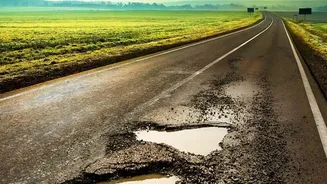
Every driver in India knows the jarring experience of hitting a pothole. These craters are more than just an annoyance; they damage vehicles, slow traffic to a crawl, and can lead to accidents. The problem intensifies dramatically during and after the rainy
season. Water seeps into small, existing cracks in the asphalt. The pressure from passing vehicles then forces the water to expand the cracks, breaking down the road's structure and creating larger potholes. This cycle of damage and repair is costly for civic authorities and endlessly frustrating for the public. Traditional road maintenance involves patching or resurfacing, which causes significant traffic disruption and consumes vast amounts of materials and energy. This constant state of repair highlights the need for a more resilient and sustainable solution.
The Science of Self-Healing Roads
Enter self-healing asphalt, a revolutionary approach to road construction. Instead of waiting for damage to become severe, this technology embeds a repair mechanism directly into the road material itself. The core idea is to stop micro-cracks before they evolve into potholes. Several methods exist, but one of the most promising involves bio-engineered binders. Scientists have developed tiny microcapsules containing a 'rejuvenating agent'—often a type of oil. These capsules are mixed into the asphalt during production. When a micro-crack forms due to stress from traffic or temperature changes, it ruptures nearby capsules. The released agent then flows into the crack, softening the surrounding aged bitumen (the 'glue' in asphalt) and allowing it to bind back together, effectively healing the damage.
How Rain Becomes an Ally
While rain is typically the enemy of conventional roads, some self-healing technologies cleverly use moisture to their advantage. One innovative method uses bio-binders made from materials like calcium alginate, a substance derived from seaweed. These binders can be designed to encapsulate a healing agent. In some systems, the presence of water itself acts as a trigger. For instance, technologies involving superabsorbent polymers work by absorbing moisture from rain and swelling to fill cracks, a process that promotes internal hydration and self-sealing. Another approach involves embedding specific bacteria within the asphalt that, when exposed to water and air from a crack, produce calcium carbonate—essentially limestone—which naturally fills and seals the fissure. In these systems, a rainfall that would normally worsen road damage instead initiates the repair process.
The Benefits for Indian Cities
The potential advantages for India's bustling urban centres are enormous. By autonomously repairing minor damage, self-healing asphalt can significantly extend the lifespan of roads, possibly even doubling it. This leads to substantial long-term cost savings, as the need for frequent and disruptive repair work diminishes. Fewer road closures and construction zones mean smoother traffic flow and less congestion. Environmentally, the benefits are also compelling. Longer-lasting roads reduce the demand for raw materials like bitumen, a petroleum product, and cut down on the energy consumption and carbon emissions associated with constant repair cycles. This aligns perfectly with goals for creating smarter, more sustainable cities that can better withstand the pressures of heavy traffic and harsh weather conditions.
The Road Ahead for Healing Highways
While the technology is incredibly promising, widespread adoption still faces hurdles. The initial installation cost of self-healing asphalt can be higher than conventional mixes, though this is often offset by dramatically lower long-term maintenance costs. Researchers are continuously working to optimize the formulas, making the healing agents more efficient and the capsules more durable to survive the harsh asphalt mixing and paving process. Pilot projects in various parts of the world are demonstrating the real-world effectiveness of these materials, gathering crucial data on their performance under different traffic loads and climates. As the technology matures and scales up, costs are expected to decrease, making it a more viable and competitive option for road authorities globally.