

What is a Planetary Opposition?
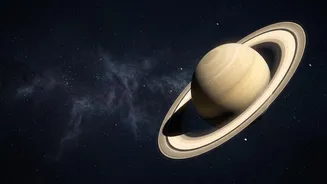
On October 4, 2026, Saturn reached opposition. This is a special alignment that happens roughly once a year when Earth passes directly between the sun and Saturn. Think of it like a celestial straight line: Sun-Earth-Saturn. From our viewpoint, Saturn is on the opposite
side of the sky from the sun. This alignment does two things: it means Saturn is at its closest point to Earth for the year, making it appear larger and brighter than usual. It also means the planet rises in the east around sunset, stays visible all night long, and sets in the west around sunrise.
Why Now Is Still the Perfect Time to Look
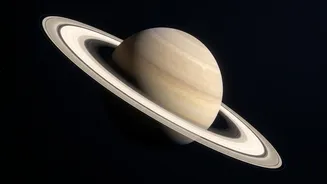
While opposition marks the peak moment, Saturn doesn’t just fade away the next day. Because it moves so slowly in its orbit, the planet remains a brilliant object for weeks before and after the event. Throughout October, Saturn will continue to be exceptionally well-placed for viewing. In fact, this period is a fantastic opportunity for stargazers because the planet is still near its brightest and visible for most of the night. Adding to the spectacle, Saturn's famous rings, which appeared nearly edge-on and invisible in 2025, are now tilted towards us again, making them much easier to see.
Finding Saturn in the Night Sky
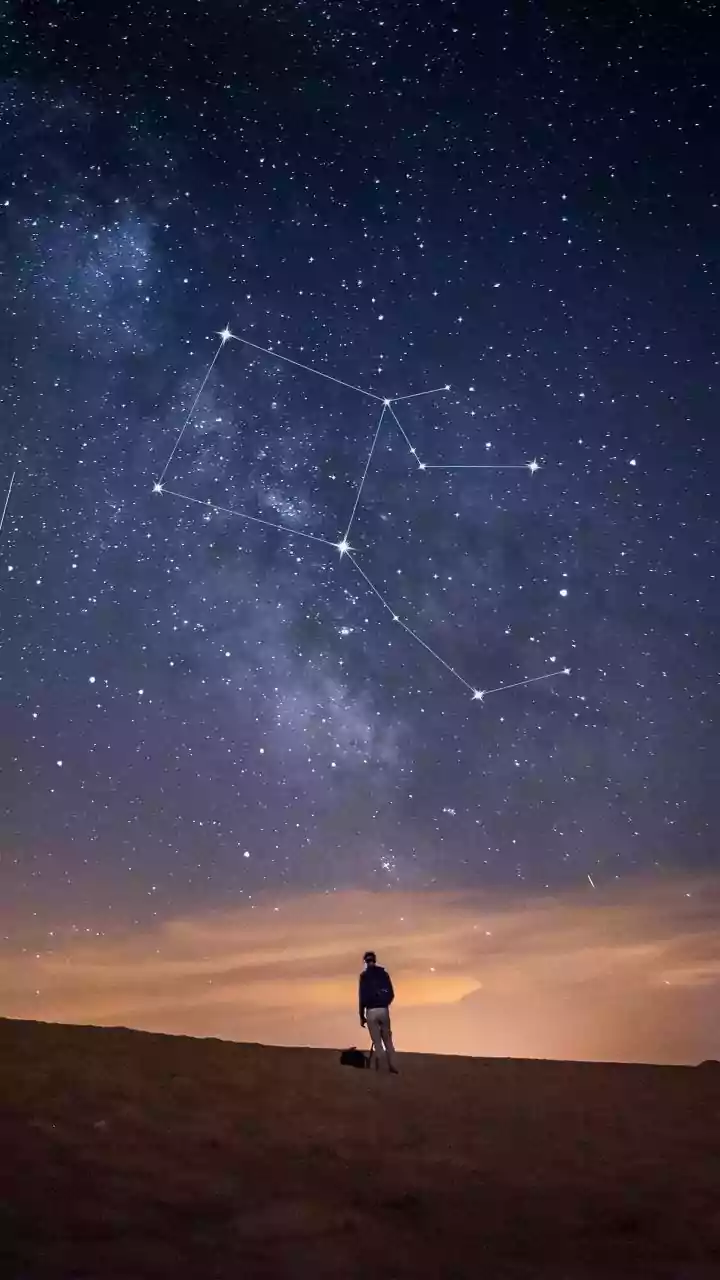
You don't need to be an expert to locate Saturn. It's bright enough to be seen with the naked eye, even from areas with some light pollution. Look towards the eastern sky after sunset. Saturn will appear as a bright, steady, golden-hued point of light. Unlike stars, which twinkle due to atmospheric disturbance, planets tend to shine with a more constant light. This month, you can find Saturn in the constellation Cetus, the Whale, near its border with Pisces. It will be the brightest object in that patch of sky. For extra help, stargazing apps like Stellarium or Sky Guide can point you in the exact direction.
What You Can See With Binoculars
If you have a pair of binoculars, they can enhance your view. While they won't be powerful enough to clearly resolve the rings as a separate structure, they will make Saturn's golden color more vivid. You might also notice that the planet appears slightly oval or elongated, which is the combined shape of the planet and its rings. Binoculars are a great starting point and help you get a feel for locating celestial objects before moving on to a telescope. They can also reveal some of Saturn's brightest moons, like Titan, which will look like a faint star very close to the planet.
Using a Telescope for the Best View
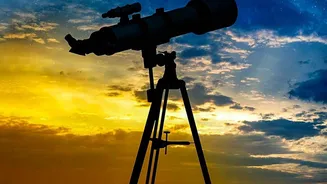
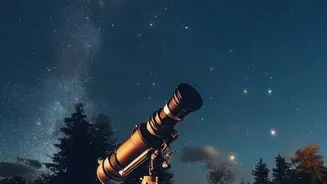
To truly witness the sight that wows so many first-time observers, you’ll need a telescope. But you don't need a professional setup; even a small telescope with at least 50mm aperture and 25x magnification can reveal the rings. A larger telescope, perhaps 4 to 6 inches in aperture, will provide a much clearer view, allowing you to see the gap between the planet and its rings. On a clear, steady night, you might even spot the Cassini Division, a dark gap that separates the main rings. The view of the rings appearing as a distinct, three-dimensional structure floating around the planet is an unforgettable experience.
Tips for the Best Stargazing Experience
To make the most of your Saturn-gazing session, a few simple preparations can go a long way. First, find a location away from bright city lights if possible. While Saturn is bright, darker skies will always improve the view. Second, give your eyes about 20-30 minutes to fully adapt to the darkness; this will allow you to see much fainter details. Avoid looking at your bright phone screen, as it can ruin your night vision. Finally, check the weather forecast for a clear night and be patient. Wait for Saturn to climb higher in the sky, as this reduces the amount of turbulent atmosphere you have to look through, resulting in a sharper view.