





From Nature’s Light to Urban Labs
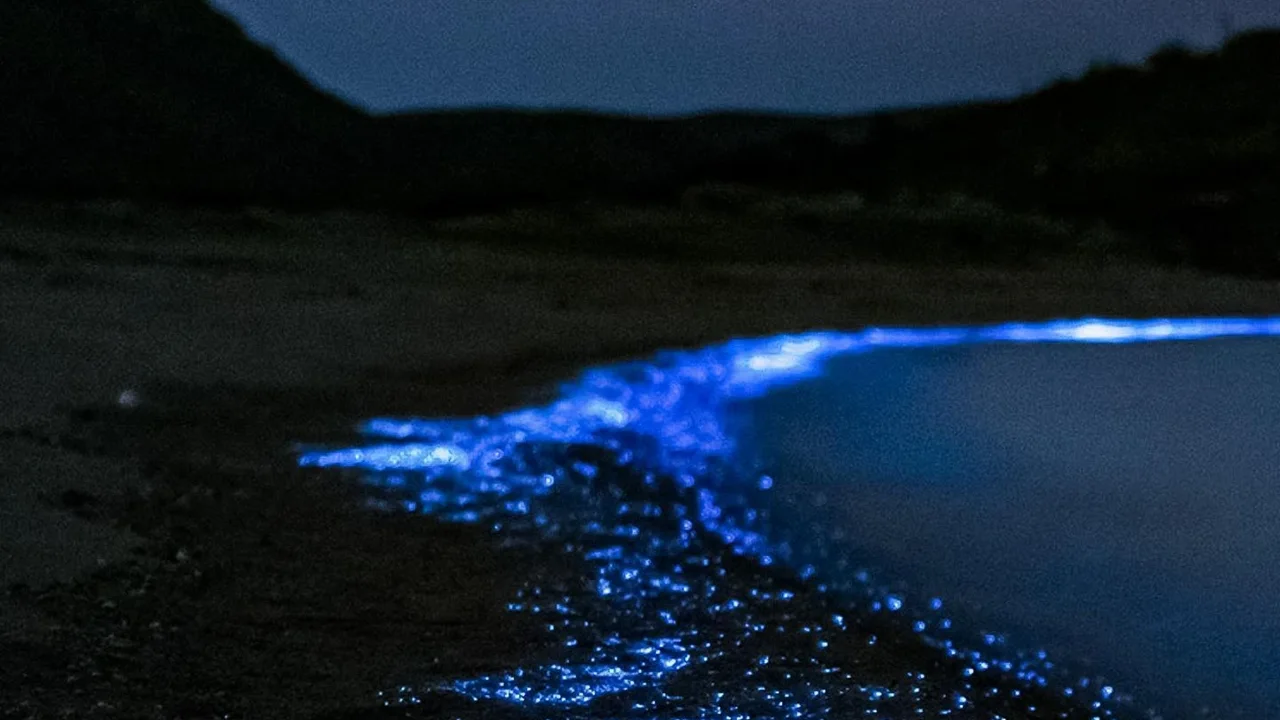
The dream of a self-sustaining, living light source is built on bioluminescence, the very process that makes fireflies and some deep-sea creatures glow. For decades, scientists have been working to transfer this natural ability into the plant kingdom.
Early experiments in the 1980s successfully inserted firefly genes into tobacco plants, creating the world's first glowing plant. However, there was a catch: the plants had the genetic 'spark' but not the 'fuel,' requiring them to be externally supplied with a chemical called luciferin to light up. The long-term ambition has always been to create plants that glow on their own, a goal that has seen numerous research projects, including efforts at MIT and a notable early crowdfunding campaign called the Glowing Plant project.
How to Make a Plant Glow
The key to creating a self-sufficient glowing plant lies in giving it the complete genetic toolkit. Recent breakthroughs have come from borrowing genes from bioluminescent mushrooms rather than fireflies. These fungal genes provide the instructions for a full metabolic pathway that uses caffeic acid—a compound plants already produce—to create both the necessary enzyme (luciferase) and its fuel (luciferin). This allows the genetically modified plant to glow continuously throughout its life cycle without any external help, powered entirely by its own metabolism. The light emanates from all parts of the plant, including its flowers, stems, and leaves, with the glow often appearing brightest in new growth.
The Promise of Lower Power Bills
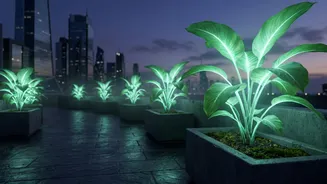
For municipal governments, public lighting is a major expense. In some regions, it can account for a significant portion of a city's electricity bill. The appeal of bioluminescent trees is the potential to dramatically slash these costs. These living streetlights would require no electricity, no wiring, and no grid connection. By harnessing photosynthesis, they would be powered by sunlight and CO2, offering a radically sustainable and potentially carbon-neutral lighting solution. The vision extends beyond just cost savings; advocates point to a reduction in light pollution, as the light from plants is softer than harsh conventional streetlights, and the creation of more natural, aesthetically pleasing urban nightscapes.
The Reality Check: Brightness and Bureaucracy
Despite the exciting potential, a forest of glowing trees won't be replacing our streetlights tomorrow. The single biggest hurdle is brightness. While scientists have increased the light output a hundredfold in recent years, current bioluminescent plants are still far too dim for functional illumination, producing a soft, ambient glow rather than the powerful light needed for a busy road. Furthermore, deploying genetically modified organisms (GMOs) in public spaces is a complex regulatory challenge. In the U.S., multiple agencies, including the USDA and EPA, oversee GM plants to ensure they pose no risk to plant health or the environment. Public acceptance of GMOs is another critical factor that developers are hoping to influence by introducing beautiful, harmless ornamental plants first.
Lighting Up Homes Before Streets
The first wave of this technology is not for cities, but for homes and gardens. A company called Light Bio has successfully commercialized the 'Firefly Petunia,' a plant engineered with mushroom genes that glows at night. Available to consumers in the United States, these petunias are being marketed as a living, sustainable light for your home or patio, requiring only sunlight and water to power their gentle glow. This commercial debut marks a major milestone, moving bioluminescent plants from the lab to the living room. The company and researchers see these ornamental plants as a first step, hoping to build public familiarity and trust while they continue working on making future generations of plants brighter.