
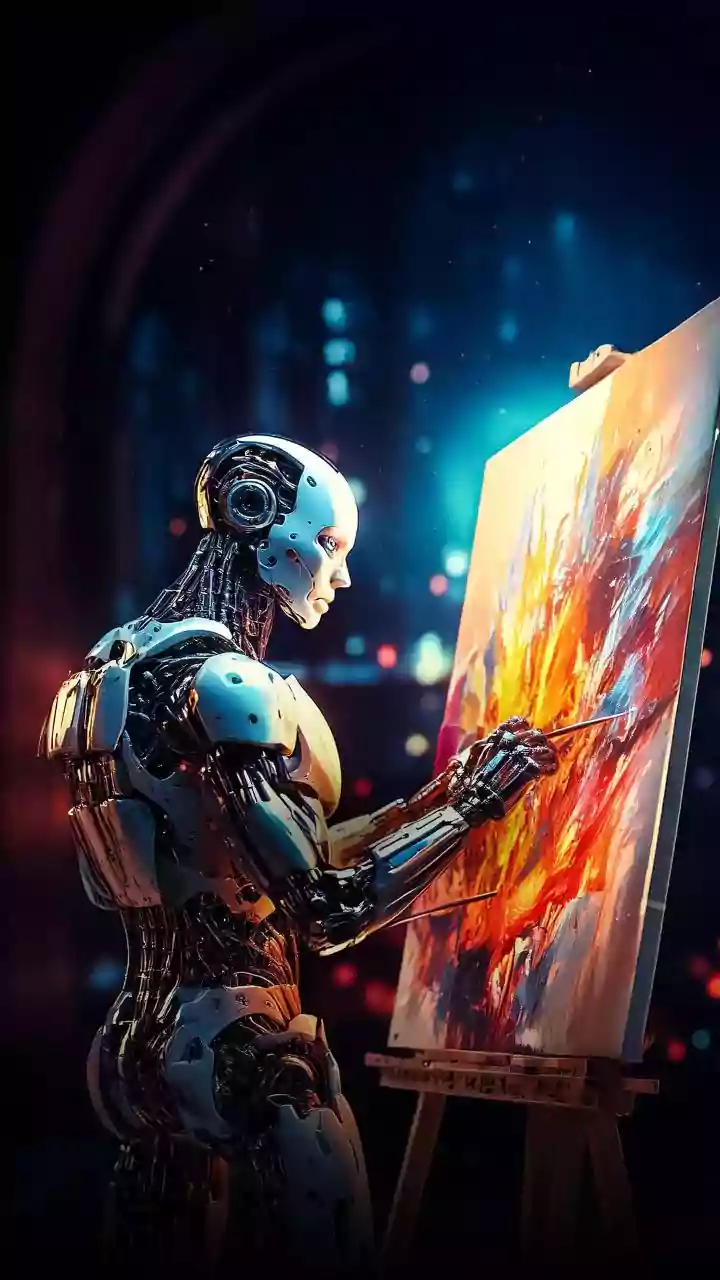





Beyond the Bullet Point
For decades, creating a school or college presentation followed a familiar, often tedious, formula: open a slide app, choose a template, and fill it with text. The most adventurous might hunt for a stock photo or a piece of clipart. The result was often a sea
of uniform, uninspired slides that did little to engage the audience. But artificial intelligence is fundamentally changing this process. Instead of searching for pre-existing images, students are now creating them from scratch using just their words. AI image generators can turn a simple text description into a unique, high-quality visual in seconds, making presentations more dynamic and memorable. This shift is not just about aesthetics; it's about communication. A powerful, custom-made image can explain a complex idea, evoke an emotion, or set a tone more effectively than a dozen bullet points ever could. As a result, educators are noticing a significant improvement in the quality and engagement level of student presentations.
The Art of the Perfect Prompt
So, what does it mean to 'talk' to an AI? The secret lies in 'prompt writing' or 'prompt engineering'. A prompt is the instruction you give to an AI model. But getting a useful result is more complex than simply typing 'a cat'. A good prompt is a detailed set of instructions. It’s the difference between asking for 'a picture of a futuristic city' and requesting 'a photorealistic image of a futuristic Mumbai in 2077, with flying auto-rickshaws, holographic billboards in Marathi, and the Bandra-Worli Sea Link in the background, all bathed in the warm light of a monsoon sunset.' Learning to write effective prompts is a new form of digital literacy. It involves clarity, creativity, and an understanding of how the AI 'thinks'. Students are learning to specify not just the subject, but also the style (e.g., oil painting, 3D render, anime), lighting, camera angle, and mood. It’s a skill that blends technical instruction with creative direction.
From Vague Idea to Vivid Image
The quality of the AI's output is directly tied to the quality of the input. A beginner might type a prompt like, “A person giving a speech.” The AI would likely generate a generic, uninteresting image. However, a student skilled in prompt writing would be far more specific. For example: “An energetic young Indian woman with curly hair, wearing a smart business-casual outfit, standing on a brightly lit stage. She is passionately addressing a large, diverse audience, her expression confident. The background is a large screen displaying a simple, elegant bar chart. The overall mood is inspiring and professional.” This level of detail guides the AI to produce an image that is not only visually compelling but also perfectly aligned with the presentation's message. This iterative process of refining prompts also encourages students to think more deeply about the message they want to convey, strengthening their overall communication skills.
A Skill for the Future Workplace
While the immediate benefit is better-looking presentations, the implications of learning prompt writing are far broader. This skill is rapidly becoming essential not just in academics but in the professional world. Marketers use it to generate ad creatives, designers to brainstorm concepts, and content creators to produce visuals for social media. By learning prompt engineering now, students are gaining a competitive edge in the future job market. They are demonstrating more than just subject knowledge; they are showing technical fluency, creativity, and an ability to effectively collaborate with AI systems. In a world where AI tools are becoming as common as word processors, knowing how to wield them effectively is no longer a niche skill but a fundamental requirement for many careers.
The Tools of a New Trade
A vibrant ecosystem of AI tools is making this visual revolution possible. Platforms like Midjourney, DALL-E 3 (integrated into ChatGPT and Microsoft Copilot), and Adobe Firefly are among the most popular for creating high-end images. For students looking for something more integrated, many presentation tools are now building AI directly into their platforms. Services like Canva’s Magic Media allow users to generate images without leaving their slide deck. While these tools are powerful, they are just that—tools. Their effectiveness depends entirely on the skill of the user. The real magic isn't in the AI itself, but in the human ability to provide clear, creative, and detailed instructions.