


The Policy That Unlocked The Stars
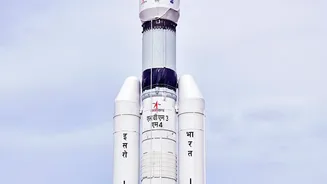
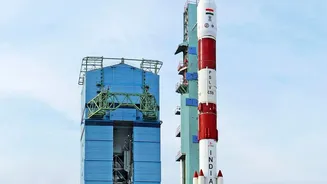
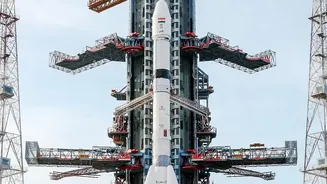
The catalyst for this transformation was a series of sweeping government reforms, culminating in the Indian Space Policy of 2023. For decades, space was the exclusive domain of the state-run Indian Space Research Organisation (ISRO). The new policy dramatically
redefined this relationship, repositioning ISRO from the primary operator to an enabler and technical partner. At the heart of this change is the Indian National Space Promotion and Authorisation Centre (IN-SPACe), established in 2020. IN-SPACe acts as a single-window agency, streamlining approvals and providing private companies with access to ISRO's invaluable testing facilities, launchpads, and expertise. This regulatory clarity, combined with liberalised Foreign Direct Investment (FDI) policies, sent a clear signal to entrepreneurs and investors: India's space frontier was officially open for business.
From Launchpads to Data Streams
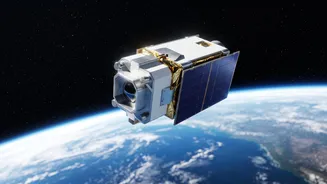
The new ecosystem is not just about building rockets. India's 440 registered space-tech startups are diversifying across the entire value chain. In the upstream sector, companies like Skyroot Aerospace and Agnikul Cosmos are developing their own launch vehicles to provide cost-effective rides to orbit for small satellites. Skyroot made history with its suborbital Vikram-S launch and is developing the orbital-class Vikram-1 rocket. Agnikul is notable for its 3D-printed, single-piece semi-cryogenic engine. In the midstream, firms like Dhruva Space and Bellatrix Aerospace are building satellites and crucial subsystems like propulsion systems. Meanwhile, the downstream sector is flourishing with companies like Pixxel, which is deploying a constellation of high-resolution hyperspectral imaging satellites to provide advanced Earth observation data and analytics for agriculture, mining, and climate monitoring.
Fueling the Final Frontier
This boom is powered by a significant influx of capital. Private investment in the sector surged from around $100 million in fiscal year 2021-22 to over $600 million by March 2026. Recent years have seen record funding, with startups raising $200 million in 2025 and $113 million in the first half of 2026 alone. Marquee names have attracted substantial backing, with launch provider Skyroot Aerospace achieving unicorn status. This investment isn't just coming from domestic venture capitalists; global institutional investors and sovereign wealth funds are also taking notice. Bengaluru has emerged as the country's primary hub for space-tech, attracting more than half of the total funding, complemented by growing ecosystems in Hyderabad and Chennai.
ISRO's New Role: From Player to Coach
The rise of private players doesn't sideline ISRO but instead elevates its role. Freed from the routine tasks of manufacturing and operating satellites and rockets, the agency can now focus on its core mission: pioneering deep space exploration, advanced research and development, and national security. This strategic shift allows ISRO to act as a mentor, transferring mature technologies to private firms and providing critical infrastructure support. The goal is to create a robust public-private partnership where ISRO pushes the boundaries of science and exploration, while the private sector builds a commercially viable ecosystem around it. This collaborative model is seen as essential for India to achieve its ambitious goal of capturing a larger share of the global space economy.
Beyond The Launch: Challenges Ahead
Despite the explosive growth, the path forward is not without its obstacles. Space ventures are capital-intensive with long gestation periods, and access to patient, early-stage funding remains a significant hurdle. While top-tier startups are securing large rounds, many newer ventures struggle for seed capital. Another challenge is the infrastructure gap; while access to ISRO facilities has been a game-changer, the demand for private testing and prototyping facilities is growing rapidly. Furthermore, the industry faces the universal challenge of converting technological milestones into commercially viable businesses with a steady stream of customers. As the sector matures, navigating these financial and operational complexities will be crucial for turning hundreds of startups into sustainable, globally competitive enterprises.