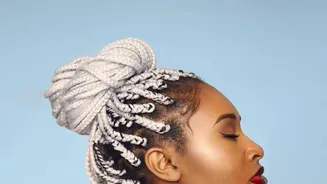


Braids are a timeless protective style, but the secret to a truly flawless look lies in the extensions. Getting that seamless, 'grew-it-myself' finish is an art, and it goes far beyond just picking a pack of hair off the shelf.
Beyond the Basics: Why a Perfect Match Matters
The difference between braids
that look professionally done and those that scream 'obvious extensions' often comes down to two critical factors: shade and texture. When extensions don't blend seamlessly, they can create a visible line where your natural hair ends and the synthetic or human hair begins. A perfect match ensures the extension moves with your hair, creating a cohesive, believable look from root to tip. This attention to detail is what elevates a simple braided style into a stunning, natural-looking statement that protects your hair while looking effortlessly chic.
Mastering the Shade Game
Choosing the right colour is more complex than just matching your root colour. For the most natural look, you should match the extensions to the ends of your hair, as this is where the blending is most visible. Natural hair is rarely one flat colour; it has dimension, highlights, and undertones. To replicate this, many stylists recommend using two or more complementary shades. For example, if you have dark brown hair, mixing a #2 (dark brown) with a #4 (medium brown) can create a subtle dimension that mimics how natural hair catches the light. Don’t be afraid to create a custom blend by splitting and layering two packs of hair together until the colours are perfectly mixed. Always check the colour in natural daylight, as artificial lighting can distort tones.
Texture Is a Non-Negotiable
Texture is just as crucial as colour for a believable blend. If you have highly textured 4C hair, using a silky straight extension will create a noticeable disconnect at the base of the braid. The goal is to choose an extension texture that mimics your own hair's pattern, whether it's kinky, coily, yaki, or wavy. A 'yaki' texture, for example, is designed to mimic the appearance of relaxed or silk-pressed Black hair, offering a slight texture that isn't bone-straight, making it a fantastic option for a seamless blend. For those with curly or coily hair, choosing a kinky or curly braiding hair helps the style hold better and look more natural. The right texture ensures your natural hair can be easily 'tucked' or hidden within the braid, making the entire look more cohesive.
Choosing Your Weapon: Braiding Hair Types
The two main players in the braiding hair market are synthetic hair and human hair. Synthetic hair, most famously Kanekalon, is the go-to for many braided styles like box braids and twists. It's affordable, holds its style well, and is lightweight. Premium synthetic fibers are designed to mimic natural hair texture and often come pre-stretched to save time and create a less bulky, more natural taper at the ends. Human hair, while more expensive, offers the most realistic appearance and movement. It's ideal for styles like goddess or boho braids, where curly ends are left out, as it doesn't tangle as easily as synthetic curls and can be styled with heat. Ultimately, the choice depends on your budget, desired style, and how long you plan to wear the braids.
Pro Tips for a Flawless Finish
Once you have the right hair, the technique is everything. For styles like knotless braids, the 'feed-in' method is key. This involves starting the braid with your natural hair and gradually adding small pieces of the extension hair. This creates a flatter, more natural-looking braid and reduces tension on the scalp. Another pro tip is to properly prep your hair by ensuring it's washed, conditioned, and detangled before braiding. For a super-smooth blend, especially with straighter textures, you can gently feather the extensions by pulling small strands from the bottom to create varied lengths, which helps avoid a blunt, unnatural finish.