



Before You Hit the Road: A Pre-Monsoon Vehicle Check
A safe trip begins before you even turn the key. A thorough vehicle inspection is non-negotiable, especially for the demanding conditions of a monsoon ghat at night. First, focus on your tyres; they are your only connection to the slippery road. Ensure
your tyre tread depth is well above the minimum, ideally 3mm or more, to prevent skidding on wet surfaces. Use a one-rupee coin to test the depth; if the coin's edge is fully visible, your tyres are too worn for a safe journey. Also, check and maintain the manufacturer-recommended tyre pressure. Next, inspect your brakes. Wet conditions can significantly increase stopping distances. If your brakes feel spongy or the pads are worn, get them serviced. Your wipers are your window to the world in a downpour; replace them if they leave streaks or make noise. Finally, test every single light—headlights, fog lamps, taillights, and indicators. Clean headlamp covers can drastically improve brightness, which is critical for spotting hazards at night.
Navigating the Darkness: Driving Techniques for Ghat Roads
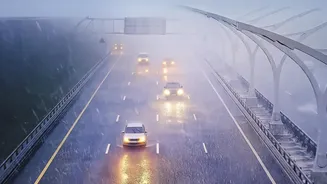
Driving on ghats at night during the monsoon is a test of focus and restraint. The golden rule is to reduce your speed significantly. Wet, winding roads reduce traction and visibility, making sudden manoeuvres dangerous. Maintain a much larger following distance from the vehicle ahead—at least a four-second gap—to give yourself ample time to react. When ascending or descending steep slopes, use lower gears to maintain control and reduce strain on your brakes. Use your headlights on a low beam setting. High beams can reflect off the rain and fog, further reducing your visibility. Honk briefly before blind curves to alert oncoming traffic. Patience is paramount, especially when stuck behind a slower-moving vehicle like a truck. Wait for a long, clear stretch before attempting to overtake; never do it on a blind curve.
Monsoon-Specific Hazards: Water, Potholes, and Landslides
Monsoon brings unique dangers that every driver must anticipate. Waterlogged roads can conceal deep potholes or even washed-away sections of the road. Never drive through standing water if you cannot gauge its depth; it's always better to find an alternative route. Driving through deep water can damage your car's engine and electrical systems. If you must proceed, do so slowly in first gear, keeping the engine revs up to prevent water from entering the exhaust. Be vigilant for signs of potential landslides, especially in areas with recent excavation or unstable-looking soil and rocks. Avoid stopping your vehicle in zones marked as landslide-prone or directly under steep, rocky cliffs. Another major risk is aquaplaning, where your tyres lose contact with the road surface on a layer of water. If you feel the car begin to aquaplane, do not brake or turn suddenly. Gently ease off the accelerator until you feel the tyres regain traction.
The Emergency Kit: Your Lifeline When Stranded
Despite all precautions, things can go wrong. A well-stocked emergency kit is essential. Your kit should contain both vehicle and personal supplies. For the car, include a portable tyre inflator, a puncture repair kit, a tow rope, and jumper cables. A powerful torch or headlamp (with extra batteries) is crucial for any nighttime issue. Reflective warning triangles and a high-visibility vest are vital to ensure other vehicles can see you if you break down. For personal safety, pack a first-aid kit with basics like bandages, antiseptic, and pain relievers. Always carry extra drinking water and non-perishable snacks like nuts or biscuits. A fully charged power bank for your phone is a modern-day necessity, especially since mobile networks can be unreliable in remote ghat sections. Store these items in a waterproof bag and keep them easily accessible, not buried under luggage.
If the Worst Happens: Stranded Vehicle Protocol
If your car gets stuck or breaks down, your immediate actions are critical. If you are in a potentially dangerous spot, like a narrow bend or an area prone to landslides, your priority is to move to a safer location if possible. If your car stalls in a waterlogged area, do not attempt to restart the engine. Trying to crank a flooded engine can lead to 'hydrostatic lock,' causing catastrophic and expensive damage. Switch on your hazard lights to alert others, but only if you are stationary. If water levels are rising and entering the cabin, abandon the vehicle and move to higher ground. Your safety is more important than the car. Once you are safe, call for roadside assistance. Inform them of your exact location and the situation. It is always wise to have these numbers saved before you begin your journey.