
A New Perspective From a Familiar Place
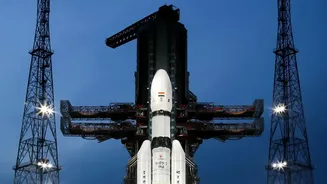
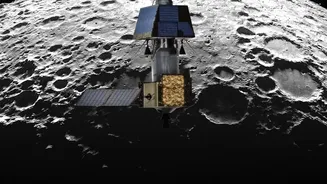
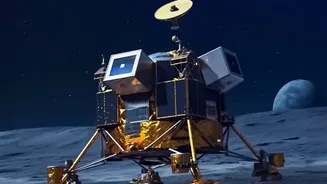
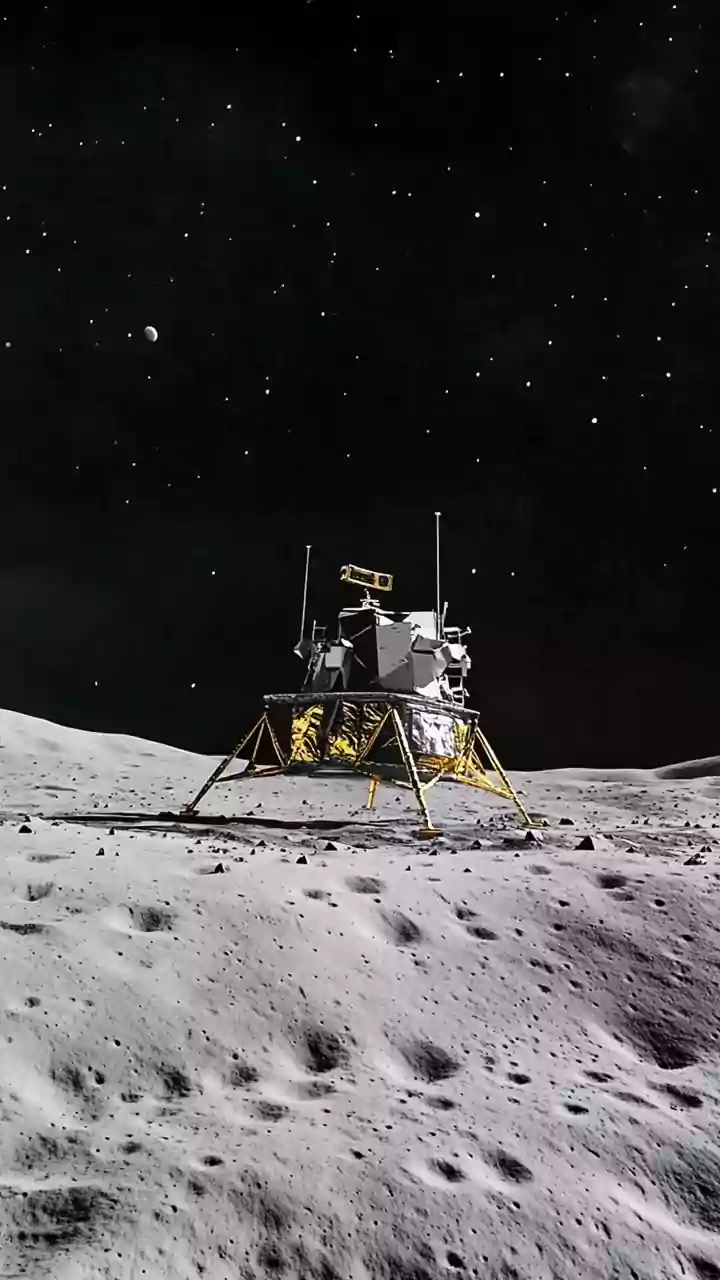
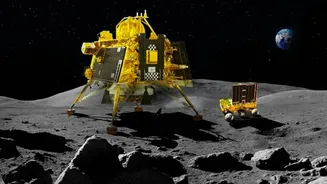
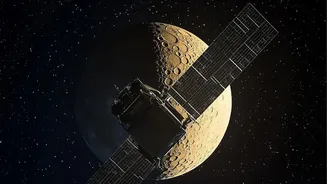
After successfully delivering the Vikram lander and Pragyan rover into lunar orbit, the Chandrayaan-3 Propulsion Module’s primary job was done. But for scientists at the Indian Space Research Organisation (ISRO), its mission was far from over. Instead
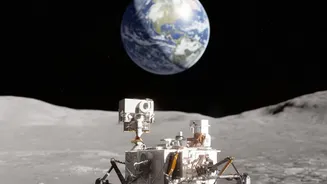
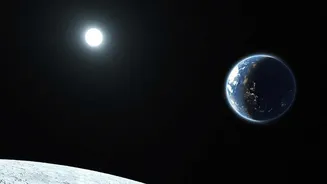
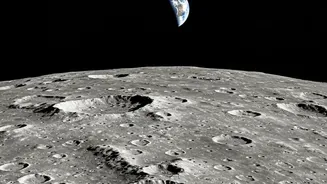
of powering down, the module, which continued to orbit the Moon, turned its gaze towards the bright, blue marble in the lunar sky: Earth. This wasn’t for a scenic photograph. It was for a groundbreaking experiment to study Earth not as our home, but as a distant, potentially life-bearing exoplanet. By using the unique vantage point of lunar orbit, ISRO aimed to capture the tell-tale signs of a habitable world, creating a benchmark that could one day help us identify another Earth hundreds of light-years away.
The Instrument: A Payload Named SHAPE
The key to this experiment was a single, ingenious instrument aboard the Propulsion Module: SHAPE. The name is an acronym for Spectro-polarimetry of HAbitable Planet Earth. Weighing just under 5 kg, this compact payload was designed to do something remarkably complex. It analyses the light reflected from Earth in the near-infrared spectrum, a range invisible to the human eye. SHAPE breaks this light down in two ways. First, through spectroscopy, it looks for the chemical 'fingerprints' of gases in our atmosphere, like water vapour. Second, using polarimetry, it studies how light is scattered by particles, which can reveal the presence and characteristics of clouds. Together, these two measurements create a detailed profile of Earth as seen from a great distance, capturing the essential signatures that point to a planet capable of supporting life.
Why Study Earth from the Moon?
The fundamental goal of the SHAPE experiment is to help scientists in the search for extraterrestrial life. To find Earth-like planets orbiting distant stars, we first need to know exactly what we are looking for. By observing our own planet as a single, integrated point of light—much like how we see distant exoplanets—we can create a definitive template. This 'disc-integrated' view blurs all the details of continents and oceans into a single stream of data. The SHAPE experiment recorded how this data—the spectrum and polarization of light—changes as Earth rotates and at different phases of its orbit. This provides a crucial reference library. When future, more powerful telescopes are pointed at a promising exoplanet, scientists can compare its light signature to the one captured by SHAPE. A close match would be one of the most exciting discoveries in human history.
What the Observations Confirmed
Operating for months from its perch in lunar orbit and later from a high Earth orbit, the SHAPE payload performed its job successfully. The data it collected served as a vital proof of concept. It validated that an instrument of its design could indeed detect the key biosignatures of a habitable planet from afar. Scientists at ISRO were able to identify the expected features in Earth's light, confirming that the technique works even when observing a planet as a single, unresolved dot. While a scientific paper detailing the full results is anticipated, the initial success confirms that the instrument design and the methodology are sound. This paves the way for similar, more advanced instruments to be included in India's future interplanetary missions, such as those planned for Venus or Mars.
India’s Role in a Cosmic Search
The SHAPE experiment is more than just a clever technical demonstration; it represents a significant and unique contribution by India to the global scientific community. While space agencies around the world are building powerful telescopes to find exoplanets, ISRO has provided a vital piece of the puzzle: a clean, validated baseline of what a habitable planet's signature looks like. This experiment showcases a philosophy of high-impact, cost-effective science. Chandrayaan-3 was not only a mission to land on the Moon but also a dual-purpose scientific platform. By turning its gaze back home, the mission has provided an invaluable tool that will aid astronomers everywhere in their quest to answer one of humanity’s oldest questions: Are we alone in the universe?