








A Voice of Authority
When Dr. Devi Shetty speaks about healthcare, India listens. As the founder of Narayana Health, he has pioneered a model aimed at making quality medical care accessible to the masses. His work is built on the principle that healthcare is a fundamental
right, not a luxury. For decades, he has operated on thousands of patients, but his most consistent diagnosis has been on the ailing financial health of India's healthcare system. His forecasts are not just business predictions; they are warnings rooted in the daily financial struggles he sees his patients endure. He has long argued that no person with a full-time job should be pushed into poverty because of a single hospital visit.
The Unsustainable Trajectory of Costs
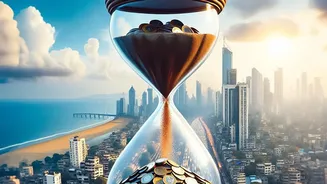
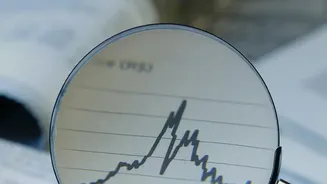
Dr. Shetty's central forecast is that without systemic change, medical bills will become increasingly unmanageable for the vast majority of Indian households. The issue is not just about the price of a specific surgery but the entire ecosystem. From imported medical devices and pharmaceuticals to the Goods and Services Tax (GST) on health insurance premiums, various factors contribute to a continuously rising cost curve. He points out the paradox of India being the 'pharmacy of the world' while its own citizens struggle to afford treatment. This creates a situation where even the middle class is just one major illness away from a financial catastrophe, forced to sell assets or take on crippling debt.
The Reality of Household Debt
This isn't a future problem; it's a present-day crisis. Out-of-pocket expenditure (OOPE) on health in India remains dangerously high. OOPE refers to the payments made directly by individuals for healthcare services, not covered by any insurance. While government data suggests a decline in the percentage of OOPE in total health spending, for millions of families, the absolute amount is still devastating. Studies have repeatedly shown that healthcare costs are a leading cause of families falling into poverty. This 'medical poverty trap' means that a health crisis not only drains current savings but also mortgages a family's future, affecting children's education and overall quality of life.
The Insurance Imperative
According to Dr. Shetty, the only viable solution to this crisis is a robust health insurance system that covers the entire population. He envisions a future where paying a small, affordable premium becomes the norm, protecting families from catastrophic expenses. While government schemes like Ayushman Bharat are a significant step in providing a safety net for the most vulnerable, a large segment of the population—the 'missing middle'—remains unprotected. Dr. Shetty has often called for making health insurance more affordable, for example by lowering or removing the GST on premiums, to encourage wider adoption. For him, insurance is not a financial product but an essential tool for social security.
What Can Families Do?
While systemic change is slow, individuals are not entirely helpless. The first step is acknowledging the risk. The belief that 'it won't happen to me' is a dangerous gamble. Financial planning for health must become a priority for every household. This means actively seeking out and understanding health insurance policies, even if it seems like an added expense. It's about comparing plans, understanding coverage limits, and choosing a policy that fits the family's needs. Creating a dedicated emergency fund for health-related expenses that may not be covered by insurance can also provide a crucial buffer. The goal is to build a financial firewall to protect your family's long-term well-being from the shock of a medical emergency.