







Understanding the 'Triple Convergence'
While not a formal astronomical term, a 'Triple Horizon Convergence' is our name for a visually striking event when three celestial objects—typically a combination of bright planets like Jupiter and Saturn, and our own Moon—appear incredibly close to
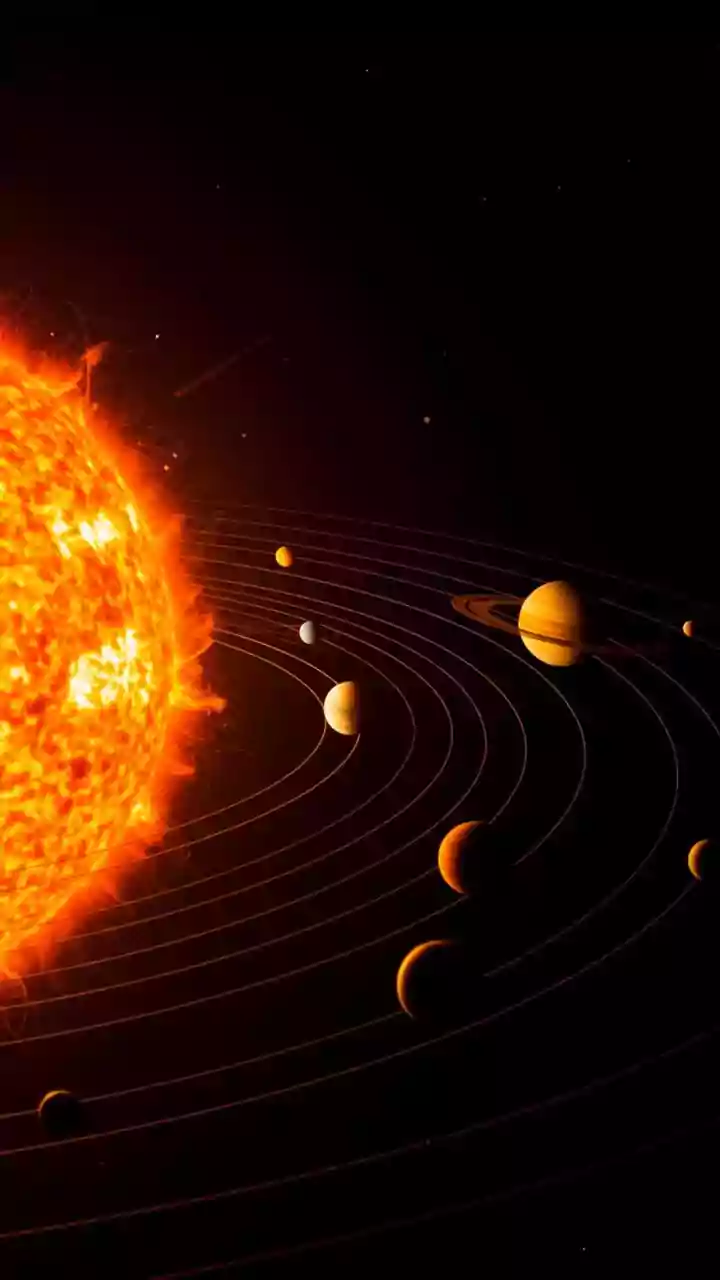
each other in the sky, often low on the horizon around sunrise or sunset. These alignments, or conjunctions, offer a breathtaking perspective on the dance of our solar system. Their magic lies in their rarity and the illusion of closeness. Though these planets are millions of kilometres apart, from our vantage point on Earth, they form a temporary, majestic trio.
When and Where to Look
These events happen periodically, but the next notable one for observers in India is worth marking your calendar for. Look for it in the pre-dawn sky during the last week of the month. The best viewing window will be about 45 to 60 minutes before sunrise, looking towards the eastern horizon. The exact timing will vary slightly based on your city, so it’s wise to use a stargazing app like Stellarium or SkyView a day or two beforehand. Simply set your location and time, and the app will show you precisely where to direct your gaze. The key is to find a spot with an unobstructed view of the eastern horizon.
Finding the Perfect Viewing Spot
For most of us in India, the biggest challenge is light pollution. The glow from our cities can wash out all but the brightest stars and planets. To give yourself the best chance of seeing the convergence clearly, try to get away from the city centre. A rooftop in a quieter suburb, a park on the edge of town, or a drive out to the countryside can make a world of difference. Your ideal spot should have a clear, low view of the horizon in the direction of the event (east for this one). Remember to give your eyes about 15-20 minutes to adapt to the darkness for the best possible experience. Safety first: go with a friend or family, and choose a familiar, safe location.
The Essential Gear Guide
You don't need a professional observatory to enjoy this. The beauty of a bright planetary conjunction is that it’s visible to the naked eye. However, the right gear can elevate the experience from 'wow' to 'unforgettable'.
Level 1: Your Eyes Only. The simplest way to watch. It’s free and you can still appreciate the scale and beauty of the alignment.
Level 2: Binoculars. This is the best-kept secret of amateur astronomy. A standard pair of 7x50 or 10x50 binoculars will dramatically enhance your view. You'll be able to see the planets as distinct discs, and in the case of Jupiter, you might even spot its four largest moons as tiny pinpricks of light.
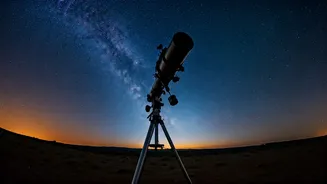
Level 3: A Beginner's Telescope. If you have a small telescope, this is its moment to shine. You’ll get a clear, magnified view of the planets. You may even be able to make out Saturn's rings. Don't worry if your telescope is basic; any magnification will reveal details invisible to the naked eye.
Capture the Moment with Your Phone
Yes, you can take a photo of this with your smartphone! It won’t be a Hubble-quality image, but it will be a wonderful memento. First, turn off your flash. Use your phone's 'Night Mode' or 'Pro Mode' if it has one. In Pro Mode, you can manually increase the ISO (light sensitivity) and shutter speed (try a few seconds). The most important thing is to keep the phone perfectly still. Rest it on a stable surface or, better yet, use a small tripod. You can also use the self-timer function to avoid camera shake from tapping the screen. There are also apps that help with long-exposure photography, which can yield surprisingly good results.