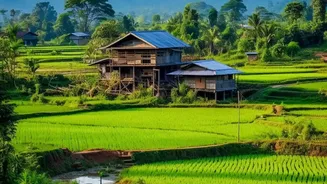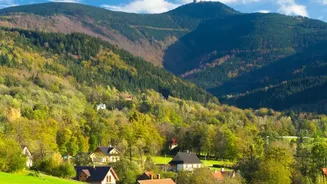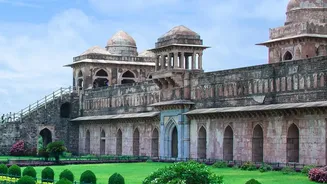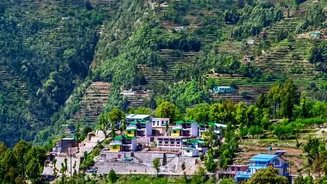





Forget the crowded monuments and packed tourist circuits for a moment. A quieter, more authentic travel revolution is unfolding across India, inviting you to trade bustling cities for the serene pace and rich culture of village life.
The Search for Something Real
In a world of fast-paced
urban living, a growing number of Indian travellers are seeking more than just a vacation; they're searching for a genuine connection. This has sparked a significant shift in travel preferences, moving away from conventional hotspots towards the unexplored heart of the country: its villages. Rural tourism, which includes everything from agri-tourism and farm stays to cultural and eco-tourism, offers an antidote to the commercialised holiday. It’s about experiencing rural life, art, and heritage in its natural setting. The demand for these authentic, immersive trips is being driven by urban dwellers looking for nature-based retreats, hands-on activities, and a deeper cultural understanding.
What is Rural Tourism?
Rural tourism is defined as any form of tourism that showcases the life, art, culture, and heritage of a rural location in a way that benefits the local community. It’s an interactive and participatory experience. Imagine waking up in a homestay, learning about organic farming from your hosts, trying your hand at a local craft, or participating in a village festival. This is a far cry from passive sightseeing. The category is broad, encompassing agri-tourism, where visitors stay on working farms, as well as nature, adventure, and cultural tourism in non-urban settings. The core idea is that the visitor’s experience is deeply linked to the local lifestyle, environment, and community.
A Push from the Top
The potential of rural tourism hasn't gone unnoticed by the government. The Ministry of Tourism has formulated a national strategy to develop and promote it as a tool for a self-reliant India ('Aatmanirbhar Bharat'). The strategy focuses on developing sustainable and responsible destinations. Initiatives like the revamped 'Swadesh Darshan 2.0' scheme and financial assistance for homestays in tribal and rural areas are key components. States are also launching their own ambitious plans. Uttar Pradesh, for example, has identified hundreds of villages to be developed as tourism hubs with a focus on farm stays and integrating local crafts like silk-farming with tourism. Similarly, Sikkim is boosting its rural offerings with adventure activities to encourage longer stays.
A Win-Win for Communities and Travellers
The beauty of rural tourism lies in its mutual benefits. For travellers, it offers a unique opportunity to disconnect from urban chaos and reconnect with nature and tradition. For rural communities, it is a powerful driver of economic and social development. With nearly 70% of India's population living in villages, tourism can unlock new income streams, create jobs for youth and women, and reduce migration to cities. It helps revive and preserve local arts, crafts, and traditions that might otherwise fade away. By turning their homes and farms into accommodation and experiences, residents can earn a livelihood while sharing their culture with pride.
Stories from the Soil
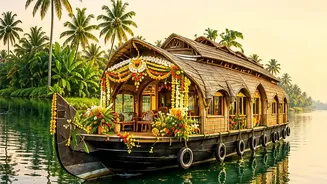
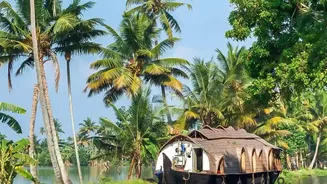
Across the country, success stories are blooming. In Kerala, Kumbalangi was declared India’s first 'model tourism village', where visitors can join fishermen and explore the backwaters by canoe. In Nagaland, Khonoma is celebrated as the country's first 'green village' for its community-led conservation efforts and unique terrace farming. Mawlynnong in Meghalaya, often called 'Asia's cleanest village', attracts visitors with its living root bridges and pristine environment. These destinations prove that tourism can thrive when it is built around community, sustainability, and the celebration of local heritage.
The Road Ahead: Balancing Growth and Authenticity
While the future of rural tourism looks bright, the path has its challenges. The primary concern is ensuring that growth is sustainable. There is a risk of over-commercialisation, which can lead to the 'commodification' of culture and a loss of the very authenticity that travellers seek. Other hurdles include a lack of digital literacy in some areas, which can hinder marketing efforts, and the need for adequate infrastructure like accessible roads and quality accommodation. The key will be to manage this growth responsibly, prioritising community involvement and preserving the natural and cultural integrity of these destinations.