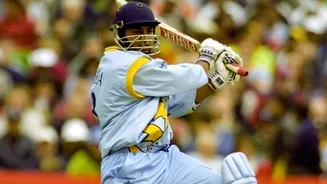








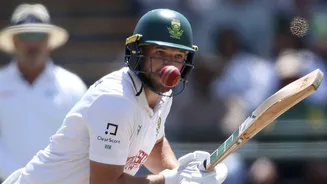
The 2-1 series loss to South Africa is more than just a setback; it’s a result that sends tremors through Australian cricket. It forces a confronting question: is the famed Australian winning formula, once built on intimidation and skill, broken beyond
repair?
A Familiar Story of Batting Woes
The Australian batting lineup's performance in South Africa was a painful echo of recent struggles, defined by fragility and inconsistency. After a dominant win in the first Test, the team was bowled out for just 111 in the decisive match in Cape Town. This collapse wasn't an anomaly but a trend. Marnus Labuschagne's continued poor form has put his Test career in jeopardy, with a string of low scores extending over a year. The team has also struggled to find a stable opening pair since the retirement of David Warner, with Nic Maddinson's selection for the tour proving to be a controversial failure. Former players have been scathing, with Warner himself labelling the batting display 'utterly disgraceful' and 'un-Australian', pointing to a lack of fight. The performance highlighted an over-reliance on a few individuals and an inability to handle pressure, a far cry from the resilient batting orders of the past.
Leadership and Strategy Under the Microscope
Beyond individual failures, the series defeat has put captain Pat Cummins and the team's strategic direction under intense scrutiny. While Cummins has called for calm, acknowledging that bad performances don't make them a terrible team, the nature of the losses has invited criticism. Questionable shot selection, such as Alex Carey's baffling reverse sweep at a critical moment, and needless run-outs, pointed to a team lacking composure and tactical discipline. The decision to select Nic Maddinson and ask him to open the batting against a world-class pace attack was seen by many as irresponsible and unfair, a move that backfired spectacularly and reportedly caused disillusionment among players in the domestic ranks. Captain Cummins has admitted that the defeat warrants an internal review, suggesting that both personnel and the team's overall approach will be re-evaluated.
An Ageing Attack and Uncertain Future
For years, Australia's 'Big Four' bowling attack of Cummins, Josh Hazlewood, Mitchell Starc, and Nathan Lyon has been the bedrock of its success. However, questions are mounting around the ageing quartet. Concerns about their fitness and longevity have been circulating for some time. While the pace trio remains formidable, the series in South Africa, combined with a shock loss to Bangladesh earlier in the year, suggests opponents are finding ways to counter them. Furthermore, Nathan Lyon's returns in 2025 were noted to be his least effective in years, raising the difficult question of succession for the legendary off-spinner. The pipeline of talent is a major concern, with few bowlers in the domestic Sheffield Shield seen as being ready to make the step up and consistently perform at the Test level.
Is the Domestic System Still Delivering?
A key part of Australia's historical dominance was its seemingly endless production line of Test-ready cricketers, forged in the heat of the Sheffield Shield. However, many analysts now believe the domestic system is no longer the force it once was. Batting averages in the Shield have been worryingly low, with critics arguing it is not preparing batters for the rigours of Test cricket. The rise of T20 franchise leagues, including Australia's own Big Bash, has also been cited as a factor, with some players potentially prioritising white-ball contracts over redball development. This has led to a situation where, as one former selector noted, there are very few players 'bashing the door down' for a Test spot, leaving selectors with limited options when incumbents lose form.