





An Orbiting Legacy Nears Its End
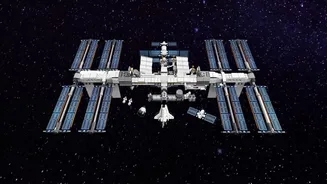
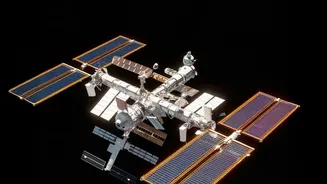
The International Space Station represents a monumental achievement in global cooperation and scientific endeavor. Since continuous human occupation began in 2000, it has hosted astronauts from numerous countries and enabled groundbreaking research that
is only possible in microgravity. However, the aging orbital laboratory is nearing the end of its operational life. NASA and its international partners are planning for a controlled deorbit of the 450,000-kilogram structure around 2030, guiding it to a safe conclusion in a remote part of the Pacific Ocean. This impending retirement creates both a challenge and an immense opportunity: how to maintain a continuous human presence in low-Earth orbit without a government-owned successor.
NASA's Pivot to Commercial Customer
Instead of building a direct replacement for the ISS, NASA is charting a new course. Through its Commercial Low-Earth Orbit Destinations (CLD) program, the agency is actively fostering a private market for space stations. The strategy is to transition from being an owner and operator to becoming just one of many customers. NASA intends to buy services and lease space on commercially owned and operated platforms for its astronauts and research projects. After some initial uncertainty in early 2026 about the program's direction, NASA reaffirmed its commitment in June 2026 to support the development of free-flying private stations, following strong feedback from industry partners who are investing significantly in this new ecosystem.
Meet the New Space Architects
Several key players have emerged in the race to build the first commercial orbital habitats. Axiom Space is taking a unique hybrid approach, with plans to first attach its modules to the ISS. Its Payload Power Thermal Module is set to be the first element, which can later detach and form the core of a free-flying Axiom Station as early as 2028. Meanwhile, California-based Vast is developing Haven-1, a single-module station aiming to be the first standalone commercial platform in orbit, with a launch targeted for early 2027. Other major contenders include the Starlab project, a joint venture between Voyager Space and Airbus, and Orbital Reef, a concept from Blue Origin and Sierra Space envisioned as a "mixed-use business park" in orbit.
Building for a New Frontier
These next-generation habitats are not just replicas of the ISS. Companies are pioneering innovative designs and technologies. Sierra Space, for its Orbital Reef partnership, is developing the LIFE (Large Integrated Flexible Environment) habitat, an inflatable module that launches in a compressed state and expands in orbit to the size of a three-story building. This technology allows for much larger pressurized volumes than traditional rigid structures. Vast's Haven-1 is being designed to demonstrate key life support systems and even test artificial gravity by rotating the station. These designs are engineered from the ground up for commercial viability, intended to serve a diverse clientele ranging from national space agencies and private researchers to manufacturers and space tourists.
A Laboratory Above the Clouds
The primary driver for these new stations is research. Microgravity offers a unique environment for breakthroughs in fields that are difficult to study on Earth. Pharmaceutical companies can grow more perfect protein crystals for drug development, while materials scientists can create novel alloys without the influence of gravity-induced defects. These new platforms will feature dedicated lab space, like Vast's Haven-1 Lab, offering slots for a variety of scientific payloads. Axiom Station plans a dedicated Research and Manufacturing module, alongside an Earth observatory. By providing more frequent and affordable access to orbit, these commercial habitats are poised to unlock a new wave of scientific discovery and in-space manufacturing, creating a robust economy in low-Earth orbit.