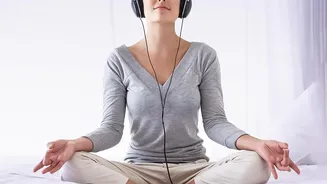








The day is done, but is your mind? For many, the transition from a busy day to a restful night is a struggle. This is where Yoga Nidra, an ancient practice of 'yogic sleep', can transform your pre-sleep ritual from a list of chores into a profound release.
What Exactly Is Yoga Nidra?
Yoga Nidra, which translates to 'yogic sleep', is a powerful meditation technique that induces a state of deep relaxation while maintaining full consciousness. Unlike other forms of meditation that may require intense focus or clearing the mind, Yoga Nidra is a guided practice typically done while lying down in a comfortable position. The goal isn't to concentrate, but to follow the voice guiding you. It systematically relaxes you at every level of your being, leading you to a state between wakefulness and sleep. In this threshold state, the body is completely at ease, yet the mind remains aware and receptive, allowing for deep healing and rest to occur without the pressure of actively trying to fall asleep.
The Science of Deep Relaxation
The benefits of Yoga Nidra for sleep are rooted in its effects on the nervous system. The practice helps shift the brain from the active, thinking state (beta brainwaves) to the more relaxed, restorative states (alpha and theta brainwaves). This process activates the parasympathetic nervous system, also known as the 'rest and digest' system. It dials down the production of stress hormones like cortisol and adrenaline, which are often the culprits behind a racing mind at night. Studies and practitioners report that a regular Yoga Nidra practice can help reduce anxiety, alleviate insomnia, and improve overall sleep quality. Some even claim that 30 minutes of Yoga Nidra can feel as restorative as a few hours of conventional sleep, making it a powerful tool for combating fatigue.
Setting the Stage for Rest
To effectively incorporate Yoga Nidra into your bedtime routine, creating the right environment is key. This is about signalling to your body and mind that it's time to wind down. About 30 minutes before you plan to practice, begin dimming the lights in your room. Ensure the temperature is comfortable—not too hot or too cold. Put on comfortable, non-restrictive clothing. The practice is best done in bed, so make sure you have pillows for support under your head and perhaps under your knees to release any lower back tension. Use a light blanket to keep warm, as your body temperature can drop during deep relaxation. The most important step is to eliminate distractions: put your phone on silent and out of reach.
A Simple Bedtime Practice
You don't need to be a yoga expert to practice. You can use a recorded audio guide—many are available for free online. Most bedtime practices will follow a similar structure. You'll begin by setting a 'Sankalpa', or a short, positive intention for your practice, stated in the present tense, such as 'I am calm and at ease'. The guide will then lead you through a systematic body scan, asking you to bring your awareness to each part of your body without judgment. This is followed by breath awareness, simply noticing the natural rhythm of your inhalation and exhalation. The practice concludes by gently bringing your awareness back to the room, after which you can simply remove your headphones and drift into natural sleep.
Building Your New Nightly Ritual
Consistency is more important than duration. Even a 10-minute Yoga Nidra session every night can have a greater impact than one long session per week. A sample routine might look like this: Start your winddown an hour before your desired bedtime. This includes finishing all chores and screen time. Then, take care of your usual hygiene tasks like brushing your teeth. For the final 15–20 minutes, get into bed, get comfortable, and play your chosen Yoga Nidra audio guide. The intention is not to 'try' to sleep, but to simply follow the instructions. If you fall asleep during the practice, that's perfectly fine—it means your body is getting the rest it needs. The goal is to make this practice the final step before you surrender to sleep.