







Nature's frontline defenders
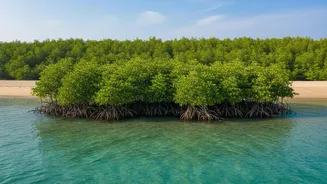
For centuries, mangrove forests have served as silent guardians of the coast. These unique ecosystems, thriving in the brackish water where rivers meet the sea, are more than just a collection of trees. Their dense, interlocking root systems act as a natural
barrier, significantly reducing the force of waves and tidal surges. Studies have shown that a healthy mangrove forest can absorb a significant portion of wave energy, potentially cutting storm surge heights by over 50 percent as water moves through the forest. This dissipation of energy protects inland areas from severe flooding, reduces erosion by trapping sediment, and stabilises the shoreline, making coastal communities far more resilient to the impacts of cyclones and tsunamis.
From victims to guardians
The eastern coasts of India, particularly in states like Odisha, Andhra Pradesh, and Tamil Nadu, are highly susceptible to powerful cyclones originating in the Bay of Bengal. For generations, coastal communities have been on the front lines of this climate threat. However, a fundamental shift is underway. Instead of being passive victims of environmental change, local villagers are becoming active stewards of their own protection. Community-led action programs, often supported by government bodies like the Forest Department and NGOs, are empowering residents to take charge. The approach is built on a simple but powerful premise: those who live by the coast and depend on its resources are best placed to protect it.
The grassroots revival
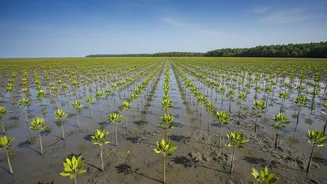
These initiatives are about much more than just planting trees. They involve a holistic, scientific approach. Local community members, particularly women's self-help groups, are trained to establish and manage nurseries, carefully selecting native mangrove species suited to the local soil and tidal conditions. They learn techniques like digging tidal channels to ensure the saplings receive the necessary mix of fresh and saltwater to thrive. In places like Badakot village in Odisha, residents have successfully converted barren wastelands into acres of thriving mangrove forests, creating a climate-resilient habitat from the ground up. These programs often start small, with a few dedicated individuals convincing their neighbours of the long-term benefits.
Proof in the storm
The success of these community-driven projects is not just theoretical; it's proven when the skies darken and the sea rises. In areas protected by a healthy belt of mangroves, the damage to homes, crops, and infrastructure during cyclones is often significantly less than in unprotected neighbouring areas. The memory of devastating events, like the 1977 Diviseema cyclone in Andhra Pradesh, serves as a powerful motivator. Elders in villages like Sanghameswaram recall how the absence of mangroves allowed the tidal surge to cause catastrophic damage, a lesson that has fuelled a deep community commitment to restoring these natural shields. Today, under national efforts like the MISHTI scheme, states are scaling up these efforts, with Andhra Pradesh alone restoring thousands of hectares.
Benefits beyond the barrier
The advantages of mangrove restoration extend far beyond storm protection. These revitalised ecosystems become thriving nurseries for fish, crabs, and shrimp, boosting the catches and livelihoods of local fishing communities. The forests also act as massive carbon sinks, capturing and storing carbon dioxide from the atmosphere at a rate much higher than many terrestrial forests. Furthermore, they create opportunities for alternative income streams such as beekeeping for mangrove honey and responsible eco-tourism. This multi-faceted value transforms the conservation effort from a defensive necessity into a foundation for sustainable economic and social prosperity for the entire community.