





A Global Rush for Lunar Water
The focus of this new lunar era is the south pole, and for one primary reason: water. For decades, scientists theorised that craters at the poles, permanently shielded from sunlight, could be cold traps holding ancient ice. The Apollo missions brought
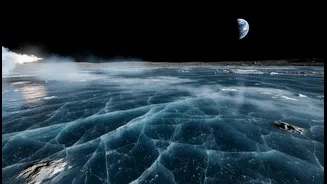
back bone-dry soil, but subsequent probes, including India's Chandrayaan-1, confirmed the presence of water ice in these permanently shadowed regions. This ice is more than a scientific curiosity. It's considered a vital in-situ resource that could be mined to provide drinking water, breathable air, and, crucially, hydrogen and oxygen for rocket propellant. This could make the Moon a refuelling station for deeper space exploration, drastically reducing the cost of future missions. This potential has sparked a wave of planned landings from NASA's Artemis program and others, all converging on this valuable patch of lunar real estate.
The Problem of Arrival: Lander Contamination
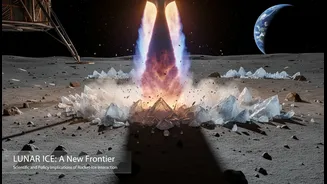
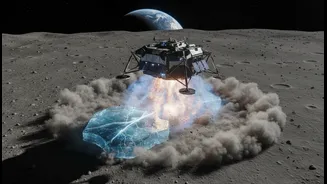
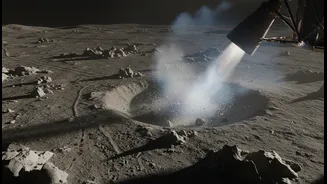
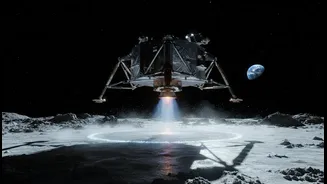
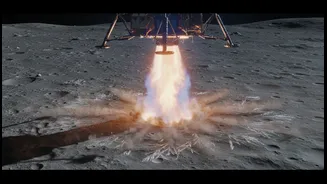
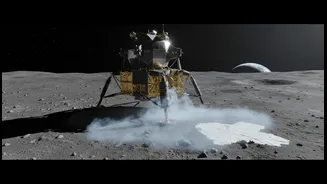
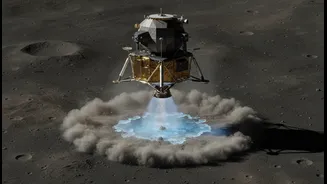
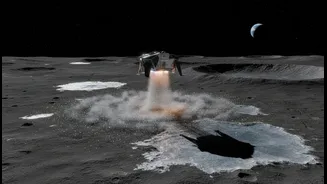
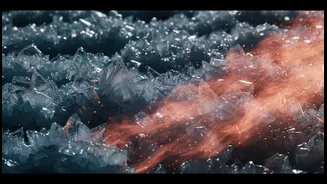
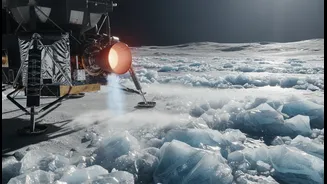
Herein lies the conflict. The process of landing a spacecraft on the Moon involves powerful rocket engines firing to slow the descent. This process spews hot exhaust gases, which include water and other compounds like methane. On a world with virtually no atmosphere, these exhaust plumes expand rapidly and globally. Studies using computer simulations show that exhaust from a single mid-sized lander can spread across the entire Moon in just a few hours. A significant portion of these exhaust gases can then freeze and settle in the same ultra-cold polar craters that hold the pristine, ancient ice. In effect, we risk contaminating the scientific record before we even have a chance to read it.
What's at Stake? Science and Resources
The scientific stakes are immense. The ancient ice at the lunar poles is a time capsule, potentially holding clues about the origin of water in our solar system and perhaps even the building blocks of life on Earth. Contaminating this ice with modern, Earth-made water and chemicals from rocket exhaust could hopelessly scramble these priceless signals, making it impossible to distinguish between native lunar molecules and our own pollution. But this is not just a problem for scientists. If future lunar bases are to rely on mining this ice, contaminating it with other chemicals could complicate purification efforts. The bigger issue is one of proximity; a lander setting down near a promising ice deposit could kick up dust and regolith that blankets and obscures the very resource it intended to prospect. It's a classic tragedy of the commons scenario, played out on a planetary scale.
The 'Wild West' of Lunar Landings
Currently, the rules governing outer space are not equipped for this new challenge. The foundational Outer Space Treaty of 1967, signed long before the discovery of polar ice, prohibits national appropriation of celestial bodies but offers little specific guidance on resource extraction or landing site deconfliction. It calls for nations to act with "due regard" for others' activities, but what that means in practice is vague. There is no international traffic control for the Moon, nor are there zoning laws to protect scientifically sensitive areas from the impacts of nearby industrial activity. This legal vacuum creates a high-stakes 'first come, first served' environment, where the actions of one mission could inadvertently jeopardise the plans of another.
Building the Rules of the Road
Recognising this gap, efforts are underway to establish clearer principles. NASA is leading the charge with the Artemis Accords, a non-binding set of principles for cooperation in civil space exploration. As of June 2026, 68 nations have signed on. The Accords address deconfliction of activities through the creation of 'safety zones' to prevent harmful interference between missions. They also reinforce the importance of preserving outer space heritage and commit signatories to plan for mitigating orbital debris. While critics point out the Accords are a U.S.-led initiative and not a binding international treaty, they represent the most significant attempt to create norms of responsible behaviour for this new era. The goal is to ensure lunar exploration is safe, sustainable, and collaborative, preventing a chaotic scramble that could ruin the Moon's scientific value forever.