



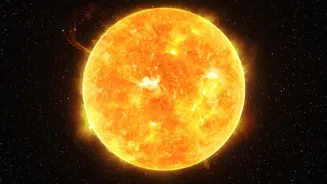
The Sun's Violent Outbursts
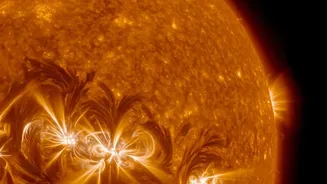
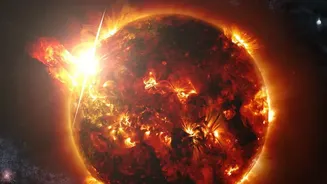
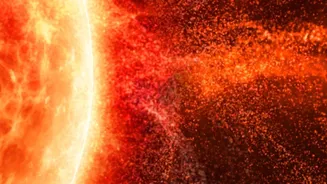
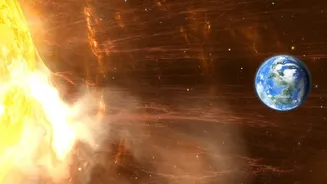
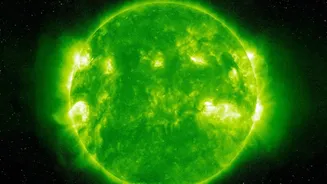
Our sun is not always the serene ball of light it appears to be. It is a dynamic star that periodically releases massive explosions of energy and matter. These events, known as solar flares and coronal mass ejections (CMEs), send streams of charged particles
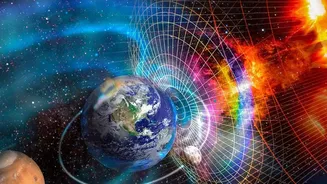
hurtling through space. While many miss our planet, a CME aimed directly at Earth can trigger a geomagnetic storm, a major disturbance of our planet's magnetic field. These storms are the primary cause of what we call severe 'space weather', and they pose a significant threat to our technologically dependent world.
How a Solar Storm Knocks Out Power
The danger to power grids isn't the direct impact of particles, but a secondary effect. When a CME slams into Earth's magnetic field, it generates rapidly fluctuating magnetic fields on the ground. This, in turn, induces powerful, low-frequency electrical currents in long conductors on the surface, such as power lines and pipelines. These are called Geomagnetically Induced Currents (GICs). GICs are essentially rogue DC currents flowing into an AC (alternating current) system. They can flow into the massive transformers at substations, causing them to saturate, overheat, and potentially suffer permanent damage. This can lead to voltage instability, tripping safety relays and, in the worst-case scenario, a cascading grid collapse.
A Lesson from History: The Quebec Blackout
The threat is not theoretical. In March 1989, a powerful geomagnetic storm struck Earth, and its effects were felt most acutely in Quebec, Canada. Geomagnetically induced currents surged through the Hydro-Québec power grid. Within just 90 seconds, safety systems tripped across the network, and the entire grid collapsed. Six million people were plunged into darkness for up to nine hours in the cold of winter. The event was a wake-up call for the energy industry worldwide, demonstrating the profound vulnerability of power infrastructure to activity on the sun. It proved that robust monitoring and mitigation strategies were no longer optional.
The Shield of Modern Science
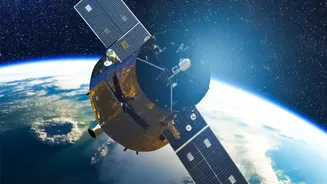
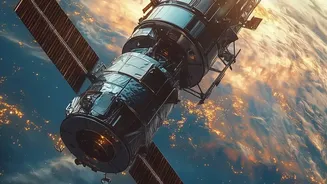
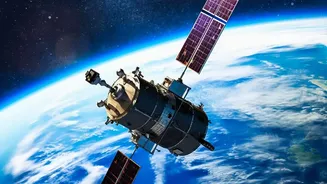
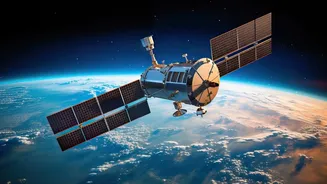
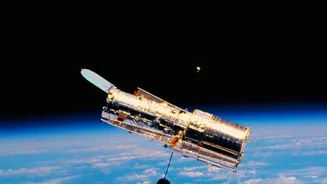
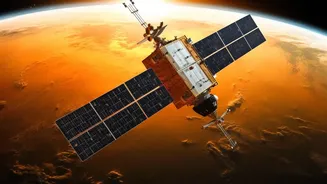
This is where advanced space weather monitoring comes in. The goal is simple: see the storm coming. By placing satellites at strategic points in space, scientists can watch the sun for explosive events. When a CME is launched toward Earth, it can take anywhere from 12 hours to a few days to arrive, creating a critical window for preparation. Agencies like the U.S. National Oceanic and Atmospheric Administration's (NOAA) Space Weather Prediction Center (SWPC) and the Indian Space Research Organisation (ISRO) are at the forefront of this effort. They operate a network of ground and space-based observatories to provide continuous surveillance. These services act as an early warning system for the world, issuing alerts and forecasts to power grid operators, satellite companies, and airlines.
Forecasting for Resilience
Modern forecasting is more than just spotting a flare. It involves complex models that predict a CME's trajectory, speed, and magnetic orientation. India's Aditya-L1 mission, positioned at the L1 Lagrange point, plays a vital role by studying solar wind and magnetic fields before they reach Earth. This provides crucial data for predicting the severity of a geomagnetic storm. Recently, advancements using machine learning and AI are making these forecasts even more accurate, with some models able to predict grid disruptions with more lead time. New missions like NASA's PUNCH can now track CMEs almost all the way to Earth, revolutionizing forecast accuracy. Armed with this advance notice, grid operators can take protective measures: reducing load, postponing maintenance, and preparing for increased reactive power demand to stabilize the system and prevent a repeat of the 1989 blackout.