






The Modern Urban Dilemma
Living in a city apartment often means making calculated decisions about space. Every square foot is precious, making it difficult to justify owning bulky, rarely-used items. Think about a high-pressure washer for cleaning the balcony once a year, a ladder
to change a single lightbulb, or an electric drill for a weekend DIY project. The famous observation that the average power drill is used for a mere 13 minutes in its entire lifetime highlights the inefficiency. For urban families, the choice is often between spending significant money on an item that will gather dust, cluttering up valuable storage space, or forgoing the project altogether. This leads to a cycle of over-consumption or inconvenience, a problem ripe for a community-based solution.
A Library for Everything Else
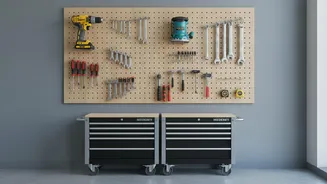
Enter the tool-sharing bank, or the ‘library of things’. The concept is simple and powerful: instead of every household owning its own set of tools, a central, shared collection is made available to all residents. In an apartment complex, this can be a dedicated room or a set of secure lockers managed by the building administration or a residents' committee. Much like a traditional library, residents can check out a circular saw, a carpet cleaner, or a set of wrenches for a specific period, returning it for the next person to use. Some models are free amenities, while others operate on a small, affordable subscription fee to cover maintenance and replacement costs. This setup transforms access to equipment from a capital expense into a low-cost service.
More Than Just Convenience
The benefits for families extend far beyond simple convenience and cost savings. Firstly, there's the significant financial relief. Residents avoid the upfront cost of purchasing tools they might only use once or twice. Secondly, it declutters living spaces, freeing up valuable storage in already compact homes. But perhaps more importantly, these sharing hubs foster a stronger sense of community. They become natural meeting points where neighbours can interact, share skills, and even collaborate on projects. This shift from 'mine' to 'ours' cultivates a more connected and supportive living environment, something often missing in the anonymity of large city buildings.
Tackling the E-Waste Mountain
The impact of tool sharing goes beyond individual households and touches upon a critical environmental issue: electronic waste (e-waste). Every power tool, kitchen appliance, and piece of electronic equipment eventually reaches the end of its life. When thousands of households individually buy and discard these items, it contributes to a growing mountain of e-waste, which is often difficult and hazardous to recycle. By keeping a smaller number of high-quality tools in constant circulation within a community, tool libraries drastically reduce the overall number of products manufactured and discarded. Many tool libraries also have volunteers who repair and maintain the equipment, extending product lifespans and salvaging parts from items that can no longer be used—a core principle of the circular economy.
A Perfect Fit for Urban India
While dedicated tool libraries are more established abroad, the concept is incredibly relevant for India’s rapidly urbanising landscape. Cities like Mumbai, Bengaluru, and Delhi are characterized by high-density living, a growing DIY culture among millennials, and an increasing environmental consciousness. The booming co-living sector in India, which already provides shared amenities like kitchens and laundry rooms, is a natural environment for introducing tool-sharing banks. As millions more people move into urban centres and developers focus on creating community-centric living spaces, integrating shared-resource models like tool banks is a logical next step. It aligns perfectly with the minimalist and access-over-ownership preferences of a younger generation.