






More Than Just Push-Ups
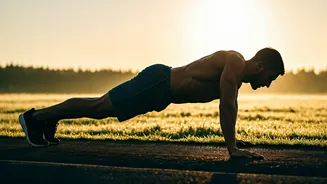
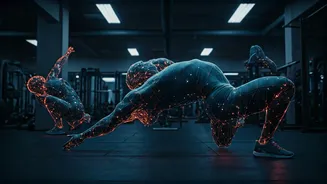
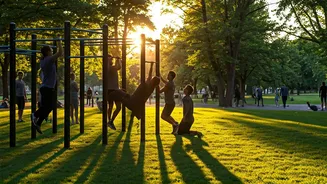
So what exactly is a “fluid bodyweight flow”? Forget the rigid, high-rep calisthenics of boot camp. This is about stringing together movements—like crawls, rolls, and dynamic stretches—into a seamless, dance-like sequence. Think of modalities like Animal
Flow, Primal Movement, or advanced yoga styles that prioritize the transition between poses as much as the poses themselves. The goal isn’t to lift a maximal load for a few reps; it's to control your own body through complex ranges of motion. Instead of isolating a muscle group, these workouts challenge your coordination, mobility, and stability all at once. It’s a practice that looks less like a bodybuilding session and more like a form of physical problem-solving, where the puzzle is how to move from one position to the next with grace and control.
The Search for Functional Strength
The rise of these flows isn’t a rejection of strength, but a redefinition of it. For years, the dominant fitness culture glorified pushing ever-heavier weights, often with aesthetics as the primary goal. But a growing number of people are asking a different question: “What can my body do?” They’re seeking functional fitness—strength that translates directly to everyday life. It’s the ability to pick up a heavy suitcase without tweaking your back, play with your kids on the floor without your knees aching, or simply feel more athletic and less rigid. After a decade dominated by high-intensity interval training (HIIT) that often led to burnout and injury, many are seeking a more sustainable, joint-friendly approach. Bodyweight flows offer an antidote: a low-impact, high-skill challenge that builds resilience from the inside out.
Strength vs. Skillful Movement
Let’s be clear: bodyweight flows are not a one-for-one replacement for heavy lifting. The two disciplines simply train different qualities. Heavy weight training is unparalleled for building maximal strength and muscle mass. Loading the skeleton with external weight triggers unique hormonal and neurological adaptations that you can't replicate with bodyweight alone. If your goal is to deadlift 400 pounds, you have to deadlift. Bodyweight flows, on the other hand, excel at developing relative strength—your strength in proportion to your body weight—along with motor control, balance, and proprioception (your sense of where your body is in space). Rather than one being “better,” they are different tools for different jobs. The trend isn't so much an abandonment of weights as it is an embrace of movement skill as a co-equal pillar of fitness.
A Workout for the Mind
Perhaps the most compelling driver of this trend is the mental benefit. You cannot zone out during a bodyweight flow session. Unlike running on a treadmill or performing a set of bicep curls, these complex sequences demand your full attention. You have to concentrate on your breath, hand placement, and the distribution of your weight. This intense focus transforms the workout into a form of moving meditation. In a world of constant digital distraction and chronic stress, an hour spent fully inhabiting your body can feel revolutionary. It’s a practice that quiets the mental chatter, leaving you feeling not just physically tired but mentally refreshed and centered. For many urban professionals, this integrated mind-body experience is just as valuable as the physical results.