






The Limits of the Laboratory
For decades, the standard approach to understanding animal minds, including those of dogs, has been through controlled laboratory experiments. This method has its strengths: by creating a sterile, predictable environment, scientists can isolate variables
and test specific hypotheses. Think of a dog being asked to choose between two buttons to get a treat, or having its brain scanned while listening to different words. These studies have provided valuable insights, revealing that dogs can understand more of our speech than we thought and possess sophisticated problem-solving skills. However, this approach has a significant drawback. A dog in a strange, quiet lab is not a dog in its natural element. Its behaviour is often constrained, influenced by the stress of an unfamiliar setting and the absence of normal social cues, which can paint an incomplete or even misleading picture.
The Household: A Living Case Study
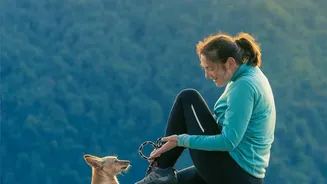
A more complete picture begins to emerge when we observe dogs where they spend most of their lives: our homes. A growing number of studies now recruit pet dogs to participate in research from the comfort of their houses or in more natural, campus-like settings. The home is a rich, complex environment. Here, a dog’s communication is not just about responding to a specific command. It is about navigating relationships with multiple family members, other pets, and the daily rhythm of life. Observing a dog in its home allows researchers to study spontaneous interactions, subtle social cues, and behaviours that would never surface in a lab. How does a dog signal it wants to play to one person versus another? How does its posture change when the delivery person arrives versus a familiar guest? These are the questions that household-based observation can help answer.
Lessons from the Street and Village
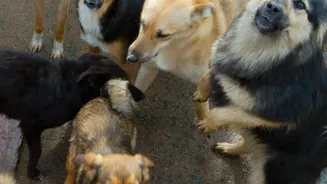
Perhaps the most overlooked and valuable subjects for understanding dog communication are free-ranging dogs, often called village or street dogs. These animals, which make up an estimated 75% of the world's billion-strong dog population, are not products of human breeding but of natural selection. Particularly in India, free-ranging dogs live in complex social groups, navigating busy urban environments and forming intricate relationships with humans and other dogs. Researchers studying these populations in India have discovered fascinating social dynamics. These dogs show a high degree of behavioural flexibility, learning to distinguish between friendly and threatening humans and adjusting their behaviour based on experience. Some studies suggest their social structures can even be reminiscent of human joint families, with cooperative pup-rearing and complex conflict-resolution strategies. This is the raw, unfiltered social life of dogs, offering a window into behaviours that pet dogs, whose mates and meals are chosen for them, may never display.
A Truer Picture of 'Man's Best Friend'
Combining these different contexts is the key to a holistic understanding. Lab studies can help us pinpoint specific cognitive abilities. Household observations show us how those abilities are applied in a dog's primary social group. And studies of free-ranging dogs reveal the underlying evolutionary and social behaviours that form the bedrock of the entire species. For example, a lab experiment might show that a dog can follow a pointing finger. A household observation might show how a dog uses its own gaze to direct its owner's attention. A study of street dogs might reveal how they use subtle body language to claim resources without resorting to fights. Each context provides a vital piece of the puzzle. By dismissing free-ranging dogs as mere mongrels or assuming lab results tell the whole story, we risk misunderstanding the very animal we claim to know so well.