




The Problem with Potholes
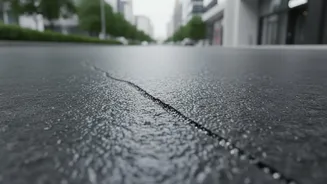
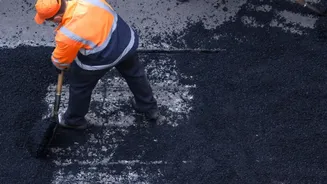
Every driver in India knows the feeling: the sudden, jarring thud of hitting a pothole. These craters are more than just a nuisance; they are a significant safety hazard and a massive drain on public funds. Caused by water seeping into small cracks in the asphalt
or concrete, which then expands and contracts, the damage quickly escalates under the weight of traffic. The result is a perpetual cycle of patching and repairing that costs municipalities crores of rupees annually, not to mention the damage to vehicles and the risk of accidents. Conventional concrete, despite its strength, is brittle and inevitably cracks over time, leaving it vulnerable.
Introducing 'Bioconcrete'
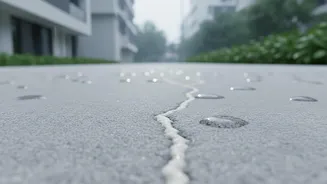
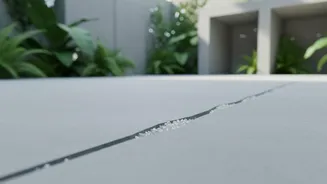
Imagine a road that, when it cracks, simply mends itself. This is the promise of self-healing concrete, often called 'bioconcrete' or 'living concrete'. The concept, pioneered by microbiologist Henk Jonkers at Delft University of Technology, was inspired by how nature heals itself, like bones mending in the human body. The idea is to embed a healing agent directly into the concrete mix. When a crack forms and water gets in, this agent activates and fills the fissure from the inside out, preventing small problems from becoming large potholes. The most promising of these agents are not chemicals, but living organisms.
How Bacteria Heal the Cracks
The magic lies in specific types of bacteria, such as Bacillus pasteurii or Sporosarcina pasteurii, which are naturally found in soil and are harmless to humans. These microbes are remarkable because they can produce spores and lie dormant in harsh, highly alkaline environments—like concrete—for potentially hundreds of years. They are mixed into the concrete along with a food source, typically calcium lactate, which is encapsulated in biodegradable pods. For as long as the concrete is intact, the bacteria do nothing. But the moment a crack forms and water seeps in, the process begins. The water dissolves the pods, providing the now-awakened bacteria with their food source. As the bacteria feed on the calcium lactate, their metabolic process produces limestone (calcium carbonate). This limestone precipitate fills the crack, effectively sealing it and restoring the concrete's integrity.
The Benefits and the Hurdles
The advantages of this technology are enormous. By autonomously repairing micro-cracks, bioconcrete can significantly extend the lifespan of roads, bridges, and buildings. This would lead to massive long-term savings on maintenance and repair budgets, which currently consume a huge portion of construction spending. Furthermore, it has environmental benefits; producing less new cement means a lower carbon footprint. However, the technology is not without its challenges. The primary hurdle is cost. Currently, self-healing concrete can be significantly more expensive than traditional concrete, largely due to the price of the calcium lactate nutrient. Researchers are exploring cheaper, sugar-based nutrients to bring the price down. Additionally, the healing process is not instantaneous and is most effective on smaller cracks, typically under a millimetre wide.
The Road Ahead for India
While widespread adoption is still some years away, the potential for self-healing concrete in a country like India is immense. The technology is particularly well-suited to our climate, where monsoon rains can wreak havoc on road infrastructure. The very water that causes the damage would become the trigger for the repair. Research into bacterial concrete is already underway in India, with organisations like the Nuclear Power Corporation exploring its use for durable structures. As the technology is refined and becomes more cost-effective, we could see pilot projects on city streets and national highways. It may not be the end of every pothole overnight, but it represents a major shift from a strategy of constant repair to one of built-in resilience.