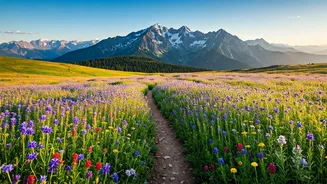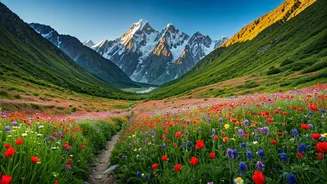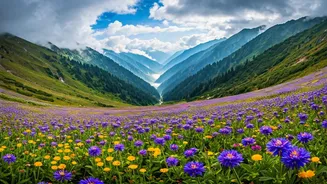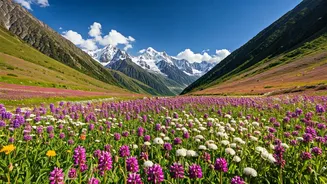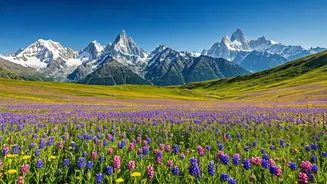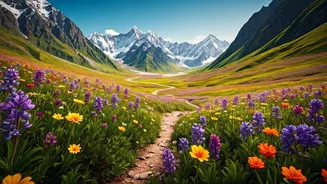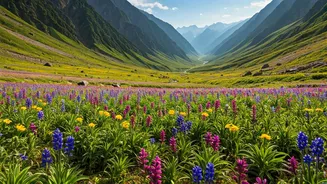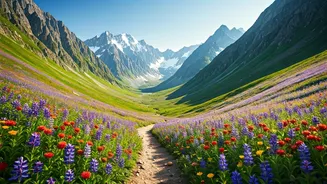



A Symphony of Colour
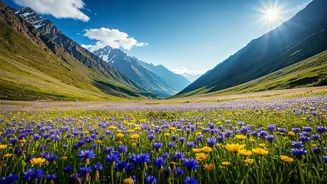
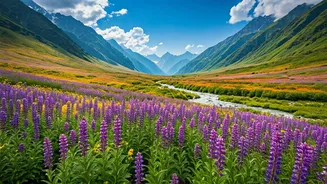
Tucked away in the Chamoli district of Uttarakhand, the Valley of Flowers National Park is a UNESCO World Heritage Site that transforms into a vibrant canvas every monsoon. This enchanting valley, against the backdrop of the mighty Zanskar range, is not
just a trekker’s paradise but a botanical wonder. Legends say it's the place from where Lord Hanuman collected the Sanjeevani herb. While the park is open from June to October, there’s a specific period when its beauty reaches an almost mythical crescendo. This is the 'peak bloom,' a fleeting spectacle that attracts nature lovers, photographers, and adventurers from across the globe.
Why Mid-July is the Golden Window
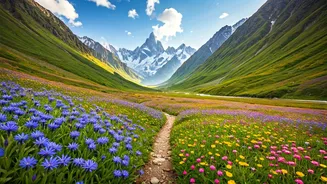
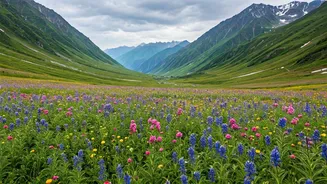
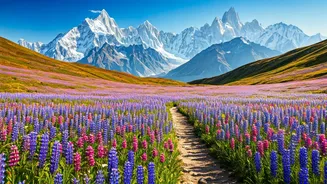
The secret to the Valley's magic is the monsoon. The rains awaken the dormant seeds, and by mid-July, the valley floor erupts in a riot of colour. This is the peak bloom season, which typically lasts until mid-August. During this time, you can witness hundreds of species flowering simultaneously. Look out for the iconic Himalayan Blue Poppy, the elusive Brahmakamal (often found on higher slopes), the delicate Cobra Lily, and vast carpets of Geraniums, Potentillas, and Himalayan Balsam. While visiting in June offers lush greenery and early blooms, and late August provides a different palette of colours, mid-July is when the floral density and diversity are at their absolute zenith. It's the moment the valley truly lives up to its name.
Planning Your Journey: The First Leg
Your journey to this floral paradise begins long before the trek. The nearest major towns are Haridwar and Rishikesh, which are well-connected by rail and road. From there, you need to undertake a long, scenic road journey to Govindghat or the newer starting point, Pulna (around 295 km, taking a full day). It is highly advisable to break the journey at a place like Joshimath or Pipalkoti to acclimatise and rest. From Govindghat/Pulna, the actual trek starts. Shared taxis and buses ply this route, but booking a private cab offers more flexibility. Ensure you have your accommodation in Govindghat or Joshimath booked in advance, especially during the peak season.
The Trek to Ghangaria and the Valley
The official trek begins from Pulna. From here, it’s a 14 km trek to Ghangaria, the base camp for both the Valley of Flowers and Hemkund Sahib. The trail is well-paved but can be strenuous, so take your time. You can hire a porter or a mule to carry your luggage. Ghangaria has basic guesthouses and a GMVN tourist rest house. After resting overnight, you’ll start the trek to the Valley of Flowers. The entry gate is about a kilometre from Ghangaria, where you’ll need to buy a permit (valid for three days). The valley itself is a 3-4 km trek from the gate. The trail is gentle, allowing you to soak in the breathtaking scenery as the floral landscape unfolds before you.
Essential Tips for a Perfect Trip
To make the most of your visit, keep these tips in mind. First, acclimatise properly to avoid altitude sickness. Spend a night at a lower altitude before ascending to Ghangaria (3,050 metres). Second, pack wisely. You'll need good waterproof trekking shoes, a raincoat or poncho (monsoon showers are frequent), warm layers, a first-aid kit, and sunscreen. Third, be a responsible tourist. Do not pluck flowers or leave any litter behind. The valley is a fragile ecosystem. Lastly, remember that there is no accommodation inside the valley; you must trek back to Ghangaria before 5 PM. Carry a packed lunch and enough water for the day's excursion.
Bonus Trek: The Spiritual Climb to Hemkund Sahib
Since you're already at Ghangaria, consider dedicating a day to the trek to Hemkund Sahib. This sacred Sikh Gurudwara and the adjoining Lakshman temple are situated beside a glacial lake at an altitude of over 4,300 metres. The 6 km trek is steep and challenging but incredibly rewarding. The path itself is often dotted with Brahmakamal flowers, and the spiritual aura of the destination, combined with the stunning panoramic views of snow-capped peaks, makes it an unforgettable experience. Most travellers plan their itinerary to cover both the Valley of Flowers and Hemkund Sahib over two separate days from the Ghangaria base.