

The Sun's 11-Year Cycle Hits Its Peak
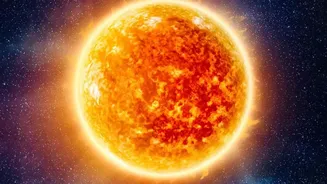
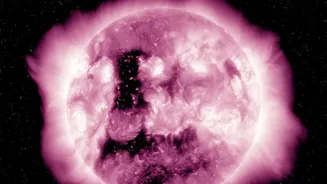
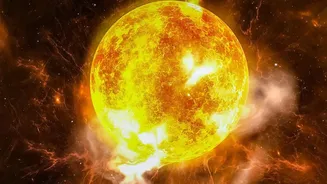
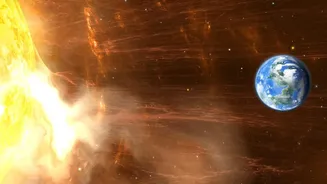
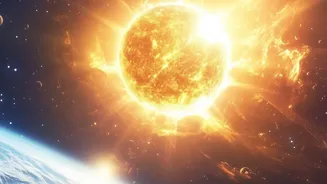
The sun has a heartbeat, a rhythmic cycle of activity that lasts roughly 11 years. We are now in what scientists call Solar Cycle 25, which is reaching its crescendo, or 'solar maximum,' through 2026. This peak period is defined by a dramatic increase
in sunspots, which are dark, magnetically complex regions on the sun's surface. These sunspots are the launchpads for powerful solar flares and enormous eruptions of solar plasma known as coronal mass ejections (CMEs). While earlier predictions suggested a mild cycle, Solar Cycle 25 has proven to be far more active than expected, making it one of the most intense in two decades. This heightened activity sends streams of energetic particles hurtling towards Earth, setting the stage for both celestial beauty and technological chaos.
A Major Threat to Our Digital World
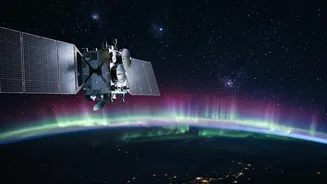
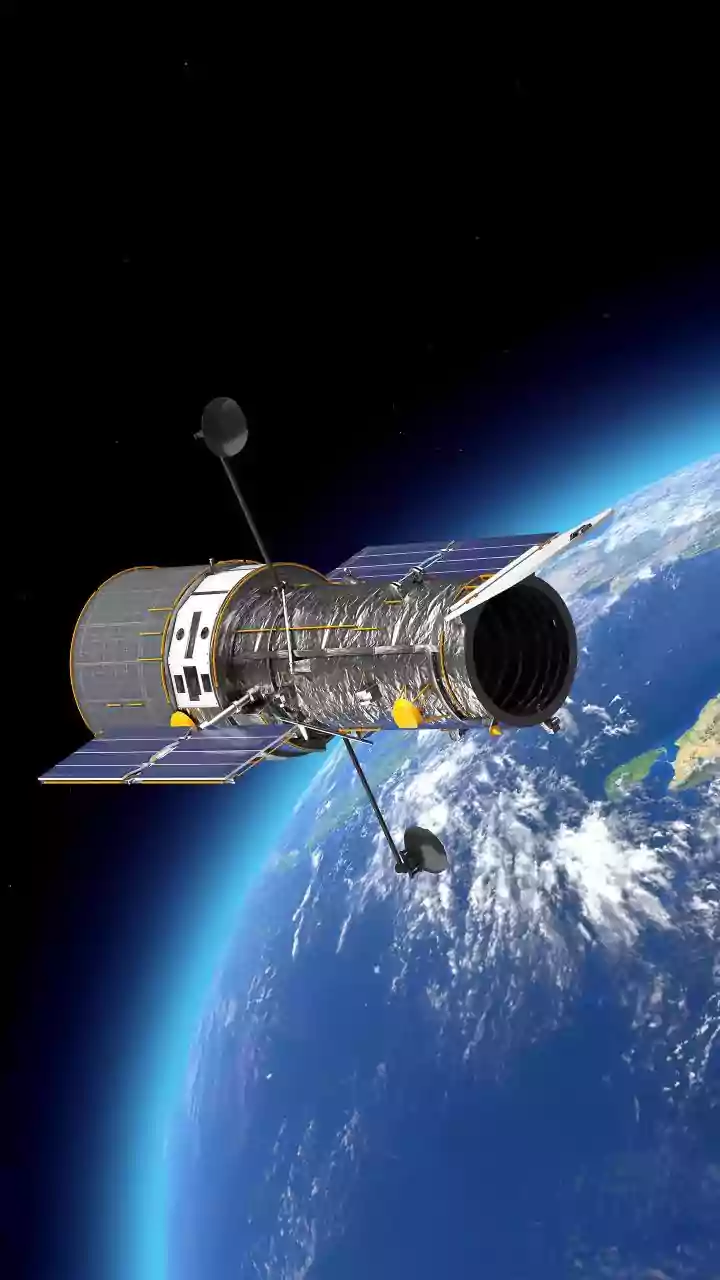
Our dependence on satellites makes a strong solar maximum a significant concern. When a CME slams into Earth's magnetic field, it can trigger a geomagnetic storm. These storms have several disruptive effects on our orbital infrastructure. Firstly, they heat and expand Earth's upper atmosphere, increasing the atmospheric drag on satellites in low-Earth orbit. This can cause satellites to lose altitude, shortening their operational lifespan and even risking collisions. Secondly, the influx of charged particles can directly damage satellite electronics, causing short-circuits or phantom commands that disrupt operations. This can interfere with essential services we use daily in India, including GPS navigation for maps and ride-hailing apps, DTH television signals, and critical weather forecasting. In severe cases, it can cause high-frequency radio blackouts and significant errors in GPS positioning.
The Sky's Dazzling Consolation Prize
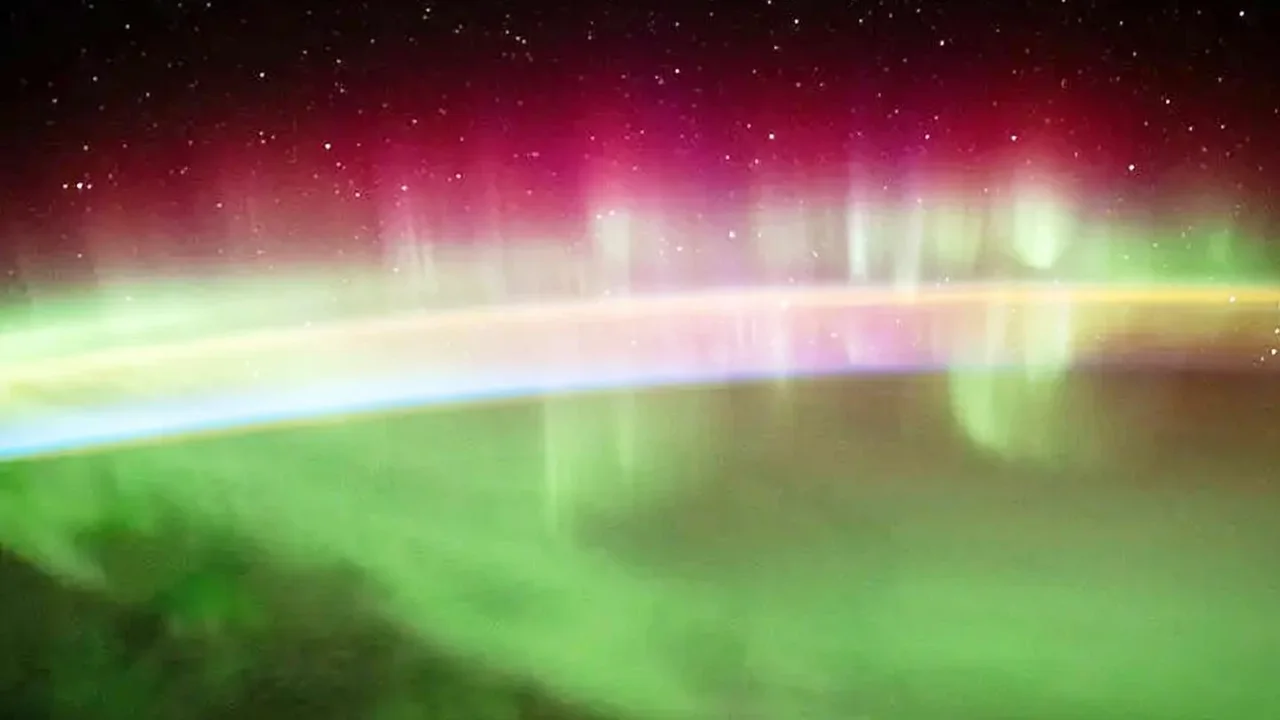
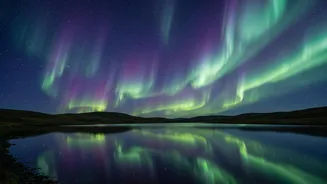
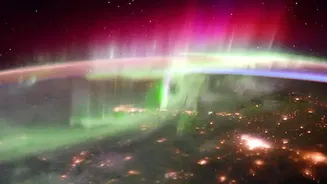
The very same solar particles that pose a risk to our technology are also responsible for one of nature’s most breathtaking spectacles: the aurora. The northern and southern lights are created when these charged particles from the sun collide with gases like oxygen and nitrogen in our planet's upper atmosphere. The solar maximum supercharges this process. The increased frequency and intensity of solar storms mean the auroras are brighter, more dynamic, and can be seen at much lower latitudes than usual. While normally confined to the polar regions, the powerful storms of the 2026 peak have pushed these displays further south, offering a rare viewing opportunity for millions. The colours seen—most commonly green from oxygen at lower altitudes and rarer reds from oxygen at higher altitudes—become more vibrant and widespread.
Can We See the Auroras in India?
This is the question on every Indian sky-watcher's mind. The answer is, almost never. India's location is generally too far south to see the aurora, even during a strong solar maximum. However, the sheer power of Solar Cycle 25 has created some incredibly rare exceptions. During the most extreme geomagnetic storms, a faint red glow, known as a Stable Auroral Red (SAR) arc, has been photographed from high-altitude, dark-sky locations in India, such as Hanle in Ladakh. This is not the classic dancing green curtain seen in Norway, but a subtle, high-altitude phenomenon caused by heat from Earth's magnetic field. So, while a trip to Delhi or Mumbai won't yield an aurora sighting, the possibility—however slim—of capturing a faint glow from the highest reaches of the Himalayas is a historic first for the country. For a guaranteed show, Indian travellers would need to head to traditional aurora hotspots like Scandinavia or Canada.