






Why Go Inflatable?
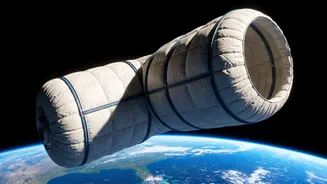
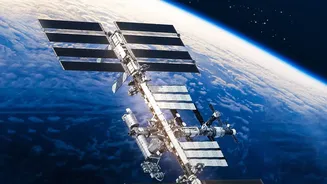
The biggest challenge in building anything in space is getting it there. Rockets have limited cargo space, known as a payload fairing. Traditional rigid modules, like those on the International Space Station (ISS), are constrained by this volume. Inflatable
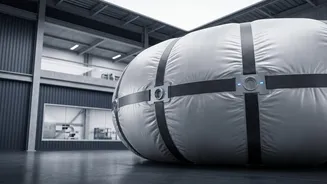
habitats solve this problem with an ingenious approach. They are launched in a compressed, compact state, allowing for a much larger structure to fit inside a standard rocket. Once in orbit, the module inflates to its full size, creating a voluminous living and working area. Sierra Space’s LIFE habitat, for example, can be packed into a 5-meter fairing but expands to the size of a three-story building, offering about a third of the entire pressurized volume of the ISS in a single module. This massive gain in volume per launch drastically reduces costs and complexity, making the business case for commercial space stations viable.
The Ground-Based Gauntlet: Burst Testing
Before an inflatable module can ever reach orbit, it must endure a brutal series of ground tests designed to prove its strength and reliability. The most spectacular of these is the Ultimate Burst Pressure (UBP) test. Engineers take a full-scale or sub-scale version of the habitat and pump it with gas until it violently explodes. Companies like Sierra Space and Lockheed Martin conduct these tests at specialized facilities, including historic rocket test stands at NASA's Marshall Space Flight Center. The goal is to ensure the module can withstand pressures far beyond its normal operating level. NASA often requires a safety factor of at least four times the maximum operating pressure. In recent tests, Sierra Space's LIFE habitat has consistently exceeded this, with one full-scale module reaching 77 psi before bursting—27% above NASA's required safety margin. These tests provide thousands of critical data points on how the advanced fabrics and seams fail, allowing engineers to refine and validate their designs.
Defending Against the Void
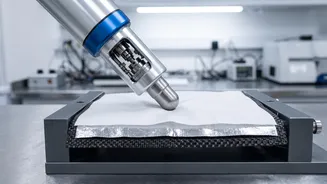
A space station's greatest threats are the ones you can’t see. Tiny particles of micrometeoroids and orbital debris (MMOD) travel at hypervelocity speeds, posing a significant impact risk. To counter this, inflatable habitats are not simple balloons; they are constructed with multiple, highly advanced layers. The outer layers are designed as a shield to break up and absorb the energy of incoming particles. Below that is the primary structural restraint layer, often made of woven Vectran straps—a material five times stronger than steel when pressurized. Finally, an inner airtight bladder keeps the breathable atmosphere inside. To test this multi-layer defense, developers use hypervelocity gas guns that fire small projectiles at speeds exceeding 7 km/s to simulate MMOD impacts. By analyzing the results, engineers can certify that the habitat's shell can protect both the structure and the astronauts inside from the constant threat of orbital debris.
Simulating the Harshest Environment
Beyond pressure and impacts, these habitats must survive the extreme environment of space. On Earth, developers use large thermal vacuum chambers to subject the modules to the intense temperature swings and vacuum they will experience in orbit. This testing helps validate the performance of the thermal insulation layers and ensures the structure remains stable. Another critical test is the long-duration creep test. In this process, a habitat is pressurized to a high level for thousands of hours to measure how the fabric stretches or 'creeps' over time. Successfully passing these tests demonstrates that the module can maintain its structural integrity for a planned mission lifespan of 15 years or more. Furthermore, engineers conduct deployment tests to ensure the complex origami-like unfolding and inflation process happens in a controlled and predictable manner.
The Commercial Space Race Heats Up
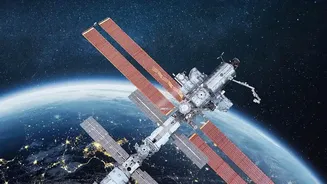
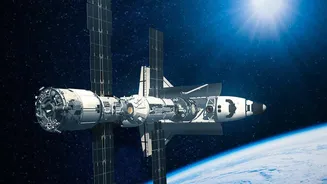
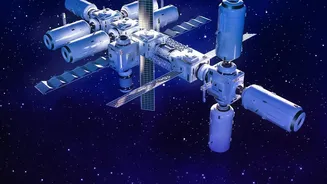
Several private companies are leading the charge in developing and testing these next-generation outposts. Sierra Space is a major player with its LIFE habitat, which forms a key part of the Orbital Reef commercial space station concept being developed with Blue Origin. Axiom Space is also developing its own commercial station, which will initially attach to the ISS and has plans that include inflatable modules for specialized purposes like entertainment venues. These efforts are part of NASA's broader strategy to foster a commercial economy in low-Earth orbit, creating a future where private stations replace the aging ISS. The successful, and often explosive, testing of these inflatable modules is a critical step toward that future, paving the way for new opportunities in in-space research, manufacturing, and tourism.