

Preparing Your Cherished Fabric
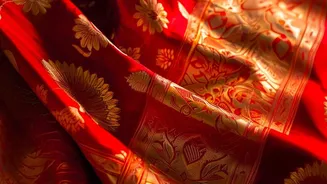
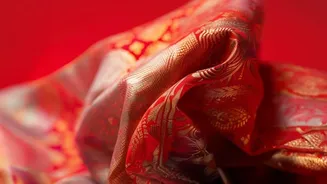
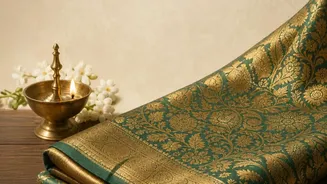
Before you begin cutting, it’s crucial to prepare your saree. Gently hand wash the silk fabric and allow it to dry completely. Iron it on a low heat setting to remove any wrinkles. Carefully inspect the saree for any tears or weakened sections. The strongest
parts of the fabric are best for items that will see frequent use, while the more delicate, decorative sections can be highlighted on cushion fronts or table runners. Decide which parts you want to feature—perhaps a gorgeous pallu or an intricate border. This initial preparation ensures your final creations are both beautiful and durable.
Gathering Your Tools and Materials
Having the right tools will make this project smooth and enjoyable. You will need your chosen silk saree, a sharp pair of fabric scissors or a rotary cutter, a measuring tape, and pattern weights to hold the slippery fabric in place. For sewing, use a fine needle (a Microtex needle, size 60/8 or 70/10, is ideal for silk) and a high-quality, fine thread made of cotton or polyester. You might also want a fabric lining, especially for lighter sarees, to add structure and durability. For cushion covers, you'll need cushion pads and a closure method, such as a zipper or extra fabric for an envelope-style back.
Crafting a Stunning Table Runner
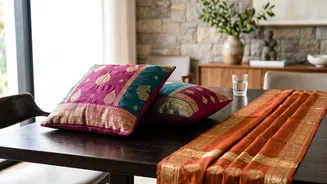
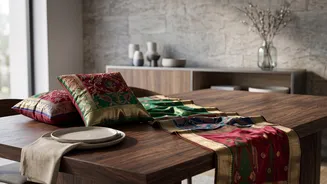
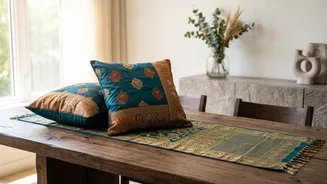
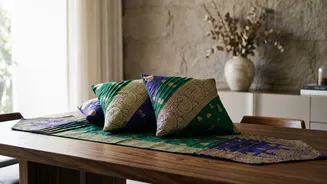
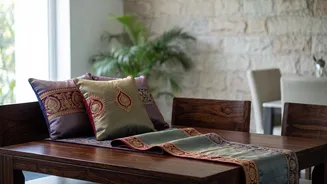
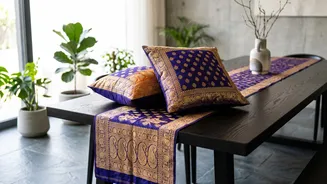
A table runner is one of the easiest ways to showcase a saree's beauty. First, measure your table's length and decide on the desired dimensions for your runner. A standard approach is to have it hang about six inches over each end. Cut a long strip from the saree to your required size, making sure to incorporate the border or pallu for maximum effect. For a more finished and durable runner, consider adding a fabric lining. Place the saree fabric and lining with their right sides facing each other, stitch along the edges, leaving a small opening to turn it inside out. Once turned, press it flat and stitch the opening closed. For an extra touch of elegance, add tassels to the ends.
Designing Elegant Cushion Covers
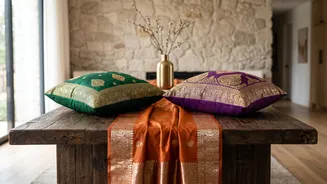
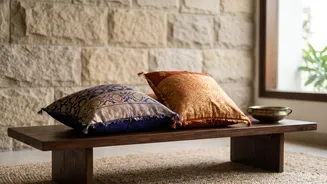
Cushion covers allow you to turn the most decorative parts of a saree into functional art. Measure your cushion pad and cut a piece of fabric for the front, adding a seam allowance on all sides. The pallu or a heavily embroidered section works perfectly for this. For the back, you can create a simple envelope closure. Cut two pieces of fabric that are the same width as the front piece but overlap in the middle when laid over it. Hem one long edge of each back piece. Then, place the front piece and the two back pieces with their right sides together and stitch around all four sides. Turn the cover right side out, and it's ready for the cushion. Using the same saree for a few cushions can create a cohesive look in your living room.
No-Sew Alternatives for Quick Decor
If sewing isn't for you, there are simple no-sew options. You can create a temporary cushion cover by neatly wrapping the fabric around a cushion, much like wrapping a gift, and securing it at the back with safety pins or a decorative knot. This method works well for dupattas or lighter sarees. For a table runner, you can simply cut a strip of the saree to the right length and use fabric glue to create clean, hemmed edges, or leave the raw edges if you prefer a more rustic look. The beautiful border of a Banarasi or silk saree can often stand on its own as a runner without any stitching at all.