

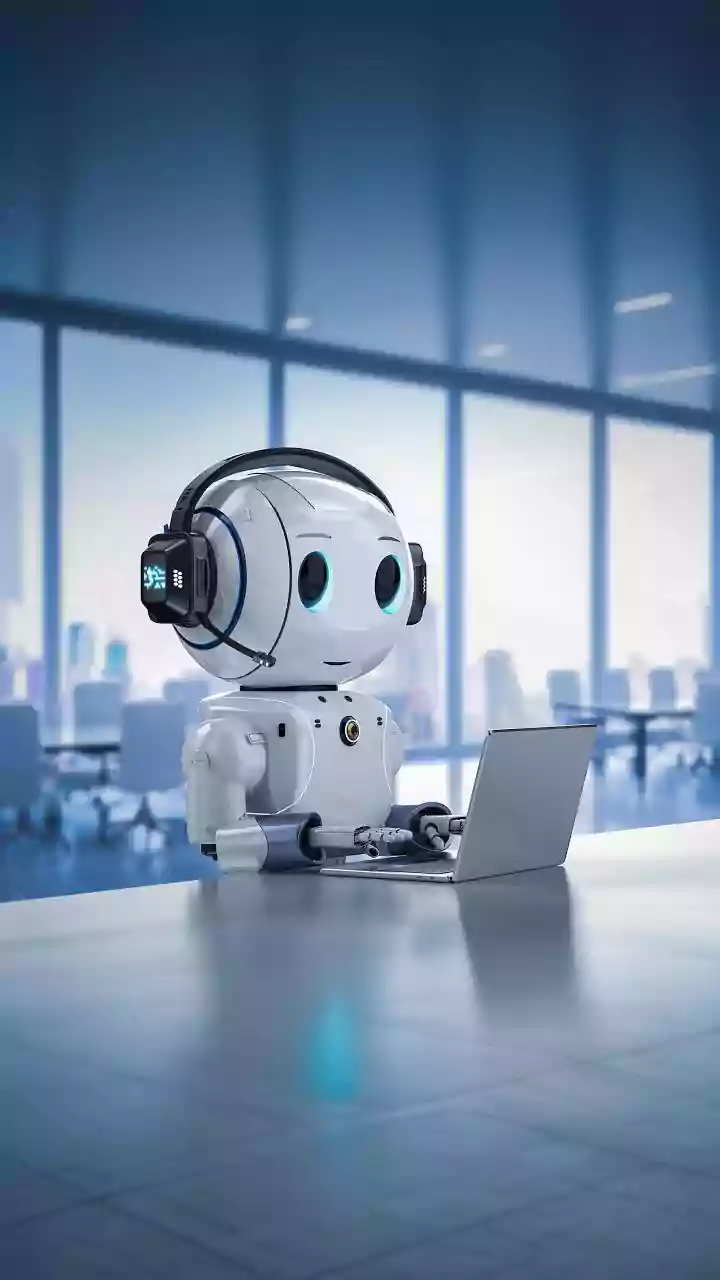





So, What Are Reading Bots?
At its core, a 'reading bot' is a sophisticated software program, often an app on a tablet or computer, designed to help children learn to read. Think of it less like a robot and more like a very smart, interactive storybook. Using artificial intelligence,
specifically voice recognition and machine learning, these programs listen as a child reads aloud. They can detect pronunciation errors, track reading speed, identify which words a child struggles with, and measure comprehension through interactive questions. Unlike a pre-recorded lesson, these bots react and adapt to the individual student in the moment, creating a one-on-one learning environment that was previously impossible to scale.
How The Personalization Works
The magic is in the data. As a student interacts with the bot, the system collects thousands of data points. It learns that a child might be great at sounding out three-letter words but stumbles on longer ones, or that their reading speed drops when they encounter a new character's name. Based on this continuous assessment, the AI tailors the experience. If a child is struggling, the bot might slow down, offer simpler texts, or provide phonetic clues for a difficult word. If a child is excelling, it will introduce more complex vocabulary and sentence structures to keep them challenged and engaged. This real-time adjustment ensures that the learning material is always in the 'Goldilocks zone'—not too easy, not too hard, but just right for fostering progress.
The Big Promise: A Tutor for Every Child
The potential benefits are enormous, especially in a country like India with large class sizes and diverse learning levels. For teachers, these bots can be powerful assistants. They can provide detailed, individual reports on each student's progress, highlighting specific areas of weakness that need attention. This frees up the teacher to focus on higher-level instruction and targeted intervention. For students, the experience is often more engaging and less intimidating than reading in front of a whole class. The bot offers non-judgmental correction, patient repetition, and a gamified experience with points and rewards that can make learning feel like play. Early studies on some platforms have shown significant gains in reading fluency and accuracy, suggesting these tools can be highly effective in boosting foundational literacy.
The Catch: What Are the Risks?
Despite the promise, there are valid concerns. The most obvious is the 'digital divide'. Access to the necessary devices (tablets, smartphones) and reliable internet is not universal, which could mean these advanced tools only benefit children from more affluent backgrounds, widening existing inequalities. Data privacy is another major issue. These apps collect vast amounts of data on a child's learning process; who owns this data and how it is used is a critical question for parents and policymakers. Furthermore, there's the risk of over-reliance on technology. Reading is not just about decoding words; it’s about understanding nuance, emotion, and culture—things a human teacher is uniquely equipped to discuss. Critics worry that an over-emphasis on bots could sideline the crucial role of human connection and conversation in developing a lifelong love for reading.
The View From India
In the Indian context, these AI tutors present a unique set of opportunities and challenges. With the National Education Policy (NEP) 2020 placing strong emphasis on foundational literacy and numeracy, technology is seen as a key enabler. AI-powered tools could potentially be adapted to cater to India's linguistic diversity, offering tutoring in multiple regional languages. However, successful implementation would require massive investment in school infrastructure and teacher training. The solution cannot be to simply hand a child a tablet. Instead, these bots must be integrated into the curriculum as a tool to support, not replace, the invaluable work of our teachers. As ed-tech adoption continues to surge, the conversation is shifting from 'if' we should use these tools to 'how' we can use them responsibly and equitably to benefit every child.