


The Universe's First Responder
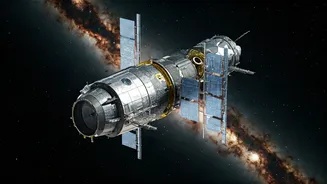
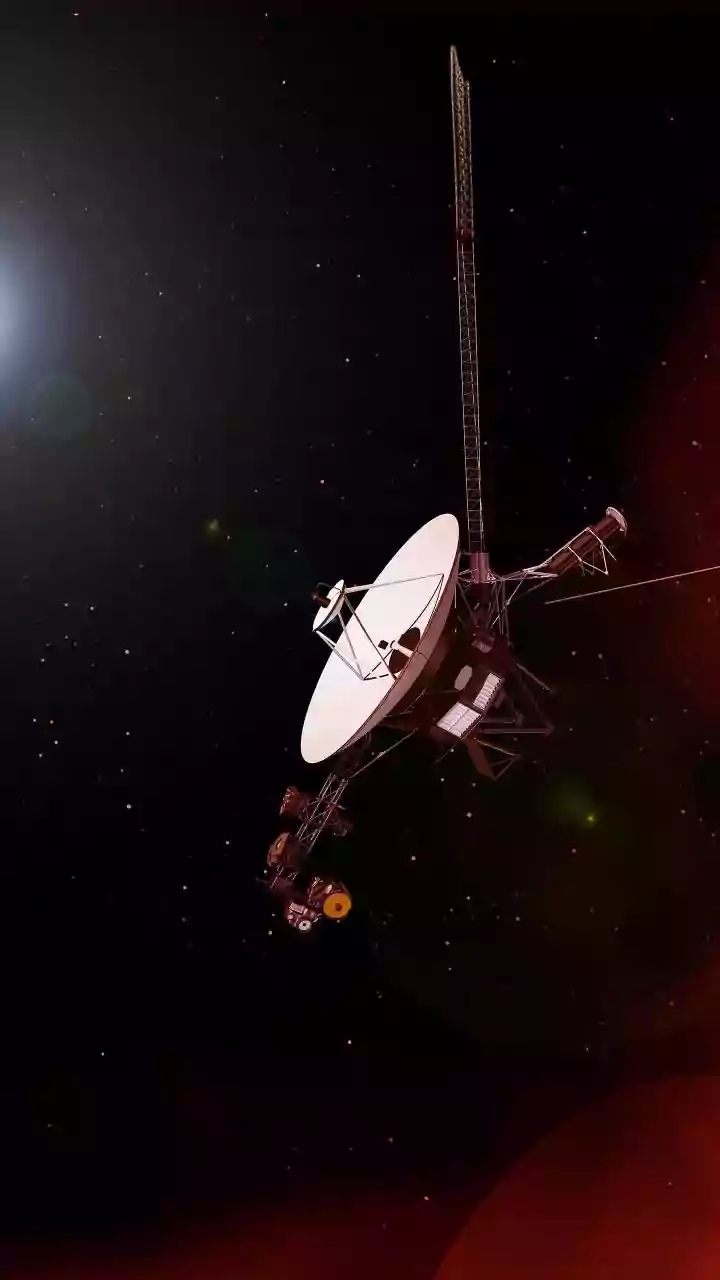
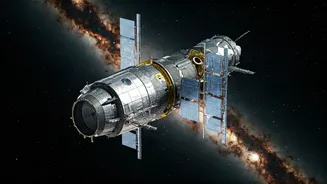
Launched in 2004 for what was planned as a two-year mission, the Swift Observatory has become one of astrophysics' most valuable assets. Its speciality isn't taking the most detailed images like Hubble or Webb, but speed. Swift is a cosmic ambulance chaser,
designed to automatically detect the most powerful explosions in the universe—gamma-ray bursts—and pivot to observe them in minutes. These cataclysmic events, often marking the death of a massive star or the collision of neutron stars, are incredibly brief. Swift's rapid response acts as an alert system for the entire astronomical community, telling other, larger telescopes exactly where to look before the evidence fades. This unique capability has been instrumental in understanding how heavy elements like gold are created and helped capture the brightest gamma-ray burst ever recorded.
A Victim of the Sun
For two decades, Swift has operated flawlessly, its mission extended time and again. But now, its orbit is decaying faster than anticipated. The culprit is the Sun. As the Sun enters a more active phase of its natural cycle, it heats Earth's outer atmosphere, causing it to expand. For a satellite in low-Earth orbit like Swift, this expanded atmosphere creates more drag, slowing the spacecraft down and pulling it closer to Earth. Without an intervention, the observatory is projected to re-enter the atmosphere and burn up before the end of the year. Faced with losing an irreplaceable asset—building a replacement isn't currently in the budget—NASA decided to try something radical.
The Audacious Rescue Plan
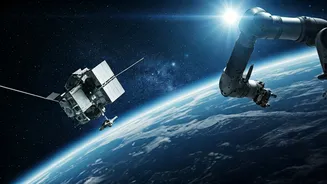
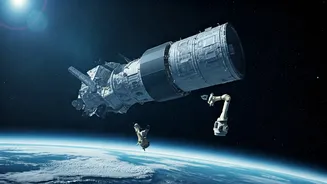
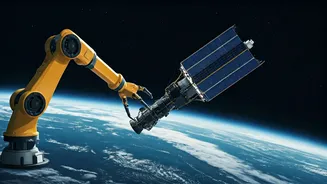
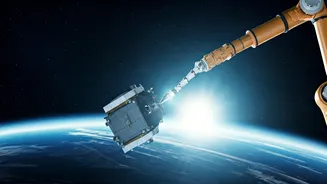
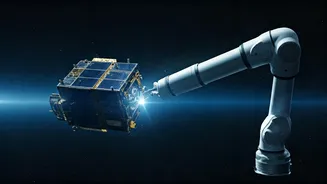
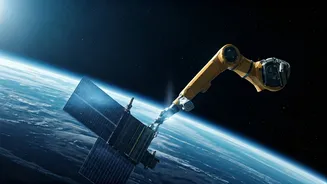
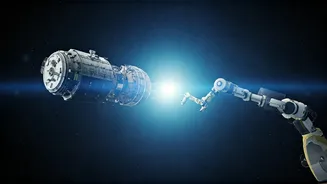
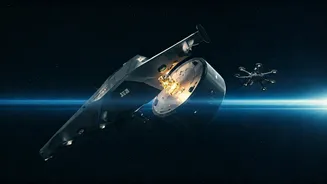
Enter Katalyst Space, a startup hired by NASA for a $30 million high-stakes salvage operation. The plan sounds like something from a science-fiction film: launch a custom-built robotic spacecraft, named LINK, to chase down the Swift telescope. The launch itself is unconventional, with a Pegasus rocket being dropped from an airplane over the Pacific Ocean. Once in orbit, the LINK robot will have to autonomously rendezvous with Swift, a spacecraft that was never designed to be visited or serviced. Using three robotic arms, it will attempt to latch onto the back of the telescope—an area engineers don't even have clear pictures of. If it can successfully grab hold, LINK will use its own thrusters to slowly boost the 1.6-ton observatory into a higher, more stable orbit over several months, giving it a new lease on life. Officials admit the chances of success are perhaps only 50-50.
A New Playbook for Space
The mission is about more than just one telescope. Its success would represent a monumental shift in how we manage assets in space. Currently, most satellites are disposable; when they run out of fuel or a component fails, they are abandoned. This rescue mission, if it works, will be a proof-of-concept for a new commercial industry of in-orbit servicing. It could usher in an era where satellites are refueled, repaired, and repositioned, extending the life of hugely expensive hardware and reducing space debris. Katalyst and NASA see this as the start of a new model where even satellites not designed for it can be serviced. The iconic Hubble Space Telescope, which is also slowly losing altitude, could be a future beneficiary of this type of technology, potentially receiving its own robotic boost in the coming years.