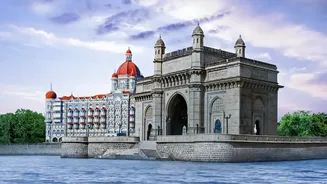







Perched on a rocky island in the Arabian Sea, the Murud-Janjira fort stands as a symbol of legendary resilience. Its formidable stone walls have witnessed centuries of history, remaining unconquered. Here is your guide to exploring this marvel.
A Fortress Unconquered
Murud-Janjira,
located off the coastal village of Murud in Maharashtra's Raigad district, is one of India's most formidable marine forts. Its story begins in the 15th century when local fishermen built a wooden structure to fend off pirates. Recognizing its strategic importance, it was later captured and transformed into an impregnable stone fortress by Malik Ambar of the Ahmadnagar Sultanate in the 16th century. The fort became the stronghold of the Siddis, rulers of African descent, and its name 'Janjira' is derived from the Arabic word 'Jazeera', meaning island. For centuries, it withstood sieges from the Marathas, Portuguese, and British, earning its reputation as the unconquered fort. This legacy of defiance is etched into every stone, making it a captivating destination for history enthusiasts.
Architectural Marvels and Relics
The fort's architecture is a masterclass in military engineering. The imposing walls rise up to 40 feet from the sea, and the structure features 26 rounded bastions that are still intact. The main gate, facing the Rajapuri jetty, is cleverly hidden and only visible at close range, a design intended to confuse attackers. Inside the sprawling complex, now mostly in ruins, you can find the remnants of palaces, officer's quarters, a mosque, and two large freshwater lakes—a remarkable feature for a structure surrounded by salt water. The fort was once armed with over 500 cannons. Today, several remain, including three massive cannons named 'Kalaal Baangadi', 'Chavri', and 'Landa Kasam', which were famous for their long range. Exploring these relics offers a tangible connection to the fort's storied past.
The Journey to the Island
Reaching Murud-Janjira is an adventure in itself. The fort is accessible only by boat from the Rajapuri jetty, located about 5 km from Murud town. Small sailboats ferry visitors across the sea, a journey that takes approximately 15-20 minutes and offers stunning views of the fortress as you approach. These boats typically give visitors a limited time—around 45 minutes to an hour—to explore the fort before the return journey. For those wanting more time, it's sometimes possible to negotiate with a different boat for a later return. The journey is dependent on sea conditions, so it's always wise to check the weather and tide schedules before planning your trip.
Best Time to Visit
The ideal time to visit Murud-Janjira is between October and March. During these winter and post-monsoon months, the weather is pleasant, with clear skies and calm seas, ensuring a smooth and enjoyable boat ride. Summers, from April to May, can be quite hot and humid, making exploration during the day challenging. The monsoon season, from June to September, brings heavy rains and rough seas. During this period, the boat services are often suspended for safety reasons, and the fort may be closed to visitors. To make the most of your visit, plan to arrive early in the morning to avoid the afternoon heat and weekend crowds.
Essential Visitor Tips
To ensure a comfortable and memorable trip, keep a few essentials in mind. Wear comfortable clothing and sturdy, waterproof footwear suitable for walking on uneven stone surfaces. Since amenities on the island are limited, it is highly recommended to carry your own water, snacks, and sun protection like hats and sunscreen. Hiring a local guide at the fort's entrance can greatly enhance your experience, as they share fascinating stories and historical details that you might otherwise miss. While exploring, be mindful of the ruins and steep drops. The area around Murud also offers other attractions, including the serene Murud Beach, the hilltop Datta Mandir, and the white sands of Kashid Beach, which can be combined to make a fulfilling day trip or weekend getaway.