




The New Green Aesthetic
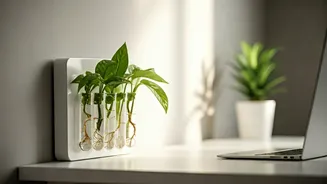
Forget bulky pots and messy soil. The latest trend taking over aesthetic-conscious workspaces is vertical propagation using magnetic test tubes. Imagine a clean, minimalist wall or the side of a filing cabinet adorned with sleek glass tubes, each holding
a single plant cutting suspended in water. This 'science-lab-chic' approach turns plant propagation—the process of growing new plants from cuttings—into a living art installation. It's a method that is both functional and beautiful, allowing you to cultivate greenery in the tightest of spaces. The clear glass puts the focus on the delicate roots and vibrant stems, creating a fascinating visual that evolves day by day. This isn't just about having a plant on your desk; it's about integrating nature into your decor in a modern, dynamic way.
Why This Trend is Taking Over
The rise of vertical propagation is no accident; it’s a perfect solution for our times. With work-from-home culture solidifying across India, many have carved out offices in compact urban apartments. This trend offers a vertical solution for adding plants without sacrificing precious desk or floor space. It also taps directly into the global 'plant parent' phenomenon, where nurturing plants has become a wellness practice. Watching roots sprout from a cutting offers a tangible sense of achievement and a mindful break from screen time. Furthermore, in our visually driven world, these setups are incredibly 'Instagrammable.' The clean lines and natural elements are a magnet for social media shares, which has rapidly fuelled its popularity. For residents in bustling cities like Mumbai, Bengaluru, and Delhi, it’s a stylish nod to nature that fits perfectly within a contemporary, space-conscious lifestyle.
Best Plants for Your Tubes
The beauty of water propagation is that many of the most beloved and resilient houseplants are perfect for it. You don't need to be a gardening expert to succeed. Here are some of the best plants to start with, all readily available in India: * **Money Plant (Epipremnum aureum):** The undisputed champion of Indian homes. It's incredibly hardy, roots within a week or two, and its trailing vines look stunning in a vertical display. * **Syngonium (Arrowhead Plant):** With its lovely arrow-shaped leaves, this plant adds a touch of elegance and is another fast-rooter in water. * **Spider Plant (Chlorophytum comosum):** This plant does the work for you, producing little 'pups' or plantlets that can be snipped off and placed directly into your test tubes. * **Philodendron:** Varieties like the Heartleaf Philodendron are incredibly easy to propagate and have a classic, lush look. * **Wandering Dude (Tradescantia zebrina):** For a pop of colour, its purple and silver striped leaves grow quickly and bring vibrant energy to your setup.
Your Step-by-Step Setup Guide
Ready to create your own living wall? It’s simpler than you think. First, acquire your materials. Magnetic test tube sets are increasingly available on Indian e-commerce sites like Amazon and from specialised online decor stores. Once you have your kit, follow these simple steps: 1. **Take a Cutting:** Using clean scissors, snip a 4-6 inch piece of stem from a healthy mother plant. Make your cut just below a 'node'—the small bump on the stem where a leaf grows. This is where new roots will emerge. 2. **Prepare the Cutting:** Gently remove any leaves from the bottom half of the stem that would otherwise be submerged in water. 3. **Fill the Tube:** Fill your test tube about two-thirds full with room-temperature water. Using filtered or distilled water can help, but tap water left out for a day to allow chlorine to evaporate also works well. 4. **Place and Position:** Submerge the bare end of the stem into the water, ensuring the node is fully covered. Attach the magnetic tube to any metal surface—a refrigerator, a metal desk lamp, a whiteboard, or a magnetic wall strip. Choose a spot with bright, indirect light.
Keeping Your Green Wall Thriving
This setup is delightfully low-maintenance, but a little care goes a long way. The most important task is to change the water every 7-10 days. This replenishes oxygen for the developing roots and prevents the growth of algae, keeping the water clear and the plant healthy. Within a few weeks, you’ll see the magical sight of tiny white roots beginning to sprout from the node. Once the roots are an inch or two long, you have a choice. You can either leave the plant in the test tube indefinitely as a hydroponic decoration (it will grow very slowly), or you can transplant it into a small pot with soil to grow into a full, new plant. This process allows you to multiply your plant collection for free, providing endless cuttings for your vertical display.