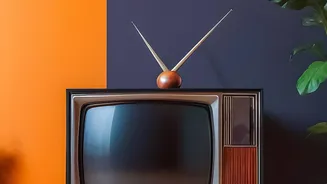







The Doordarshan Days and Satellite TV's Dawn
The story of India's media revolution begins in an era of scarcity. For decades, Doordarshan was the sole broadcaster, offering shows that became national reference points, like the mythological epics 'Ramayan' and 'Mahabharat', and India's first soap
opera, 'Hum Log'. The latter, which first aired in 1984, captured the struggles and aspirations of a middle-class family, becoming a cultural touchstone. The landscape changed dramatically in the 1990s with economic liberalization, which opened the airwaves to private satellite channels. This explosion of choice ended the state's monopoly and set the stage for a new kind of television, one that was commercial, competitive, and ready to cater to a rapidly modernizing India.
The Reign of the 'Saas-Bahu' Saga
The new millennium was dominated by one genre: the family soap opera. Producer Ekta Kapoor and her production house Balaji Telefilms redefined prime-time television, making the 10:30 PM slot appointment viewing. Shows like 'Kyunki Saas Bhi Kabhi Bahu Thi' (2000-2008) and 'Kahaani Ghar Ghar Kii' became cultural phenomena. These serials, often running for thousands of episodes, revolved around the lives, conflicts, and values of large joint families. The character of Tulsi Virani, played by Smriti Irani, became an idealized daughter-in-law for millions. These shows had a profound social impact, influencing everything from fashion to family conversations, and even prompted academic study on their effect on women's autonomy in rural India.
The Great Unbundling: From Cable to Personal Screens
The next phase of the revolution was technological. The arrival of Direct-to-Home (DTH) services offered even more channels and better viewing quality, but the fundamental unit of consumption remained the family living room. The real disruption came with the smartphone. This shift was supercharged by the launch of Reliance Jio in 2016, which crashed data prices and made high-speed internet accessible and affordable for hundreds of millions of Indians. Entertainment was no longer confined to the television set; it moved into our pockets, available anytime, anywhere. The era of appointment viewing was officially over, replaced by on-demand consumption.
The Streaming Tsunami and the New Content Kings
Into this fertile new ground, Over-the-Top (OTT) streaming platforms arrived. While early players like BIGFlix (2008) and Sony Liv (2013) tested the waters, the market exploded with the entry of global giants like Netflix and Amazon Prime Video in 2016, alongside the rapid growth of domestic powerhouse Hotstar (now JioHotstar). These platforms offered a library of content that was fundamentally different from television. Instead of catering to a broad family audience, they targeted individual tastes with a diverse mix of genres, from gritty crime thrillers like 'Sacred Games' to nuanced dramas and comedies. This created a new ecosystem for creators and actors, providing a platform for stories that were too niche or bold for traditional television.
A New Viewing Culture: Individual, Global, and Regional
The rise of streaming has not just changed what we watch, but how we watch it. The communal living room experience has been replaced by individualised, 'binge-watching' sessions on personal devices. Content is no longer restricted by geography or language; subtitles have made global shows like 'Money Heist' and 'Squid Game' massive hits in India. Simultaneously, there has been a huge surge in regional content, with platforms investing heavily in programming in languages like Tamil, Telugu, and Bengali to cater to diverse audiences beyond the metros. This pivot reflects a mature market where the focus is shifting from just acquiring users to retaining them with distinctive and culturally relevant storytelling.