


1. A Tectonic Collision Course
Nepal is situated directly on a major fault line where the Indian and Eurasian tectonic plates collide. The Indian plate is continuously pushing northwards into the Eurasian plate at a rate of about 5cm per year. This movement builds up enormous geological
stress that is periodically released in the form of powerful earthquakes, like the devastating 7.8 magnitude Gorkha earthquake in 2015 which killed nearly 9,000 people.
2. Young and Fragile Mountains
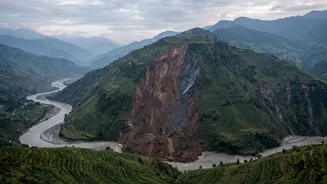
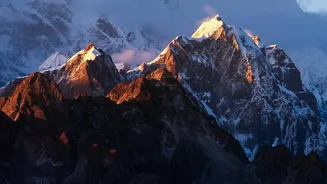
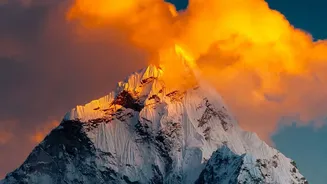
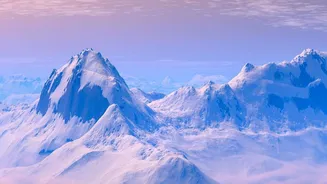
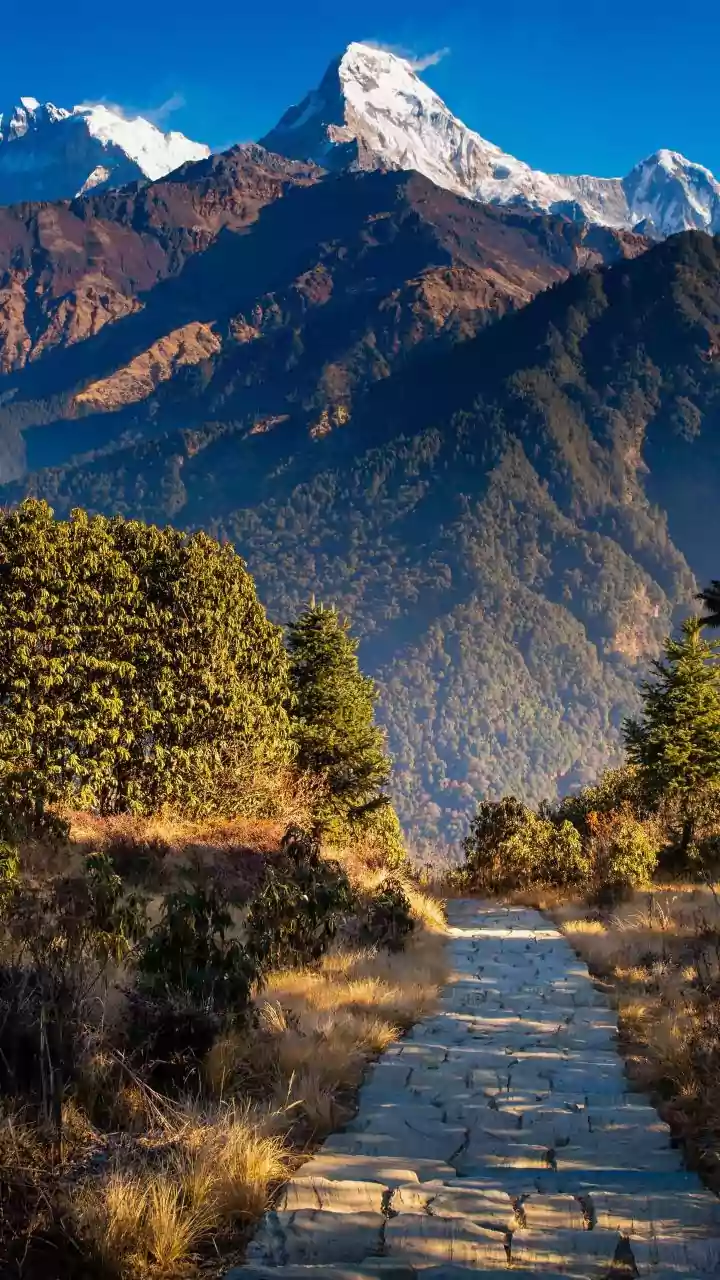
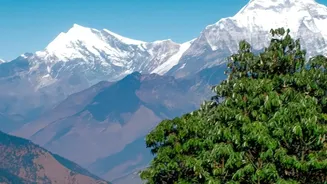
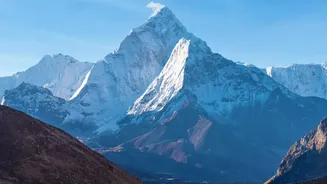
The Himalayas are geologically young and still rising, making their slopes steep, rugged, and unstable. This fragile geology, combined with the seismic activity, means the mountainous terrain is highly susceptible to landslides. Earthquakes often act as a trigger, shaking loose vast amounts of rock and soil that can cascade down into valleys below.
3. Intense Monsoon Rains
Around 80% of Nepal's annual rainfall occurs during the intense monsoon season from June to September. This heavy precipitation saturates the soil on the already steep slopes, dramatically increasing the risk of landslides and debris flows. In recent years, climate change has made these rainfall patterns more erratic and intense, worsening the problem.
4. A Climate Change Hotspot
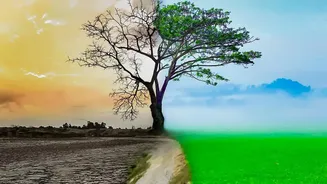
Nepal is one of the world's most vulnerable countries to climate change. Rising temperatures are accelerating the melting of its thousands of glaciers. This not only alters river flows that millions depend on but also creates a terrifying new threat: Glacial Lake Outburst Floods (GLOFs). Climate change is also linked to more extreme and unpredictable rainfall, which intensifies flooding.
5. The Threat of Glacial Lake Outbursts (GLOFs)
As glaciers melt at an accelerated rate, they form large, unstable lakes dammed by loose rock and debris known as moraines. These natural dams can fail suddenly due to pressure, an avalanche, or an earthquake, releasing a catastrophic volume of water downstream. Nepal has already recorded over two dozen GLOF events, which can destroy entire villages, roads, and crucial infrastructure like hydropower plants.
6. Unplanned and Rapid Urbanization
Cities like Kathmandu are among the fastest-growing in South Asia. This rapid, often haphazard urbanization has led to construction on floodplains and other hazardous areas. Natural drainage systems are replaced with concrete, increasing surface runoff and overwhelming city infrastructure during heavy rains. Many buildings are also not constructed to withstand earthquakes, multiplying the risk in densely populated areas.
7. Widespread Deforestation
Although community forestry programs have had success, deforestation remains a critical issue. Trees play a vital role in stabilizing soil and preventing erosion with their roots. When forests are cleared for agriculture, fuel, or development, the soil becomes loose and far more prone to washing away during heavy rains, leading to more frequent and severe landslides.
8. Haphazard Road Construction
In the push for development, thousands of kilometres of rural roads have been built, often without proper engineering or environmental assessments. Cutting into fragile hillsides destabilises the slopes, making landslides more than twice as likely to occur near these informal roads. These roads, meant to connect communities, often become a direct cause of disasters.
9. A Land of Fast-Flowing Rivers
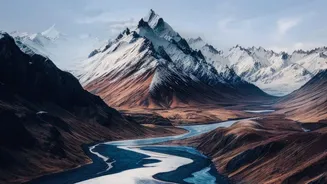
Nepal has over 6,000 rivers and rivulets, many of which are snow-fed and flow swiftly from the high mountains down through steep valleys to the plains. This topography means that when floods or landslides occur, the water and debris can travel downhill with immense speed and destructive force, leaving communities with little time to react.
10. Socio-Economic Vulnerability
Poverty and lack of resources compound all the other risk factors. Many people have no choice but to live in hazard-prone areas. Limited government capacity for enforcing building codes, managing land use, and investing in resilient infrastructure further exacerbates the country's vulnerability. When disasters strike, these underlying social and economic factors often determine the scale of the human tragedy.