


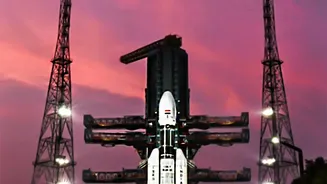
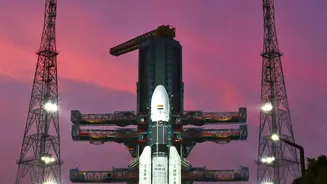
Meet Pushpak: India's Space Shuttle
At the heart of this endeavour is the Reusable Launch Vehicle–Technology Demonstrator (RLV-TD), affectionately named 'Pushpak'. Unlike conventional rockets that are discarded after a single use, Pushpak is designed like a spaceplane. It aims to travel
to orbit, deploy its payload, and then return to Earth, landing horizontally on a runway much like an aircraft. This capability is the cornerstone of reusability, a technology that is set to redefine the economics of space exploration. For decades, the high cost of space missions has been driven by expendable rockets, where the vehicle itself accounts for a massive portion of the total expense. By mastering reusability, ISRO is taking a significant step towards making space launches a more sustainable and economically viable enterprise.
A Hat-Trick of Landing Success
The most recent and significant progress in the RLV programme came on June 23, 2024, when ISRO successfully completed its third and final Landing Experiment (LEX-03). In a series of three tests, starting from April 2023, ISRO has flawlessly demonstrated Pushpak's autonomous landing capability. For the latest test, the winged vehicle was carried to an altitude of 4.5 km by an Indian Air Force Chinook helicopter and released. From there, Pushpak autonomously navigated its way to a runway at the Aeronautical Test Range in Chitradurga, Karnataka, executing a precise, high-speed landing at over 320 kmph. The LEX-03 mission was particularly challenging, testing the vehicle under more severe wind conditions and from a greater distance from the runway. Crucially, the mission reused the same winged body and flight systems from the previous test, proving the robustness of the hardware for multiple missions.
Why Reusability is a Game-Changer
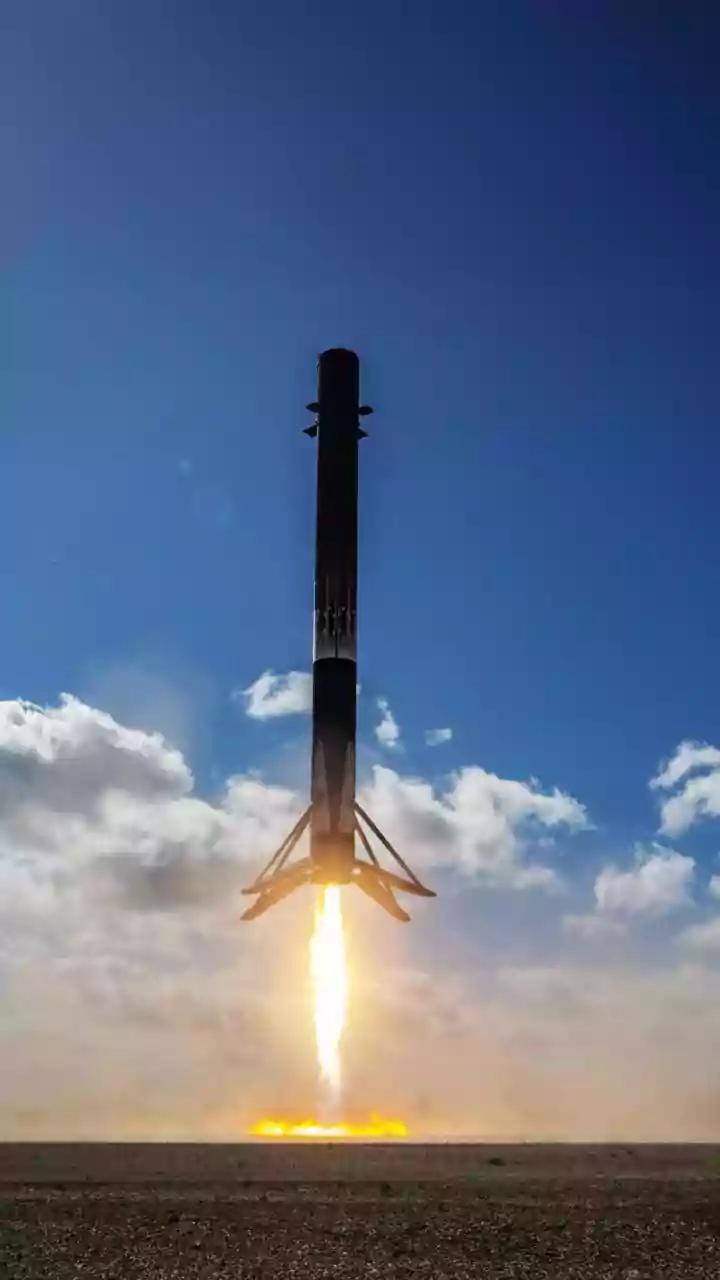
The primary driver behind developing reusable launch vehicles is cost. By recovering and reusing the most expensive components of a rocket, the cost of accessing space can be slashed dramatically. Some estimates suggest that reusability can bring down the price of launching a payload into orbit by a factor of ten. ISRO's stated goal is to reduce the cost per kilogram of payload from the current rates to something far more competitive on the global stage. This would not only benefit India's own national missions but also position ISRO as a highly attractive option for international clients looking to launch their satellites. Lower launch costs democratise space, opening up opportunities for smaller countries, universities, and startups to conduct research and deploy new technologies in orbit.
The Road Ahead: From Landing to Orbit
With the successful completion of the landing experiments, ISRO has validated the critical technologies needed for autonomous flight and landing. The next major step is the Orbital Re-entry Experiment (OREX or ORE). In this highly anticipated mission, a vehicle will be launched into orbit on a conventional rocket, spend a period of time in space, and then perform a controlled re-entry into the atmosphere before landing autonomously on a runway. This will be the true test of an orbital-class reusable vehicle. While a definitive timeline for the ORE mission has not been announced, it is the clear next phase in the programme. These efforts are part of a broader vision for a Two-Stage-to-Orbit (TSTO) fully reusable vehicle, which will eventually be scaled up from the current technology demonstrator.