


Why Cooking Isn't Simple Math
Many home cooks treat recipes like a simple multiplication problem: if you double the guests, you double the ingredients. But cooking is a series of chemical reactions governed by heat, time, and physics. When you scale a recipe, you change this delicate
system. While factors like adjusting spices and leavening agents are important, the most fundamental and often-missed element is the physical space where the cooking happens. The size and shape of your pot, pan, or baking dish dictate how heat is distributed and how moisture escapes, which can dramatically alter the final outcome. Using the wrong vessel is often the primary reason a scaled recipe fails.
The Evaporation and Surface Area Problem
One of the most critical factors is the ratio of surface area to volume. When you double a sauce recipe but cook it in the same pot, the liquid is much deeper. This reduces the proportional surface area, slowing down evaporation. Your sauce might end up watery and bland because it didn't reduce properly. Conversely, if you put a standard-sized recipe into a much wider, larger pan, the liquid spreads out into a thin layer. Evaporation happens much faster, which can cause your dish to dry out, thicken too quickly, or even burn. This is ideal for getting a good sear, but disastrous for a slow-simmered stew.
Heat, Crowding, and Uneven Cooking
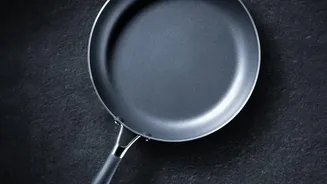
Proper heat distribution is essential for everything from browning meat to baking an even cake. When you crowd a pan by doubling the ingredients in a vessel that's too small, you create a steaming effect. Moisture gets trapped under the food and can't evaporate, preventing the delicious browning known as the Maillard reaction. Your roasted vegetables turn soggy, and your chicken fails to get a crispy skin. A pan that is too large can also be a problem. The heat source may not be able to warm the entire surface evenly, creating hot and cold spots. For searing, a smaller pan concentrates heat, while a larger one can dissipate it, resulting in gray, unappealing meat.
The Unique Challenge of Baking
Baking is even less forgiving than stovetop cooking. The volume and dimensions of a baking pan are crucial. If you pour a doubled cake batter into a pan that is simply wider but not proportionately larger in volume, you get a thin, flat, and often dry cake because it bakes too quickly. If you use a pan that's too small for a scaled-up recipe, the batter will be too deep. This often results in a cake with burnt edges and a raw, sunken center because the heat can't penetrate the middle before the outside overcooks. The depth of the batter directly impacts how long it takes to bake and whether the texture will be correct.
How to Choose the Right Vessel
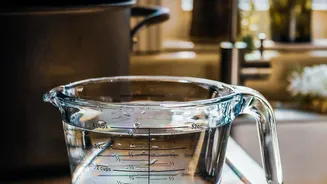
So, how do you get it right? The most reliable method for scaling up is not to use one giant pot, but to use two of the pans the original recipe called for. This perfectly preserves the original recipe's ratios of depth, surface area, and heat distribution. If that isn't practical, you need to do a little math. The goal is to match the volume. You can calculate the volume of your pans to find a suitable substitute. For example, a 9x13-inch rectangular pan has roughly double the volume of an 8x8-inch square pan, making it a good choice for a doubled casserole recipe. When in doubt, weighing your ingredients and understanding your pan's capacity will give you far more consistent results than simply multiplying by two.