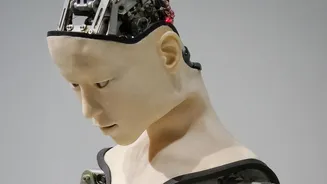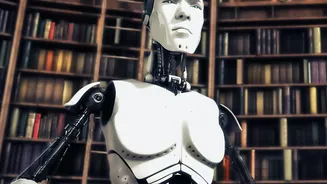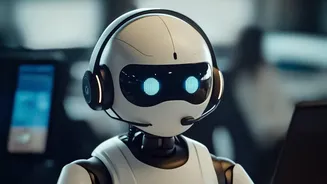




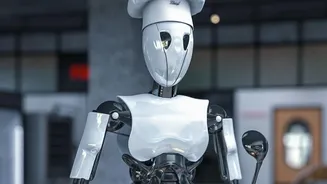
The world of automation is buzzing with futuristic excitement. Companies like Figure AI and Tesla are attracting billions in investment for humanoid robots, with backers including tech giants like Microsoft, OpenAI, and Nvidia. But beyond the impressive
demos, a more sober question is emerging in boardrooms: what is the actual return on these expensive machines?
The Allure of a Human-Like Workforce
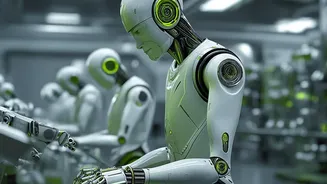
The promise of humanoid robots is undeniably compelling. Unlike traditional, single-task industrial robots that are often bolted to the floor, humanoids are designed to navigate and work within spaces built for people. This adaptability could allow them to perform a variety of tasks in existing warehouses, factories, and logistics centers without requiring a complete redesign of the facility. Proponents argue they are the key to solving chronic labour shortages, handling physically demanding or repetitive jobs, and ensuring operations can run nearly 24/7. Companies like BMW have already partnered with Figure AI to test these robots on their manufacturing lines, signaling a serious exploration of this new frontier.
The Billion-Dollar Price Tag
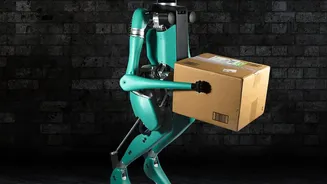
The primary hurdle to widespread adoption is cost. While some models are entering the market at lower price points, industrial-grade platforms from leading players like Agility Robotics have an estimated purchase price of around $200,000 per unit. However, the sticker price is just the beginning. True deployment costs include tens of thousands more for integration, software, and staff training. For instance, Agility's five-year total cost of ownership for one of its 'Digit' robots is projected to be around $400,000, which includes a one-time deployment fee and significant annual software and maintenance costs. This makes the upfront capital expenditure a major consideration for any business.
Scrutinizing the Return on Investment
Even with high costs, a positive return on investment (ROI) is theoretically achievable. Some analyses suggest that a robot replacing a full-time manufacturing worker could pay for itself in under two years, depending on labour costs. Agility Robotics has told investors a customer could potentially breakeven in just over a year. However, these calculations rely on a number of critical assumptions. They often presume the robot can operate for 16-20 hours a day with high reliability, something that is still a significant technical challenge. Current battery technology limits most humanoids to just a few hours of active work before needing a recharge, and their real-world reliability is still unproven at industrial scale.
Demos vs. Messy Reality
There's often a large gap between a controlled demonstration and the chaotic reality of a factory or warehouse floor. While a robot might flawlessly execute a scripted task, realworld environments have unpredictable elements, from cluttered aisles to unexpected human interactions. Currentgeneration humanoids still struggle with the dexterity and problemsolving skills of an experienced human worker. For instance, in warehouse picking tasks, a human can handle 100–150 items per hour, while current robots manage closer to 20–60. Furthermore, the risk of downtime is a major concern; if a critical production line relies on a robot that suddenly stops working, the entire operation can grind to a halt.
A Future in the Making
Despite the challenges, the momentum is undeniable. Costs are projected to fall significantly over the next decade. Tesla aims to eventually produce its Optimus robot for as little as $20,000 to $30,000, a price point that would dramatically alter the economic equation for businesses. The technology is also advancing rapidly, with improvements in AI, battery life, and mechanical durability. For now, the industry is in a phase of strategic experimentation. Companies are making calculated bets, running pilot programs, and collecting data to see which tasks are best suited for automation and how to build a business case that truly adds up.