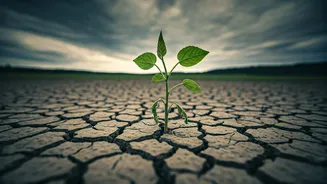






The Forecast: A Weaker Monsoon
The India Meteorological Department (IMD) has projected that the 2026 southwest monsoon, which brings about 70% of the country's annual rainfall, is likely to be below normal. [13, 22] Forecasts suggest rainfall could be around 90% of the Long Period
Average (LPA), with a significant probability of deficient rainfall. [7] This outlook is largely influenced by the development of El Niño conditions in the Pacific Ocean, a phenomenon historically linked to weaker and more erratic monsoons in India. [3, 11] As of late June, the monsoon's progress has been slow, with the country facing a significant rainfall deficit, reigniting concerns over crop output and rural demand. [16, 24]
From Field to Kitchen: The Economic Chain
A weak monsoon has a direct and powerful impact on India's economy, starting with agriculture. Nearly half of India's farmland is rain-fed, making it highly dependent on the monsoon for the crucial Kharif sowing season. [11] This season includes vital crops like rice, pulses (dal), oilseeds, and cotton. [4] Below-normal rainfall can lead to lower crop yields, which means a reduced supply of essential food items. [14] When supply falls short of demand, prices naturally rise. This chain reaction means that the rain that fails to fall on a farm in a rural heartland can eventually be felt as a higher price for vegetables, rice, and cooking oil in urban supermarkets. [16]
Kharif Sowing Under a Cloud
The early stages of the Kharif sowing season have already reflected the monsoon's slow start. According to data from the Ministry of Agriculture, the total area sown as of early-to-mid June is slightly behind the previous year. [6, 8] While planting of some crops like rice has seen a marginal increase in certain reports, the sowing of pulses, oilseeds and cotton has been slower. [6, 8] This is a cause for concern as these crops are particularly vulnerable to rainfall deficits since they are predominantly grown in rain-fed regions. [6] The delayed and deficient rains have resulted in lower soil moisture in many states, adding to the stress on farmers as they navigate the critical planting window. [6]
The Inflationary Pressure Point
The Reserve Bank of India (RBI) is watching the monsoon's progress closely. Food prices are a major component of India's Consumer Price Index (CPI), the primary measure of retail inflation. [14] A spike in food prices can quickly push overall inflation higher, squeezing household budgets and complicating monetary policy. [15] RBI Governor Sanjay Malhotra has noted that while the near-term outlook was buffered by a good winter (Rabi) crop and adequate food stocks, risks from a below-normal monsoon have amplified. [15, 20] Economists suggest a significant rain deficit could add as much as a full percentage point to headline inflation, threatening to push it toward the upper end of the RBI's tolerance band of 6%. [13, 15]
Buffers and Balances
While the situation is concerning, it is not yet a crisis. India has several buffers to mitigate the impact of a weak monsoon. The government maintains a substantial stockpile of essential food grains like rice and wheat, which can be released to stabilise prices. [13, 27] RBI officials have pointed to these ample grain inventories as a cushion against shortages. [13, 27] However, these stockpiles are less effective for perishable items like vegetables and do not cover pulses and oilseeds as comprehensively. [13] In response to the forecast, the government is preparing contingency plans, having identified over 300 districts vulnerable to low rainfall and advising states on crop diversification and water conservation measures. [13, 32]