






The Challenge of Keeping Time
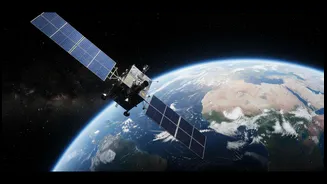
Understanding climate change relies on our ability to detect very small changes over very long periods. For this, scientists depend on a vast network of Earth-observing satellites. However, there's a significant challenge: technology doesn't stay the same.
A satellite launched in the 1990s was built with different instruments than one launched today. Even during a single satellite's mission, the harsh environment of space can cause its sensitive instruments to degrade or drift, affecting the accuracy of their measurements. It's like trying to compare a photo from an old film camera with one from the latest smartphone; the colours and clarity are fundamentally different. To build a trustworthy, decades-long climate record, scientists need a way to ensure all these different 'photos' are consistent and comparable. Without this, spotting subtle but critical trends in Earth's climate would be nearly impossible.
A 'Tuning Fork' in Space
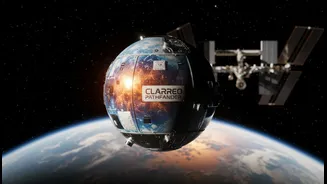
This is where NASA’s CLARREO Pathfinder comes in. Launched to the International Space Station (ISS) in May 2026, it isn't just another satellite taking pictures of Earth. Instead, its job is to be a highly accurate and stable reference point in orbit—a sort of 'tuning fork' for other climate-monitoring instruments. The mission, whose full name is the Climate Absolute Radiance and Refractivity Observatory Pathfinder, is designed to measure reflected sunlight from Earth with an unprecedented accuracy—five to ten times better than existing sensors. Its primary purpose is not just to collect data for itself, but to serve as a benchmark that other satellites, like the CERES and VIIRS instruments, can use to cross-check and calibrate their own measurements. By doing this, it helps stitch together data from different missions into a single, highly reliable, long-term record.
How the Calibration Works
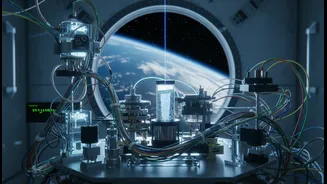
Mounted on the ISS, the CLARREO Pathfinder instrument uses a sophisticated spectrometer to achieve its remarkable accuracy. The key is its ability to calibrate itself constantly using a very stable and well-known source: the Sun. By regularly taking direct measurements of sunlight, the instrument can correct for any potential degradation or changes in its own performance over its one-year nominal mission. When it's not looking at the Sun, it observes the Earth. As it orbits, its path crosses those of other Earth-observing satellites. During these crossover events, both CLARREO Pathfinder and the other satellite measure the same spot on Earth at roughly the same time. By comparing its ultra-accurate measurement to the other satellite's reading, scientists can identify and correct any drift or bias in the other instrument. It can even use the Moon as another stable calibration target to enhance the accuracy of lunar-based calibration for other sensors.
Why Trustworthy Data Is Critical
This highly technical work of on-orbit calibration has profound real-world consequences. Having robust, long-term climate data is essential for almost every aspect of climate science and policy. These records form the bedrock of the climate models that predict future warming, helping scientists understand the speed and scale of the changes our planet is undergoing. This information is critical for governments and communities planning for the future, whether it's building more resilient infrastructure to handle extreme weather, managing water resources, or making decisions about agriculture. The high-accuracy measurements provided by CLARREO Pathfinder will allow scientists to detect climate trends decades sooner than would otherwise be possible. Ultimately, having data that is demonstrably accurate and traceable to international standards builds confidence in the scientific conclusions drawn from it.