



The Foundation of Flavour
At the heart of countless delicious dishes lies a simple concept: the flavour base. This is the initial combination of aromatic ingredients, gently cooked in fat, that creates the foundational layer of taste for everything that follows. Think of the classic
French mirepoix (onion, carrot, and celery slow-cooked in butter) or the Italian soffritto, which uses the same vegetables in olive oil. In Indian cooking, it might be a tadka of spices bloomed in ghee, while many Chinese recipes start with ginger, garlic, and scallions. These bases aren't meant to be overpowering. Instead, they create a savoury, aromatic, and subtly sweet starting point that gives a dish structure and complexity.
Your Aromatic Toolkit
While onion and garlic are the workhorses of many kitchens, the world of aromatics is vast. Leeks offer a milder, sweeter alternative to onions. Fennel provides a gentle anise note, and bell peppers contribute a vegetal sweetness without any heat. The key is to cook these ingredients slowly over low to medium heat. This process coaxes out their natural sugars, allowing them to caramelize and develop hundreds of new flavour compounds. This browning process, known as the Maillard reaction, is responsible for the nutty, savoury, and deeply complex notes that form the backbone of a great sauce, soup, or stew.
Spices That Build, Not Burn
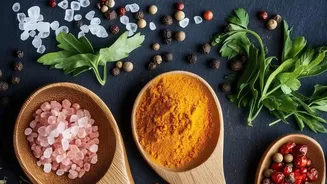
Spices are essential for complexity, but you don't need the fiery ones to achieve it. Many of the world's most aromatic spices contain no capsaicin, the compound that creates the sensation of heat. Smoked paprika, for example, offers profound smoky depth. Cumin and coriander seeds bring earthy, citrusy notes. Turmeric provides a warm, slightly bitter flavour and vibrant colour. Others like cardamom, cloves, nutmeg, and allspice introduce warm, sweet, and fragrant layers. To unlock their full potential, toast whole spices in a dry pan for a minute or two before grinding, or 'bloom' ground spices by briefly frying them in oil. This technique releases their fat-soluble essential oils, making their aromas and flavours more vibrant and pronounced.
The Role of Fat and Time
Fat is not just a cooking medium; it is a flavour vehicle. Many of the aromatic compounds in vegetables and spices are fat-soluble, meaning they dissolve in fat rather than water. This is why cooking aromatics in butter, ghee, or oil is such a critical step—the fat extracts those flavours and distributes them throughout the entire dish. Time is the other crucial ingredient. Rushing the initial cooking of your aromatics will leave you with a raw, sharp taste. Allowing them to soften and sweeten over 10, 20, or even 30 minutes allows the flavours to meld, deepen, and become something far greater than the sum of their parts.
Balancing with Acid and Umami
A great flavour base is the start, but a truly memorable dish needs balance. If a dish tastes flat or like it's missing something, the answer is often not more salt, but a touch of acid. A squeeze of lemon juice, a splash of vinegar, or a spoonful of tomato paste can brighten and sharpen all the other flavours, cutting through richness and waking everything up. Umami, the fifth taste, adds a savoury depth that makes food more satisfying. Ingredients like mushrooms, soy sauce, or tomato paste are rich in umami and can be added to your base to create a more rounded and complete flavour profile without adding any heat.