





The Robotic Vanguard: Cheaper and Safer
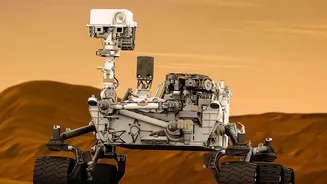
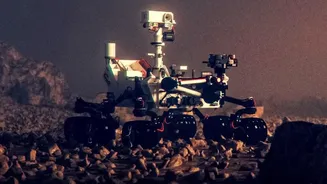
For decades, robots have been our proxies on the Red Planet. From the Sojourner rover to the advanced Perseverance, these robotic geologists have revolutionized our understanding of Mars. Their primary advantage is straightforward: they are vastly cheaper
and simpler to send. A flagship robotic mission like Perseverance costs under $3 billion. In contrast, estimates for a single crewed mission range from $100 billion to over $500 billion. This massive cost difference stems from a simple fact: robots don't need food, water, oxygen, or a return ticket. They can be built to withstand the harsh Martian environment, including extreme temperatures and a surface bombarded with radiation, without the need for bulky life support or heavy shielding. When their mission ends, they simply power down, becoming permanent monuments to human curiosity.
The Human Advantage: Speed and Intuition
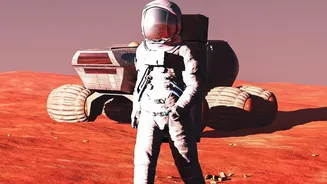
Despite the cost, the case for sending humans is compelling. The key advantage is adaptability. While a rover like Curiosity moves at a painstaking 0.14 kilometers per hour, a human astronaut could cover more ground in a day than a rover has in years. A human geologist can make split-second decisions, spot unusual rock formations, and improvise. What might take a rover, with its significant communication delays to Earth, weeks of careful commands to investigate, a human could accomplish in minutes with a rock hammer. This ability to perform complex tasks, conduct nuanced field science, and react to unexpected discoveries is something robots cannot yet replicate. Proponents argue this efficiency makes the scientific return on investment for a human mission far greater, justifying the higher upfront cost.
The Great Obstacle: Bringing Humans Home
The single greatest complication for a human Mars mission is highlighted in the headline: planning the return. A robot's journey is one-way. A human's must be a round trip, and that changes everything. The challenges are monumental and include surviving the months-long journey through deep space, shielded from cancer-causing cosmic radiation that is over 700 times more intense than on Earth. The psychological toll of isolation and confinement in a small craft is another major concern. But the biggest technical hurdle is simply getting off Mars. Escaping Mars' gravity well—which is significantly stronger than the Moon's—requires a powerful ascent vehicle. Launching that vehicle from another planet, millions of kilometers from the nearest help, is a feat of engineering never before attempted.
Mars as a Fuel Depot: The ISRU Solution
Lifting a fully fueled ascent vehicle all the way from Earth to Mars would be prohibitively heavy and expensive. The solution that mission planners are relying on is called In-Situ Resource Utilization, or ISRU. The concept is to turn Mars itself into a refueling station. Astronauts would land with a chemical plant designed to 'live off the land'. This plant would suck in the thin Martian atmosphere, which is 95% carbon dioxide, and combine it with hydrogen brought from Earth. Through a process known as the Sabatier reaction, this would create methane (rocket fuel) and water. The water would then be split through electrolysis to produce oxygen (the rocket oxidizer), with the hydrogen being recycled back into the system. Mastering ISRU is not just a helpful technology; NASA considers it essential to make a human return from Mars feasible.
A Hybrid Future: Robots Paving the Way
Ultimately, the debate between robots and humans isn't an either-or choice. The most likely future for Mars exploration is a synergistic one, where robots are not just explorers but also pioneers preparing the way for human arrival. Robotic missions will continue to scout for the best landing sites and resources, like subsurface water ice. Future missions could even pre-deploy ISRU equipment and other infrastructure, ensuring a fuel supply and habitable base are ready and waiting before astronauts even leave Earth. This strategy uses the strengths of each approach: the cost-effectiveness and safety of robots to reduce the immense risk and complexity of a human expedition. Robots will do the dangerous, repetitive groundwork so that when humans finally arrive, they can focus on what they do best: exploring, discovering, and taking that next giant leap for humankind.