




Kolkata carries many titles, but none as intriguing as the 'London of India'. This label, born from a rich and complex history, points to a time when the city was the jewel of the British Empire. But what does it really mean today?
The Capital of British India
The most significant
reason for the nickname is historical. For over a century, from 1772 until 1911, Kolkata, then known as Calcutta, served as the capital of British India. It was the administrative, commercial, and political nerve centre of the entire subcontinent. The British East India Company established it as a major trading post, and its importance grew exponentially, eventually becoming what many considered the second most important city of the British Empire, after London itself. This status meant that the British invested heavily in creating a city with infrastructure and grandeur that would reflect its imperial power, deliberately modelling parts of it after their own capital.
An Architectural Echo of London
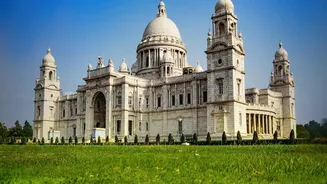
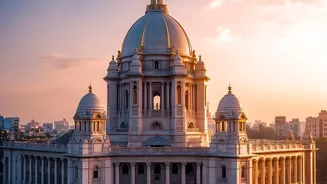
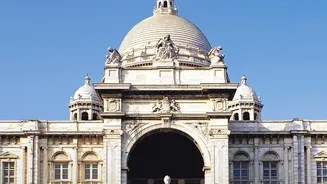
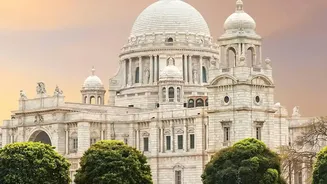
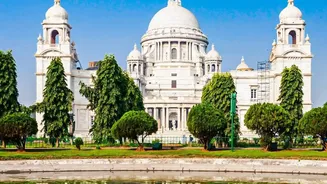
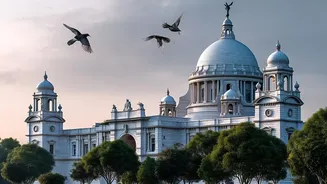
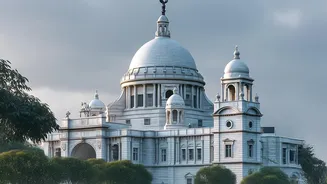
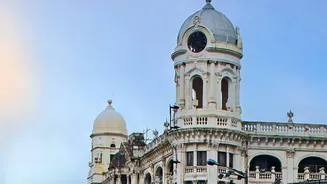
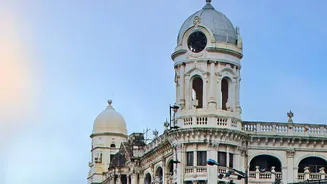
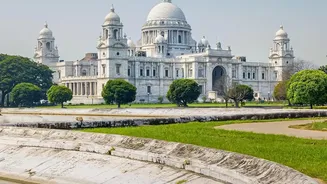
A walk through central Kolkata is a journey through a living museum of colonial architecture. The British built magnificent structures in a mix of European styles, including Neoclassical, Gothic, and Victorian, which give the city its distinct 'London-like' feel. The most iconic of these is the Victoria Memorial, a grand marble monument to Queen Victoria that blends European and Mughal styles. Other key landmarks include the imposing Writers' Building, the original administrative headquarters; St. Paul's Cathedral, built in an Indo-Gothic style; and the Calcutta High Court, the oldest in India. These wide avenues and grand buildings were intentionally designed to create a 'City of Palaces' that mirrored the imperial might of London.
Cultural and Commercial Parallels
The comparison extends beyond just buildings. London grew along the River Thames, a vital artery for trade. Similarly, Kolkata's development along the Hooghly River was crucial for its growth as a major port and commercial hub, connecting it to global trade networks. Culturally, Kolkata emerged as a powerhouse of intellectual and artistic activity, much like London. It was the heart of the Bengal Renaissance, a period of profound social and cultural reform. The city became home to India's first modern university, the oldest museum, and a thriving literary scene, cementing its reputation as the 'Cultural Capital of India'. This intellectual vibrancy drew parallels with London's own status as a global centre for arts and education.
A Nickname for a Modern City?
Today, the 'London of India' label is viewed with a mix of pride and complexity. While the city's trams and historic gentlemen's clubs still evoke a sense of colonial-era charm, Kolkata has forged its own distinct identity. After the capital shifted to Delhi in 1911, Kolkata faced decades of economic stagnation and political turmoil. In recent years, however, the city has been reinventing itself, with restoration projects for heritage buildings and a renewed focus on its cultural legacy. Some modern efforts have even playfully leaned into the comparison, with proposals for a giant 'Kolkata Eye' Ferris wheel inspired by the London Eye. Yet, for most residents, the nickname is less a literal comparison and more a nod to the city's unique, layered history—a past that is visibly present but no longer defines its future.